
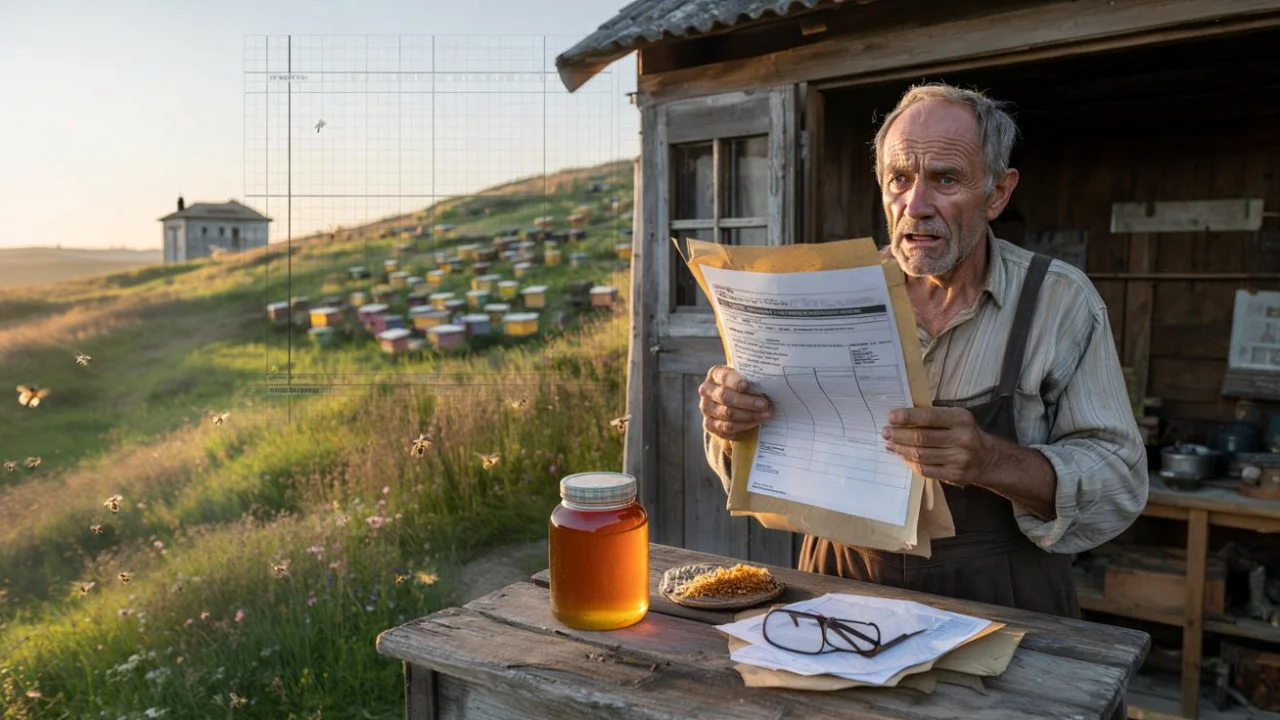
Marie’s hands trembled as she opened the envelope marked “Final Notice” in bold red letters. At 68, she thought her biggest worry would be choosing between grocery shopping and heating bills this winter. Instead, she stared at an agricultural tax assessment for $3,200 on land she gave away for free three years ago to help save the local bee population.
The irony hit her like a slap. She’d donated two acres behind her modest farmhouse to a group of young environmental enthusiasts who wanted to establish community beehives. No money changed hands. No business was created. Just neighbors helping neighbors, and maybe giving the planet’s struggling pollinators a fighting chance.
Now the state wanted to tax her generosity as if she were running a commercial honey empire. Welcome to the bureaucratic nightmare where good intentions meet government accounting, and kindness gets a price tag.
How a Simple Act of Environmental Kindness Became a Tax Trap
Stories like Marie’s are spreading across rural communities nationwide, creating a chilling effect on environmental volunteerism. When retirees open their land for conservation projects, many discover that tax authorities don’t distinguish between profit-driven agriculture and charitable environmental efforts.
The problem stems from how agricultural land classification works. When property gets used for any farming-related activity – even non-profit beekeeping or community gardens – tax assessors often reclassify it from residential to agricultural use. This triggers specialized agricultural taxes designed for commercial operations, not retired teachers sharing their backyard with bee enthusiasts.
“We’re seeing more cases where property owners get blindsided by these reclassifications,” explains Tom Richardson, a rural property tax consultant. “The tax code doesn’t have a clear category for ‘generous neighbor helping the environment.'”
What makes this particularly cruel is the timing. Many retirees living on fixed incomes choose to support environmental causes specifically because they can’t afford large monetary donations. Offering unused land feels like a perfect way to contribute. Until the tax bill arrives.
Breaking Down the Bureaucratic Maze That Traps Good Samaritans
The retiree agricultural tax problem has several moving parts that create a perfect storm of unintended consequences:
- Automatic triggers: Any structured use of land for growing, animal husbandry, or related activities can trigger agricultural reclassification
- Retroactive assessments: Tax authorities can apply new classifications backward, creating surprise bills for previous years
- No charitable exemptions: Most tax codes lack provisions for donated land use, treating it identically to commercial operations
- Assessment threshold confusion: Even minimal “production” like a few jars of honey can justify commercial agricultural status
- Limited appeal options: Property owners often have narrow windows and complex procedures for challenging reclassifications
The financial impact varies dramatically by location, but the pattern remains consistent. Rural counties, desperate for tax revenue, aggressively pursue any opportunity to move land from lower-taxed residential categories to higher-producing agricultural classifications.
| Land Use Type | Average Annual Tax | Typical Reclassification Impact |
|---|---|---|
| Residential (2 acres) | $800-1,200 | Baseline |
| Agricultural (small operation) | $2,500-4,200 | 200-300% increase |
| Commercial Agricultural | $3,800-6,500 | 400-500% increase |
“The system is designed to capture commercial farming revenue, but it’s catching community gardeners and bee enthusiasts in the same net,” notes Sarah Chen, who represents property owners in tax disputes. “Retirees on fixed incomes are getting hit hardest because they can’t absorb these sudden cost increases.”
The Chilling Effect on Environmental Cooperation
Beyond individual financial hardship, this tax trap is damaging community environmental efforts exactly when we need them most. Climate change, pollinator decline, and food security challenges require local cooperation and innovation. When governments punish citizens for environmental stewardship, they’re undermining their own sustainability goals.
Consider what’s happening in practice. Retirees who might otherwise donate land for community gardens, native plant restoration, or wildlife habitat are choosing to let their property sit unused rather than risk tax penalties. Environmental groups report increasing difficulty finding landowners willing to participate in conservation projects.
“We’ve had three retirees withdraw from our community orchard project after hearing about tax issues,” explains David Martinez, coordinator for a regional sustainability nonprofit. “People are scared that helping the environment will bankrupt them.”
The timing couldn’t be worse. Older Americans control significant amounts of rural land that could support environmental projects. Many retirees want to contribute to conservation efforts but lack the cash for large donations. Land-sharing seemed like the perfect solution until bureaucratic reality intervened.
Some states are beginning to recognize the problem. Vermont recently passed legislation creating exemptions for small-scale charitable agricultural use. Colorado is considering similar measures. But most jurisdictions still treat all agricultural land use identically, regardless of purpose or profit motive.
Finding Solutions in a System That Prices Kindness
Property tax experts suggest several strategies for retirees facing agricultural tax assessments on charitable land use:
- Document charitable intent: Maintain clear records showing no profit motive or commercial activity
- Limit formal agreements: Avoid written contracts that might suggest business relationships
- Challenge classifications promptly: Most jurisdictions have tight deadlines for contesting reclassifications
- Seek legal guidance: Property tax law varies significantly by location and requires specialized knowledge
- Connect with advocacy groups: Environmental organizations are increasingly helping members navigate tax issues
The broader solution requires legislative action to create charitable use exemptions in agricultural tax codes. Several environmental groups are pushing for “good neighbor” provisions that would protect small-scale charitable land use from commercial agricultural taxation.
“We need tax policy that encourages environmental stewardship, not punishes it,” argues Lisa Thompson, who lobbies for rural conservation issues. “Taxing retirees for helping their communities goes against every principle of good governance.”
Meanwhile, retirees like Marie continue fighting assessments that treat their environmental generosity as profit-driven businesses. The bureaucratic battle reveals a troubling truth about how our systems value kindness – by pricing it out of existence.
FAQs
Can I avoid agricultural taxes if I don’t charge rent for environmental land use?
Unfortunately, most tax codes focus on land use rather than profit. Free use can still trigger agricultural classifications in many jurisdictions.
How quickly can my property be reclassified for agricultural taxes?
Reclassification can happen within a single tax year, and some assessors apply changes retroactively to previous years.
What’s the difference between agricultural and residential property tax rates?
Agricultural classifications typically cost 200-500% more than residential rates, depending on your location and the specific type of agricultural use.
Are there any states that protect charitable land use from agricultural taxes?
Vermont and a few other states have passed exemptions for small-scale charitable agricultural activities, but most states don’t distinguish between commercial and charitable use.
Can I challenge an agricultural tax reclassification on my donated land?
Yes, but you typically have limited time to file appeals, and the process requires documentation showing the non-commercial nature of the land use.
Should I stop allowing environmental groups to use my land to avoid tax problems?
Consult with a property tax professional before making decisions, as laws vary by location and there may be ways to structure arrangements that minimize tax risks.


