
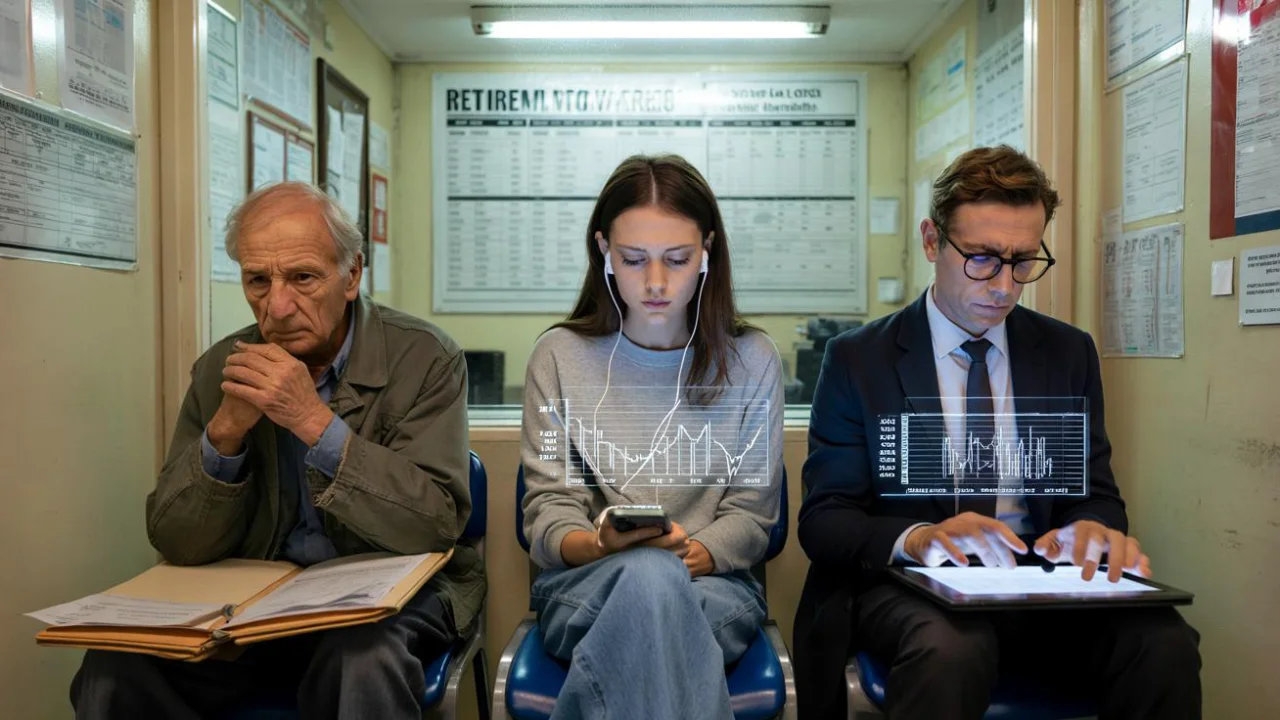
Sarah stares at her laptop screen, fingers frozen above the keyboard. The pension calculator shows her retirement age: 68. At 32, that feels like a lifetime away. Meanwhile, her father calls from the kitchen, happily planning his cruise for next year – he retired at 62 with a full pension.
“How is that fair?” she mutters, closing the laptop. It’s a question echoing in millions of homes across the country as families grapple with wildly different retirement realities.
The retirement pension threshold has become more than just policy – it’s a fault line splitting generations, creating tension at dinner tables and dividing political parties heading into 2025.
When Numbers Become Personal Stories
The retirement pension threshold isn’t just about statistics anymore. It’s about Marc, 63, whose arthritic hands can barely grip his morning coffee, counting down 18 months until he can finally stop. It’s about Léa, scrolling through job postings at 29, knowing she’ll likely work until 70.
These aren’t abstract policy debates. They’re real people facing real consequences of a system that seems to change faster than they can adapt.
Dr. Patricia Williams, a retirement policy expert, puts it simply: “We’re asking different generations to play by completely different rules, then wondering why they’re frustrated with each other.”
The current legal retirement age varies depending on when you were born, what job you held, and how many years you’ve contributed. But the “full pension” threshold – where you can retire without penalties – keeps shifting upward.
Breaking Down the Threshold Reality
Understanding today’s retirement pension threshold requires looking at the numbers that actually affect people’s lives. Here’s what different generations are facing:
| Birth Year | Minimum Retirement Age | Full Pension Age | Expected Reality |
|---|---|---|---|
| 1960-1962 | 62 | 65-67 | Most retire by 65 |
| 1975-1985 | 64 | 67 | Working past 67 common |
| 1990-2000 | 64-67 | 67-70 | Retirement at 70+ likely |
The key factors driving these changes include:
- Longer life expectancy adding pressure to pension systems
- Declining birth rates meaning fewer workers supporting retirees
- Economic volatility affecting pension fund performance
- Political pressure to balance government budgets
- Rising healthcare costs in retirement
Financial advisor James Chen explains: “The threshold keeps moving because the economics keep changing. What seemed sustainable 30 years ago simply isn’t anymore.”
But the human cost of these shifts is enormous. Workers who planned their lives around one set of rules now find themselves scrambling to adjust.
The Ripple Effects Hitting Real Families
The retirement pension threshold debate isn’t happening in isolation. It’s reshaping how families plan, save, and relate to each other.
Take the Johnsons from Ohio. Grandfather Tom retired at 62 with a comfortable pension. His son Mike, now 45, recently learned his full retirement age moved to 67. Mike’s daughter Emma, 22, jokes she’ll be working until she’s 75.
“Three generations, three completely different deals,” Mike says. “How do you explain that to your kids?”
The practical impacts are showing up everywhere:
- Young adults delaying homebuying, knowing they’ll need to save more for retirement
- Middle-aged workers taking on second jobs to boost pension contributions
- Families arguing over inheritance and financial support expectations
- Employers struggling with aging workforces who can’t afford to retire
Dr. Linda Rodriguez, who studies intergenerational wealth, notes: “We’re creating a system where your birth year determines your entire financial future. That’s not sustainable socially or politically.”
Politicians Walk a Tightrope Over Voter Anger
The retirement pension threshold has become political dynamite. Touch it, and you risk exploding your voter base.
Older voters, who actually show up to vote, want their benefits protected. Younger voters want fairness and realistic planning. Middle-aged voters are caught between paying for current retirees while wondering if anything will be left for them.
Senator Mary Thompson recently learned this the hard way: “I suggested gradually raising the threshold to 68, and my office was flooded with angry calls. Half said I was stealing from seniors, the other half said I wasn’t doing enough for young people.”
The political math is brutal:
- Raise the threshold too much, lose older voters
- Don’t raise it enough, lose younger voters
- Change nothing, and the system becomes unsustainable
- Make dramatic changes, and you create economic chaos
Policy analyst Robert Kim summarizes the dilemma: “Politicians are trying to solve a 50-year problem with 4-year election cycles. The timeline just doesn’t work.”
What This Means for Your Future
Whether you’re 25 or 55, the shifting retirement pension threshold affects your planning. The key is understanding that the old assumptions no longer apply.
For younger workers, the message is clear: don’t count on government pensions alone. Start saving early, diversify your retirement income, and plan for a longer working life.
For older workers nearing retirement, flexibility is crucial. The threshold might change again, so having multiple income sources and staying healthy enough to work longer could be essential.
The bigger question is whether society can handle this level of uncertainty. When retirement planning becomes a guessing game, it affects everything from consumer spending to family relationships.
As Sarah finally reopens her laptop and starts researching private retirement accounts, she represents millions of Americans reimagining what their golden years might actually look like. The retirement pension threshold isn’t just moving – it’s reshaping the American dream itself.
FAQs
What exactly is the retirement pension threshold?
It’s the age at which you can claim full government retirement benefits without penalties. This age has been gradually increasing for younger generations.
Why does the threshold keep changing?
Longer life expectancy, fewer workers supporting retirees, and budget pressures force governments to adjust the age upward to keep pension systems financially viable.
How do I find out my specific retirement age?
Check with the Social Security Administration or your country’s pension authority. Your retirement age depends on your birth year and contribution history.
Can the threshold be lowered again?
Technically yes, but it’s extremely unlikely given current demographic and economic trends. Most experts expect further increases over time.
What should younger workers do about these changes?
Start saving for retirement as early as possible, don’t rely solely on government pensions, and plan for potentially working into your late 60s or early 70s.
Are some countries handling this better than others?
Countries with mandatory private savings accounts alongside public pensions, like Australia, tend to have more sustainable systems, but all developed nations face similar demographic pressures.


