
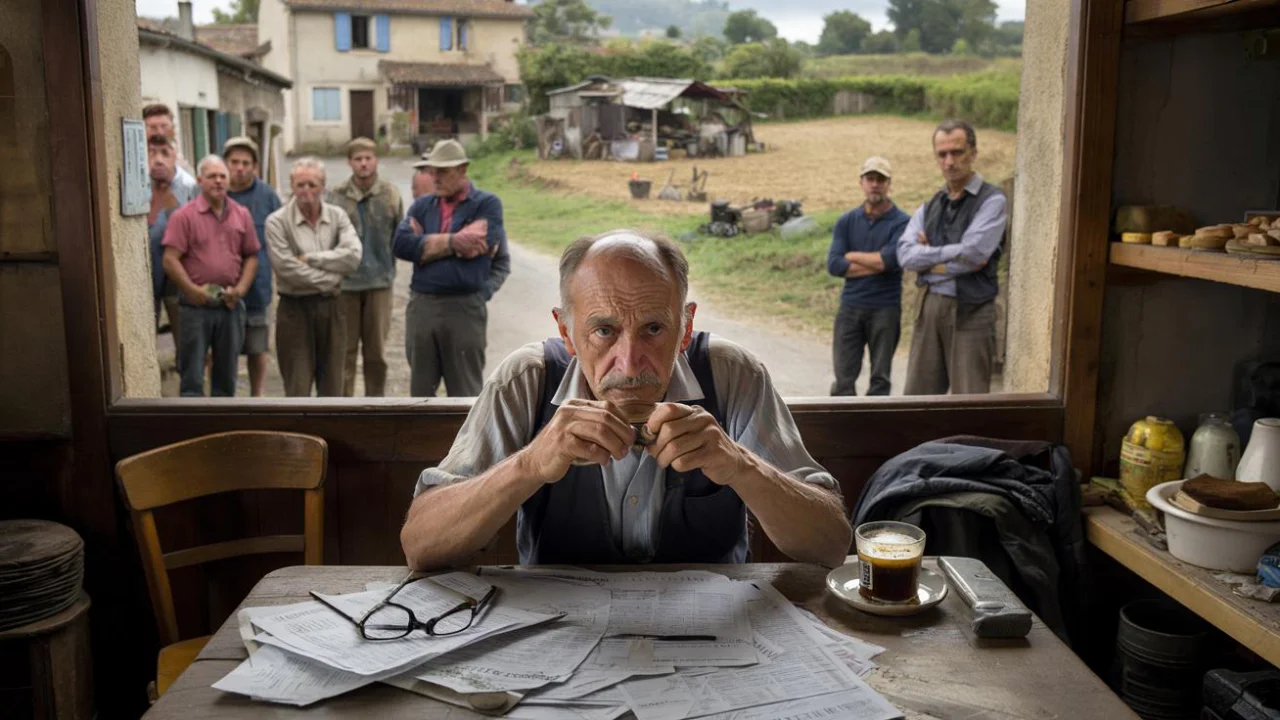
Marcel still remembers the exact moment his retirement changed forever. He was watering his tomatoes when the tax inspector knocked on his door, clipboard in hand, asking about “undeclared rental income” from the patch of land he’d let his childhood friend use for free. The 69-year-old mechanic thought there had been some mistake. There was no rental income—just two old friends helping each other out, the way people had done in their village for generations.
Six months later, Marcel’s kitchen table is buried under legal documents, tax notices, and sleepless nights wondering how a simple handshake turned into a retirement tax nightmare that could cost him thousands. His story has split their small French village down the middle, with neighbors taking sides in a battle that raises uncomfortable questions about whether kindness has become a liability in modern bureaucratic society.
“I thought retirement was supposed to be about peace,” Marcel says, his voice shaking as he sorts through another stack of official letters. “Now I wake up every morning wondering if being a good friend was the biggest mistake of my life.”
When friendship meets French bureaucracy
The trouble started innocently enough. Marcel owned a small piece of unused land behind his house—nothing fancy, just grass and weeds that he couldn’t maintain since his back surgery. His friend Alain, also retired, mentioned needing space for a small vegetable garden and tool storage. Marcel shrugged and said what felt natural: “Use it, we’re friends.”
No paperwork. No rent. Just trust and the kind of neighborly arrangement that had kept rural communities alive for centuries. Alain set up a modest shed, planted some vegetables, and even improved the property by maintaining the hedge that Marcel could no longer manage.
The problems began when a tax inspector noticed the structures during a routine area survey. In the eyes of French tax law, any use of property by a non-owner potentially constitutes a taxable benefit—regardless of whether money changes hands.
“The law doesn’t recognize friendship,” explains tax consultant Marie Dubois, who has seen similar cases multiply across rural France. “When officials see someone using land without a formal agreement, they assume there’s hidden income that should be taxed.”
The financial nightmare unfolding
Marcel’s retirement tax nightmare involves multiple government departments, each with different rules and penalties. The complexity has left him overwhelmed and financially threatened.
| Department | Issue | Potential Fine |
|---|---|---|
| Tax Office | Undeclared rental income | €3,200 plus back taxes |
| Planning Authority | Unauthorized structures | €1,800 removal order |
| Social Security | Unreported benefits | €850 in contributions |
| Municipal Office | Property tax reassessment | €400 annual increase |
The total potential cost exceeds €6,000—more than a quarter of Marcel’s annual pension. Legal fees could add another €2,000 to €4,000, depending on how far the case progresses through the courts.
Key factors that triggered the investigation include:
- Permanent structures visible from public roads
- Regular use of the land by a non-family member
- No formal documentation of the arrangement
- Neighbor complaints about “commercial-looking” activity
- Property improvements that increased assessed value
“This is happening more frequently as authorities crack down on informal arrangements,” notes rural property lawyer Jean-Claude Moreau. “What used to be normal neighborhood behavior is now seen through the lens of tax avoidance.”
A village divided by impossible choices
Marcel’s situation has created deep rifts in their close-knit community. Some neighbors defend his right to help a friend without bureaucratic interference. Others worry that ignoring tax laws sets dangerous precedents that could affect everyone’s property values and tax assessments.
The village café has become an unofficial courtroom where residents debate whether Marcel should have known better or whether the system has gone too far. Longtime residents remember when such arrangements were routine and unquestioned.
“My grandfather lent land to neighbors all the time,” says local farmer Catherine Leroux. “Nobody thought about taxes or permits. We helped each other because that’s what communities do.”
But younger residents see things differently. “Rules exist for a reason,” argues village council member Philippe Durand. “If everyone ignores tax laws when it’s convenient, the system breaks down for everyone.”
Marcel’s friend Alain has offered to pay the fines and back taxes, but legal experts warn this could be interpreted as admission of guilt, potentially making the penalties even higher. The friendship that started this mess now hangs in the balance, strained by legal complexity and financial pressure.
The case has broader implications for rural France, where informal community cooperation has always been essential for survival. Property experts report increasing numbers of similar disputes as tax authorities modernize enforcement and neighbors become more likely to report unofficial arrangements.
What this means for retirees everywhere
Marcel’s retirement tax nightmare offers stark lessons for anyone considering informal property arrangements with friends or family. Legal experts emphasize that good intentions don’t protect against tax liability or regulatory violations.
Modern tax systems increasingly use data analytics and satellite imagery to identify unreported property use. What previous generations considered private family matters are now visible to authorities with sophisticated monitoring tools.
“Retirees are particularly vulnerable because they often make decisions based on how things used to work,” explains elder law specialist Dr. Sophie Vincent. “They assume handshake deals are still legally safe when the regulatory environment has completely changed.”
The emotional toll extends beyond finances. Marcel describes feeling betrayed by a system that penalizes generosity and suspicious of neighbors who might report innocent activities. His health has suffered from stress, and he’s considering selling his home to escape the legal complications.
Similar cases across France suggest this isn’t an isolated incident but part of a broader clash between traditional community values and modern administrative requirements. Rural municipalities report increasing tensions as residents struggle to navigate complex regulations that seem designed for urban commercial situations.
Marcel’s story continues to unfold, with legal proceedings scheduled to extend well into next year. His retirement savings, intended for modest pleasures and healthcare needs, are now reserved for legal battles he never imagined fighting.
FAQs
Can you lend property to friends without tax consequences?
In most countries, informal property arrangements can trigger tax liability even without rent payments, as authorities may impute fair market value as taxable benefit.
What should Marcel have done differently?
Legal experts recommend formal written agreements specifying no rent, limited duration, and compliance with local planning regulations, even for friendly arrangements.
Are similar cases increasing in rural areas?
Yes, rural property lawyers report growing numbers of tax disputes involving informal land arrangements as authorities improve enforcement technology and neighbor reporting increases.
Can the penalties be reduced or eliminated?
Appeals are possible but expensive, and success depends on proving the arrangement was genuinely non-commercial and temporary, which requires extensive legal documentation.
How can retirees protect themselves from similar problems?
Consult local tax advisors before any property arrangements, document all agreements in writing, and verify compliance with planning and tax regulations regardless of payment.
What happens if Marcel can’t pay the fines?
Unpaid tax penalties can result in property liens, forced sales, or garnishment of pension income, potentially forcing elderly violators from their homes.


