
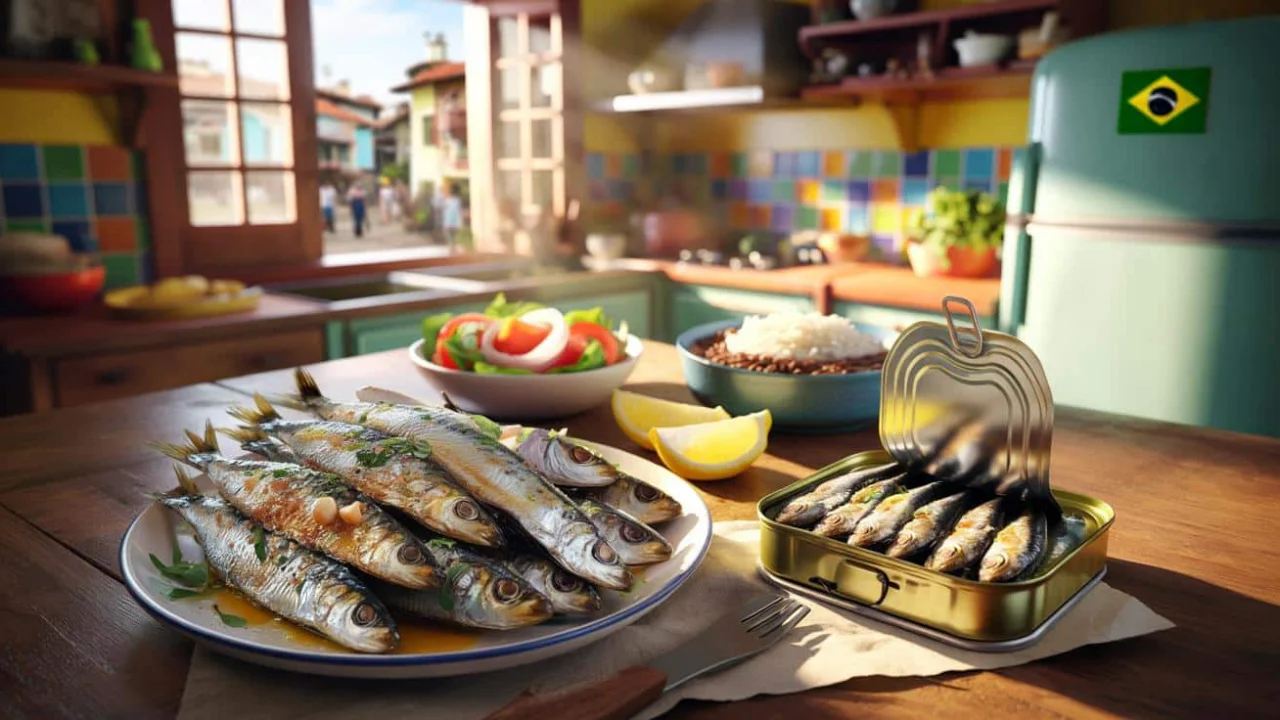
Maria stares at the grocery receipt in her hand, her eyes lingering on the beef price. Thirty reais for less than a kilo—enough to feed her family of four for maybe two meals. She folds the paper and walks to the fish counter, where silvery sardines glisten on crushed ice. The fishmonger notices her hesitation and smiles knowingly.
“My grandmother used to say sardines were God’s gift to working people,” he tells her. “Smart woman, your grandmother.” Maria picks up two kilos. For the first time in months, she leaves the market knowing everyone will eat well tonight.
This scene plays out across Brazil every day, as families rediscover a fish their parents and grandparents knew well. Sardines demand has quietly surged, transforming what was once considered “poor people’s food” into a sought-after staple that crosses all social lines.
How Economic Pressure Created an Unlikely Food Hero
Walk through any Brazilian market today and you’ll witness something remarkable. The sardine section, once tucked away in a forgotten corner, now commands prime real estate. Fresh sardines pile high on ice while canned varieties occupy entire supermarket aisles. The reason is brutally simple: everything else got too expensive.
Brazil’s inflation hit protein sources particularly hard over the past decade. Beef prices soared by over 60%, pushing what was once a daily staple into special occasion territory. Chicken followed suit, leaving families scrambling for affordable alternatives that could still put satisfying meals on the table.
“We’re seeing customers who never bought sardines before asking for preparation tips,” says Roberto Silva, who runs a fish market in São Paulo’s Vila Madalena neighborhood. “These aren’t people trying to save money for vacations—these are middle-class families trying to feed their kids without breaking the bank.”
The shift happened gradually, then all at once. During the pandemic, canned sardine sales jumped as people stocked pantries with non-perishables. But when restrictions lifted, the buying didn’t stop. Fresh sardines demand continued climbing, creating supply pressures that fishermen hadn’t seen in decades.
The Numbers Behind the Sardine Renaissance
Market data reveals the dramatic transformation of sardines from overlooked to essential. The statistics tell a story of economic necessity driving unexpected food trends across Brazil’s diverse regions.
| Year | Sardine Consumption (tons) | Price per kg (R$) | Compared to Beef Price |
|---|---|---|---|
| 2019 | 125,000 | 8.50 | 5x cheaper |
| 2021 | 156,000 | 12.00 | 6x cheaper |
| 2023 | 198,000 | 15.50 | 7x cheaper |
| 2024 | 225,000 | 18.00 | 8x cheaper |
The surge in sardines demand extends beyond pure economics. Social media played an unexpected role, with food influencers discovering that grilled sardines photograph beautifully and deliver authentic Brazilian flavor profiles. What started as budget-conscious cooking became genuinely trendy.
Key factors driving increased consumption include:
- Dramatic price gaps between sardines and traditional proteins
- Growing awareness of nutritional benefits and sustainability
- Improved distribution networks reaching inland markets
- Restaurant chains adding sardine dishes to menus
- Cultural shift away from protein-based status symbols
- Increased availability of fresh (not just canned) varieties
“The sardine market completely caught us off guard,” admits Carlos Mendoza, a seafood distributor based in Recife. “We had to triple our ordering just to keep up with demand from restaurants and markets that never carried them before.”
Why Health Experts Are Celebrating This Trend
While economists track sardines demand through market data, nutritionists see something even more valuable: a population accidentally eating better. Sardines pack more nutrition per real spent than virtually any other protein source available to Brazilian consumers.
Dr. Ana Lucia Santos, a clinical nutritionist in Brasília, calls the sardine trend “an unexpected public health victory.” Her reasoning is straightforward: sardines deliver complete protein, essential omega-3 fatty acids, vitamin D, and calcium when eaten whole—all while remaining accessible to families across income levels.
The mercury concern that shadows larger fish species doesn’t apply to sardines. They feed on plankton and small organisms, sitting low on the marine food chain where toxins don’t concentrate. This makes them safer for pregnant women, children, and anyone eating fish regularly.
Health benefits driving increased sardines demand include:
- High protein content supporting muscle development and maintenance
- Omega-3 fatty acids promoting heart and brain health
- Low mercury levels compared to larger predatory fish
- Calcium and phosphorus supporting bone health
- B vitamins essential for energy metabolism
- Sustainable fishing practices protecting marine ecosystems
“I tell my patients that sardines are like a multivitamin you can actually enjoy eating,” Dr. Santos explains. “The fact that they’re affordable makes it possible for families to eat nutritious fish multiple times per week instead of treating it as an occasional luxury.”
The Cultural Shift That Changed Everything
Perhaps the most fascinating aspect of rising sardines demand is how it reflects changing Brazilian attitudes toward food and social status. Sardines were historically associated with economic hardship—something you ate when you couldn’t afford “better” options.
That stigma is rapidly disappearing, replaced by pride in eating intelligently and sustainably. Young professionals post grilled sardine lunches on social media with captions celebrating both flavor and financial wisdom. Upscale restaurants feature sardine dishes alongside premium offerings, treating them as a legitimate culinary choice rather than a budget alternative.
The transformation accelerated when celebrity chefs began incorporating sardines into sophisticated preparations. Suddenly, the same fish that once embarrassed teenagers was appearing in food magazines and restaurant reviews. The cultural permission to enjoy sardines without apology spread quickly through Brazilian society.
“My daughter used to be mortified when I cooked sardines,” laughs Teresa Oliveira, a teacher from Porto Alegre. “Now she asks me to make extra so she can bring some to work. Her colleagues started asking for the recipe.”
This cultural shift extends to fishing communities, where increased sardines demand has revitalized local economies. Boats that struggled to sell their catch now find steady buyers. Processing facilities have expanded operations. The entire supply chain benefits when a previously ignored species becomes genuinely popular.
Restaurant owners report that sardine dishes often become customer favorites once people overcome initial hesitation. The key is preparation—proper cleaning, seasoning, and cooking techniques that highlight sardines’ natural flavors while minimizing any “fishy” characteristics that might put off newcomers.
What This Means for Brazil’s Food Future
The sardines demand boom represents something larger than a single food trend. It signals a population adapting to economic realities while accidentally discovering sustainable, nutritious alternatives to resource-intensive proteins.
This shift could influence agricultural and fishing policies for years to come. Government officials are taking notice of foods that can deliver nutrition and food security without straining natural resources or family budgets. Sardines check both boxes while supporting coastal fishing communities that need economic opportunities.
The environmental implications are particularly promising. Sardines reproduce quickly, require minimal ocean resources, and their fishing has a much smaller environmental footprint than cattle ranching or industrial chicken production. As Brazil grapples with climate change and deforestation concerns, sardines offer a protein source that aligns with sustainability goals.
“We’re watching people make choices that are good for their health, their wallets, and the environment all at once,” observes Dr. Marina Costa, a fisheries economist at the Federal University of Rio de Janeiro. “That combination is rare in food systems.”
FAQs
Why are sardines called “poor people’s fish” in Brazil?
Historically, sardines were one of the cheapest protein sources available, so they became associated with families who couldn’t afford more expensive meats or fish. This stigma is now fading as people recognize their value.
Are fresh sardines better than canned ones?
Both offer excellent nutrition, but fresh sardines provide more control over preparation and typically contain less sodium than canned varieties. Canned sardines offer convenience and longer storage life.
How much do sardines cost compared to other proteins in Brazil?
Fresh sardines typically cost about 8 times less than beef and 3-4 times less than chicken per kilogram, making them extremely budget-friendly while providing complete protein.
Do sardines really have health benefits?
Yes, sardines are rich in omega-3 fatty acids, complete protein, vitamin D, calcium, and B vitamins while being low in mercury compared to larger fish species.
How should beginners prepare sardines?
Start with simple grilled sardines seasoned with coarse salt, garlic, and lemon. The key is fresh fish, proper cleaning, and not overcooking. Many markets will clean them for customers.
Is the increased demand for sardines sustainable?
Sardines reproduce quickly and are considered a sustainable fish choice when properly managed. Their low position on the food chain makes them more environmentally friendly than many alternatives.


