
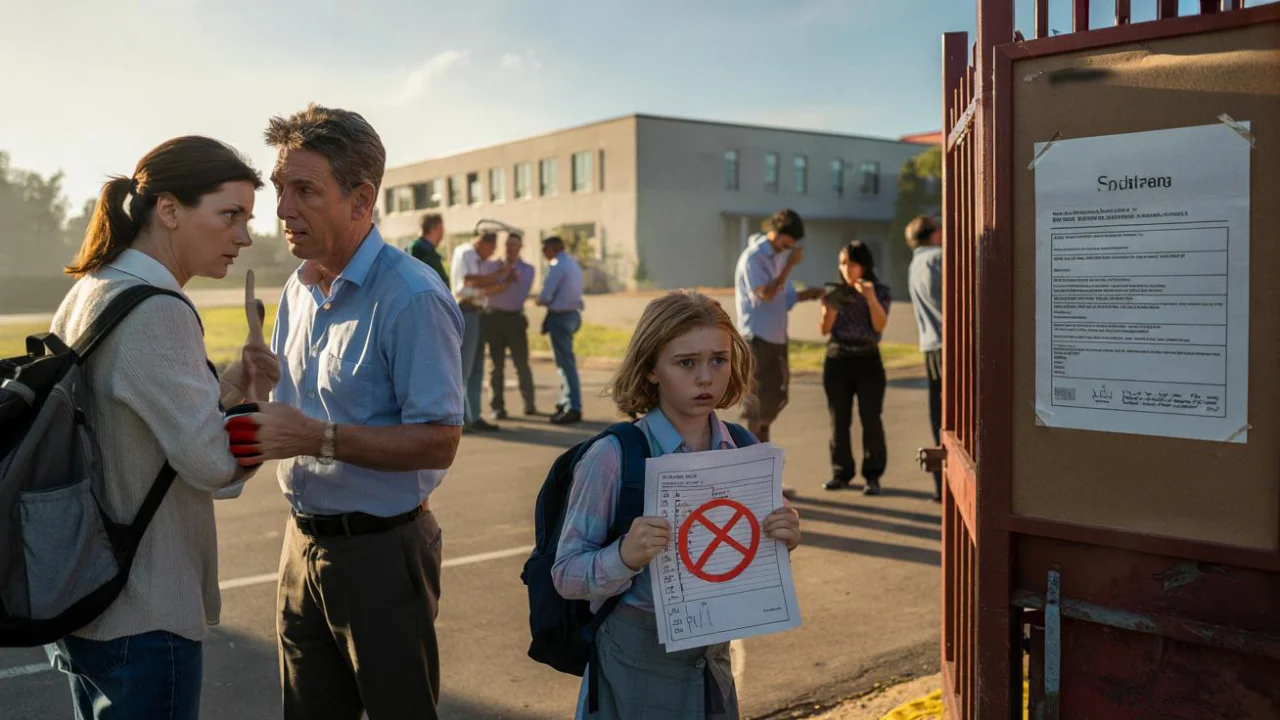
Sarah Martinez stared at her phone screen, reading the school’s email for the third time. Her 14-year-old daughter Emma had just failed her second major math assessment this semester. According to the new school failing policy, that meant one thing: Emma would have to repeat ninth grade.
“This can’t be happening,” Sarah whispered to her husband across the kitchen table. “She’s been struggling with anxiety all year, but she’s not stupid. She just needs more support.”
What started as a simple academic policy announcement has now become the most divisive issue their community has ever faced. Families are choosing sides, friendships are cracking, and some marriages are barely surviving the stress of wondering if their child will be the next victim of this unforgiving rule.
The policy that’s dividing parents everywhere
The school failing policy is brutally simple: any student who fails two major assessments in a single academic year must repeat the entire grade. No consideration for personal circumstances, learning disabilities, family crises, or mental health struggles.
Dr. Jennifer Walsh, an educational psychologist with 20 years of experience, calls it “academic cruelty disguised as high standards.” She explains, “This policy treats children like manufacturing products instead of developing human beings with complex needs.”
The school board defends their decision with data showing declining test scores over the past three years. They argue that without consequences, students won’t take their education seriously. But critics point out that this approach ignores the real reasons why children struggle academically.
Parent support groups have formed on both sides. The “Accountability First” faction believes tough consequences will motivate students to work harder. Meanwhile, the “Children First” group argues that this policy will destroy vulnerable kids who need help, not punishment.
Who gets hurt by zero-tolerance academic policies
The impact of this school failing policy reaches far beyond report cards. Here’s who faces the biggest challenges:
| Affected Group | Primary Impact | Long-term Consequences |
|---|---|---|
| Students with learning disabilities | Higher failure rates despite effort | Increased dropout risk, damaged self-esteem |
| Families in crisis | Academic performance drops during stress | Children punished for circumstances beyond control |
| Economically disadvantaged students | Limited access to tutoring/support | Widening achievement gap |
| Students with mental health issues | Anxiety and depression affect test performance | Academic trauma, school avoidance |
The data tells a concerning story. Students from single-parent homes are 40% more likely to fail under strict academic policies. Children dealing with divorce, illness, or financial instability at home often see their grades suffer through no fault of their own.
- Test anxiety affects up to 20% of students, making high-stakes assessments unreliable measures of ability
- Learning differences like dyslexia or ADHD make traditional testing formats particularly challenging
- Family stress directly correlates with academic performance, regardless of a child’s intelligence
- Grade retention costs school districts an average of $18,000 per student annually
Marcus Thompson, a veteran teacher with 15 years in the classroom, shares his frustration: “I’ve watched brilliant kids fail tests because their parents were getting divorced or they couldn’t afford breakfast. This policy punishes children for being human.”
When families turn against each other
The most shocking casualty of this school failing policy might be the relationships it’s destroying. Parent WhatsApp groups that once shared carpooling schedules now explode with heated arguments about academic standards versus compassion.
Lisa Chen discovered this firsthand when her best friend of eight years stopped speaking to her. “I supported the policy because I thought it would help all kids work harder,” Lisa explains. “But when her son failed his second test due to his autism struggles, she blamed me for backing something that hurt her family.”
Marriage counselors report a surge in couples seeking help for education-related conflicts. Parents disagree about whether to fight the policy, move their children to different schools, or accept the consequences.
The pressure extends to children who watch their parents stress, argue, and sometimes cry over report cards that once seemed manageable. Child psychologist Dr. Amanda Rivera warns, “When academic performance becomes the measure of a child’s worth, we’re creating trauma that lasts long after graduation.”
Some families have made drastic decisions. The Johnsons sold their home to move to a different school district. The Williams family hired private tutors they can’t really afford, going into debt to protect their daughter from grade retention.
What happens next for struggling students
Schools implementing harsh failing policies see mixed results that don’t match the promised improvements. While some students do show short-term grade increases driven by fear, others shut down completely under the pressure.
Research from similar policies shows troubling patterns:
- Increased anxiety and depression among students
- Higher absenteeism as struggling students avoid school
- More families seeking private school alternatives
- Teachers spending more time on test preparation than actual learning
Educational consultant Rebecca Martinez has studied zero-tolerance academic policies across multiple districts. “The schools that succeed long-term focus on support systems, not punishment systems,” she notes. “Fear-based motivation backfires more often than it works.”
Parents are demanding alternatives like:
– Mandatory tutoring before grade retention
– Mental health assessments for struggling students
– Extended time options for students with documented challenges
– Parent-teacher conferences before implementing consequences
The debate continues in school board meetings that now require security guards due to heated exchanges between community members. What started as an academic policy has become a defining moment for how society treats children who struggle.
FAQs
Can parents appeal a grade retention decision under this policy?
Most schools with strict failing policies offer limited appeal processes, but success rates are typically very low since the rules allow few exceptions.
Do private schools follow the same failing policies as public schools?
Private schools set their own academic policies and often have more flexibility to consider individual student circumstances when making retention decisions.
How do colleges view students who were held back due to failing policies?
Grade retention can impact college applications, but admissions officers usually focus more on overall academic trends and extracurricular achievements than isolated setbacks.
Are there legal protections for students with learning disabilities?
Students with documented disabilities may have additional protections under federal law, but enforcement varies widely between school districts.
What can parents do if they disagree with their school’s failing policy?
Parents can attend school board meetings, organize with other families, contact elected officials, or consider alternative schooling options if available in their area.
Do harsh academic policies actually improve student performance?
Research shows mixed results, with some short-term improvements but often negative long-term effects on student mental health and motivation to learn.


