
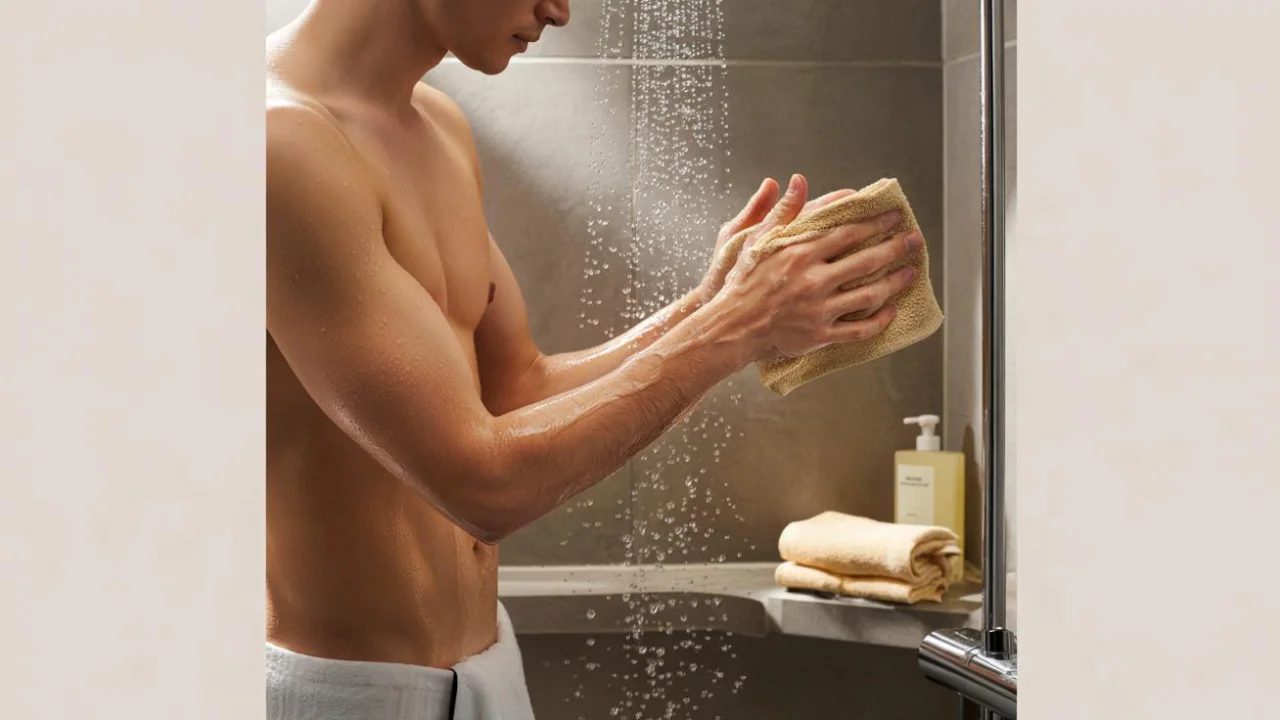
Sarah stared at the damp washcloth hanging limply on the shower rail, its once-bright blue fabric now a questionable shade of grey-green. Her flatmate had been using it for weeks, and the thought of touching it to her skin made her stomach turn slightly. “Forget it,” she muttered, squeezing body wash directly onto her palms. “My hands will have to do.”
This daily bathroom dilemma plays out in homes across the world. Some people can’t imagine showering without their trusty flannel or washcloth, scrubbing away with the confidence that comes from feeling properly clean. Others find the whole concept revolting and stick religiously to their hands, convinced this approach is more hygienic.
But which shower hygiene method actually wins when it comes to getting truly clean? Emergency doctor and public health specialist Dr Gérald Kierzek has weighed in on this surprisingly heated debate, and his verdict might surprise you.
The Great Shower Divide: Why This Matters More Than You Think
The flannel versus hands debate isn’t just about personal preference – it’s become a generational and cultural battleground. A recent French survey revealed that over half of people under 35 now shower using only their hands, while older generations remain loyal to washcloths and flannels.
“The shift is partly practical and partly about changing perceptions of cleanliness,” explains Dr Kierzek. “Younger people often live in shared accommodation where personal items get mixed up, or they’ve simply been influenced by the idea that touching fabric to skin somehow transfers more germs.”
The stakes feel higher than they should. After all, we’re talking about something we do almost every day of our lives. Getting it wrong could mean carrying bacteria, missing dead skin, or damaging our skin’s natural protective barrier.
Take the story of Marcus, a 28-year-old teacher who switched from flannels to hands after reading online that washcloths were “bacterial breeding grounds.” Within a month, he noticed his skin felt rougher, and his dermatologist pointed out a buildup of dead skin on his elbows and heels that his gentle hand-washing wasn’t removing.
Breaking Down the Science of Shower Hygiene Methods
Dr Kierzek’s analysis reveals that both methods have distinct advantages and disadvantages. The key lies in understanding what each approach actually does to your skin and the microorganisms living on it.
“A flannel or washcloth provides mechanical exfoliation,” he explains. “It physically removes dead skin cells, sweat, and surface bacteria more effectively than hands alone. But only if it’s clean and used properly.”
Here’s what the science tells us about each method:
| Method | Cleaning Effectiveness | Bacterial Risk | Skin Impact |
|---|---|---|---|
| Clean Flannel/Washcloth | High – removes dead skin and debris | Low when properly maintained | Good exfoliation, may irritate sensitive skin |
| Hands Only | Moderate – relies mainly on soap | Very Low | Gentle, preserves skin barrier |
| Dirty/Damp Flannel | Low – may redeposit bacteria | High – bacterial breeding ground | Potential for infections and irritation |
The research shows that unwashed flannels can harbor dangerous bacteria within 24-48 hours, especially in warm, humid bathroom environments. Staphylococcus and streptococcus bacteria thrive in these conditions, potentially leading to skin infections.
However, hands aren’t perfect either. Studies indicate that hand-washing alone may not remove all dead skin cells and can miss areas where bacteria and sweat accumulate, particularly in skin folds and rougher areas like heels and elbows.
What The Experts Really Recommend
Dr Kierzek’s verdict challenges both camps: “The question isn’t flannel versus hands – it’s about doing either method properly. A dirty flannel is worse than clean hands, but clean hands might not be as effective as a properly maintained washcloth.”
His recommendations for optimal shower hygiene methods include:
- If using a flannel: wash it after every use and let it dry completely between showers
- Replace washcloths weekly, even with proper care
- For hands-only washing: spend extra time on areas prone to bacterial buildup
- Use lukewarm water rather than hot to preserve skin’s natural oils
- Focus on mechanical action rather than harsh scrubbing
“I see patients who’ve developed skin problems from both extremes,” notes dermatologist Dr Anna Foster, who wasn’t involved in the original study. “Over-scrubbing with rough flannels can damage the skin barrier, while under-cleaning can lead to bacterial overgrowth in vulnerable individuals.”
The Real-World Impact on Your Daily Routine
For most healthy adults, either method can work well when done correctly. The choice often comes down to practical considerations: lifestyle, skin sensitivity, and personal circumstances.
People with certain skin conditions may need to be more careful. Those with eczema or psoriasis might find flannels too irritating, while individuals prone to body acne might benefit from the gentle exfoliation a clean washcloth provides.
“I tell my patients to listen to their skin,” says Dr Kierzek. “If you’re getting frequent infections, breakouts, or irritation, it might be time to reassess your shower routine.”
The practical reality is that consistency matters more than perfection. Someone who reliably washes with clean hands and good soap will likely have better hygiene than someone who occasionally uses a questionable flannel.
Environmental factors play a role too. In shared living situations, maintaining clean personal flannels becomes more challenging. In these cases, hands-only washing might genuinely be the more hygienic choice.
Cost considerations aren’t negligible either. Quality washcloths need regular replacement, while your hands come free and are always available.
Making the Choice That Works for You
The bottom line, according to Dr Kierzek, is that both shower hygiene methods can be effective when done properly. The “cleaner” option is whichever one you can maintain consistently and correctly.
For those committed to flannels, invest in several high-quality washcloths, wash them after each use, and replace them frequently. For hands-only advocates, focus on thorough coverage and don’t skip the areas that need extra attention.
“Perfect hygiene isn’t about following rigid rules,” concludes Dr Kierzek. “It’s about understanding the principles and adapting them to your real life.”
FAQs
How often should I replace my washcloth?
Ideally weekly, or immediately if it develops an odor or doesn’t dry properly between uses.
Can I share flannels with family members?
It’s best to avoid sharing, as this can transfer bacteria and skin conditions between people.
Is it true that hands are always more hygienic than washcloths?
No, clean washcloths can be more effective at removing dead skin and bacteria, but dirty ones are definitely worse than clean hands.
Should I wash my flannel in hot water?
Yes, hot water helps kill bacteria, and adding a bit of bleach or antibacterial detergent can provide extra protection.
How do I know if my shower method is working?
Your skin should feel clean without being irritated, and you shouldn’t experience frequent breakouts or infections.
What about people with sensitive skin?
Those with eczema or very sensitive skin often do better with gentle hand-washing using fragrance-free products.


