
Sarah Martinez thought she had a handle on her 14-year-old’s school day until the text came in during her Tuesday morning meeting: “Mom, I forgot my lunch money. Can you bring it?” Then another: “Never mind, borrowed from Jake.” Then: “Actually, can you still bring it? Jake wants his back.”
By 10 AM, Sarah had received seven texts from her daughter about lunch money, a lost pencil, and whether she could stay after school for drama club. Meanwhile, her daughter’s English teacher was trying to discuss Shakespeare while half the class secretly responded to their parents’ messages under their desks.
That afternoon, Sarah got the email: the school was implementing a smartphone ban at school starting Monday. Her first reaction was panic. Her second was relief. Her third was anger at feeling both.
The daily tug-of-war over teenage attention spans
Walk into any high school classroom today and you’ll witness a subtle choreographed dance. Students master the art of checking phones while appearing to take notes. Teachers develop hawk-like peripheral vision to catch the telltale glow of screens. Parents sit in office meetings, wondering why their teenager hasn’t responded to “How was the test?” sent three minutes ago.
This isn’t just about technology anymore. The smartphone ban at school debate has become a proxy war for deeper anxieties about safety, control, and whether we’re raising a generation that can’t focus for more than 30 seconds.
Dr. Jennifer Walsh, an educational psychologist who works with schools nationwide, puts it bluntly: “We’re asking teenagers to ignore a device designed by some of the smartest engineers in the world to be irresistible, and then we act surprised when they can’t.”
The numbers tell the story. Students now check their phones an average of 150 times during a six-hour school day. That’s once every 2.4 minutes. Teachers report spending up to 20% of class time managing phone-related disruptions, from students secretly texting to dealing with social media drama that follows kids into classrooms.
What each side actually fears losing
The smartphone ban at school conversation splits families and faculty because everyone’s fighting for something different. Here’s what’s really at stake for each group:
| Group | Primary Concern | What They Fear Losing |
|---|---|---|
| Parents | Safety and communication | Ability to reach child in emergencies |
| Students | Social connection and autonomy | Access to support networks and personal freedom |
| Teachers | Classroom management and engagement | Students’ attention and learning focus |
| Administrators | Academic performance and school culture | Control over learning environment |
Parents often view phones as digital umbilical cords. They remember their own childhoods when they couldn’t reach their parents for eight hours straight, but that was a different world. Today’s parents navigate divorce schedules via text, coordinate after-school pickups in real-time, and monitor their children’s emotional states through emoji choices.
“I need to know my daughter is okay,” explains Maria Rodriguez, whose 16-year-old attends a school considering a phone ban. “She has anxiety, and sometimes she needs to text me during lunch just to feel grounded. Taking that away feels cruel.”
Students, meanwhile, see phones as lifelines to their social world and coping mechanisms for stress. For many teenagers, their phone contains their support system, their entertainment, their way of staying connected to friends who understand them better than adults do.
Teachers tell a different story entirely. Mark Thompson, a high school history teacher with 15 years of experience, describes the change: “I used to have students who would debate historical events with passion. Now I have kids who can’t maintain eye contact for a full sentence because they’re worried about missing a notification.”
The surprising results when schools actually try phone bans
Schools that have implemented smartphone bans at school report dramatically different outcomes depending on how they measure success. The data reveals why this debate gets so heated:
- Academic performance: Test scores typically improve by 6-14% within the first semester
- Social interaction: Face-to-face conversations during lunch increase by 40-60%
- Bullying incidents: Cyberbullying drops, but some traditional bullying behaviors increase initially
- Emergency communication: No significant delays in reaching students during actual emergencies
- Student anxiety: Mixed results – some students feel calmer, others report increased stress
- Parent complaints: Spike dramatically in the first month, then gradually decrease
Lincoln High School in Oregon implemented a complete smartphone ban at school last year. Principal Janet Morrison describes the first week as “chaos.” Parents called the office 200% more than usual. Students staged a brief walkout. Three teachers requested transfers.
But by month three, something shifted. “Students started talking to each other at lunch again,” Morrison says. “Teachers could finish sentences without competing with TikTok. Parents stopped expecting instant responses and started trusting the school’s communication systems.”
However, the success wasn’t universal. Some students with anxiety disorders struggled without their coping mechanisms. Parents working multiple jobs found it harder to coordinate family logistics. A few families transferred to schools with more flexible policies.
Finding middle ground in the smartphone battlefield
The most successful smartphone ban at school policies don’t actually ban phones completely. They create structured boundaries that acknowledge everyone’s needs while prioritizing learning.
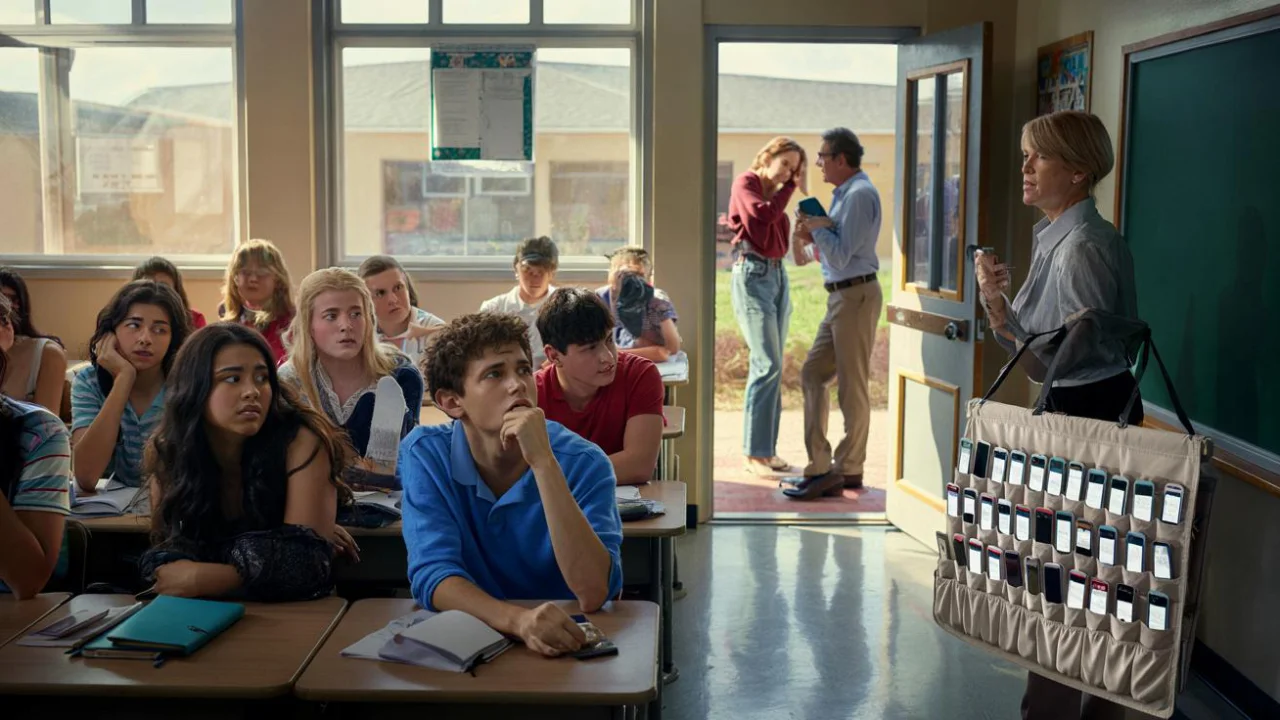
Some schools use “phone hotels” – pouches or lockers where students store devices during class but can access them during breaks. Others allow phones in backpacks but enforce strict consequences for use during instruction. A few have designated “phone zones” where students can check messages between classes.
Dr. Michael Chen, who studies adolescent behavior and technology, suggests the debate misses a crucial point: “We’re arguing about the tool instead of teaching the skill. Students need to learn how to manage their relationship with technology, not just avoid it.”
The most telling evidence comes from students themselves. Exit surveys from schools with phone restrictions show that 60% of students initially oppose the policies but 70% eventually support them once they experience the benefits.
As one sophomore wrote in her school newspaper: “I hated the phone ban at first. I felt cut off and anxious. But now I actually listen in class instead of pretending to while scrolling Instagram. I never realized how much I was missing.”
The smartphone ban at school debate isn’t really about phones. It’s about the kind of childhood we want to preserve, the type of learning environment we value, and how we balance safety with growth. Until schools, parents, and students can have honest conversations about these deeper values, the battle over devices will continue to divide communities and families.
The cardboard box on the teacher’s desk isn’t just collecting phones. It’s collecting our anxieties, our hopes, and our fears about raising teenagers in a hyperconnected world.
FAQs
Can schools legally ban smartphones completely?
Yes, schools have the legal authority to restrict phone use during school hours, though specific policies vary by state and district.
What happens during real emergencies if phones are banned?
Schools maintain landline systems and staff communication protocols for emergencies, with most reporting no delays in emergency response times.
Do phone bans actually improve academic performance?
Research shows test scores typically improve by 6-14% when phones are restricted, with the biggest gains among previously struggling students.
How do parents stay in touch with their children during school?
Most schools with phone bans maintain office communication systems and allow emergency contact through main offices, similar to pre-smartphone eras.
What about students who need phones for medical reasons?
Schools typically provide exemptions for students with documented medical needs, diabetes monitoring, or other health-related requirements.
Do students actually support phone bans once they experience them?
Surveys show that while 60% initially oppose phone restrictions, 70% eventually support them after experiencing the benefits firsthand.


