
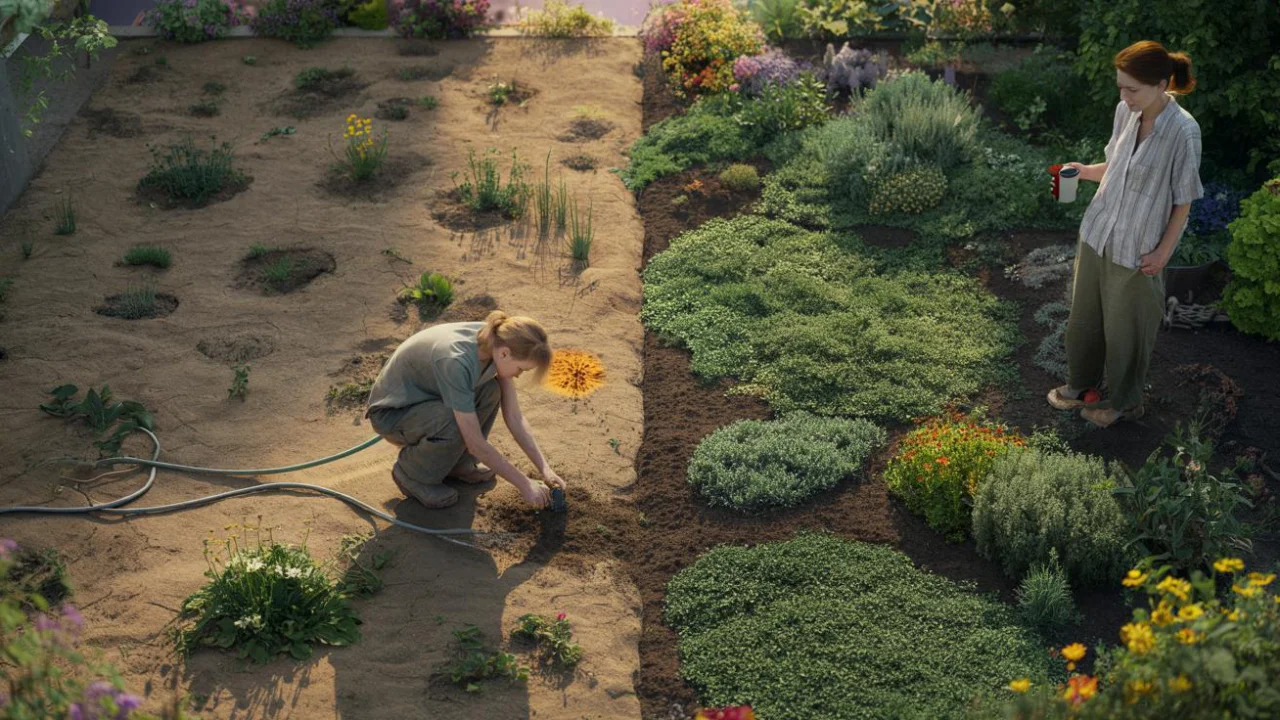
Sarah stared at her neighbor’s garden through the fence, coffee mug warming her hands on this early June morning. While she’d spent the weekend on her knees pulling weeds from bone-dry soil, Janet next door was casually watering her thriving vegetable patch with a gentle spray from the hose. No weeds in sight. No cracked earth. Just lush plants growing in what looked like a soft, dark blanket.
“How does she do it?” Sarah muttered, eyeing the bare patches in her own beds that seemed to sprout dandelions overnight. She’d been gardening for three years now, but every season felt like a battle against weeds, drought, and exhaustion.
That afternoon, Janet invited her over for tea and revealed her secret. “I haven’t seen bare soil in my garden for over a decade,” she said with a smile. “The trick isn’t working harder—it’s keeping the ground covered so it works for you.”
The Hidden Cost of Exposed Ground
Most gardeners don’t realize they’re creating their own problems the moment they leave soil uncovered. That neat, clean look after a thorough weeding session is actually a red flag. Bare soil is like leaving your front door wide open—you’re inviting trouble.
Every square inch of exposed earth becomes a landing pad for weed seeds carried by wind, birds, and passing animals. Without protection, the soil surface hardens into an impenetrable crust that repels water instead of absorbing it. Temperature swings stress plant roots, and beneficial soil organisms retreat deeper underground or die off entirely.
“I see gardeners fighting the same battles year after year because they’re treating symptoms, not causes,” explains Maria Rodriguez, a soil scientist from the University of California. “When you prioritize soil cover, you’re working with nature instead of against it.”
The contrast becomes obvious once you know what to look for. Gardens with proper soil cover stay moist longer, support healthier plant growth, and require dramatically less maintenance. The soil feels soft and springy underfoot, and weeds struggle to establish themselves in the shaded conditions.
Your Complete Guide to Soil Cover Methods
Creating effective soil cover doesn’t require expensive materials or complex techniques. The key is understanding which method works best for different areas of your garden and how to layer them for maximum benefit.
| Cover Type | Best For | Coverage Duration | Cost |
|---|---|---|---|
| Organic Mulch | Flower beds, vegetable gardens | 6-12 months | Low to moderate |
| Living Groundcover | Slopes, difficult areas | Permanent | Low (after establishment) |
| Dense Plantings | Mixed borders, naturalistic gardens | Seasonal to permanent | Moderate to high |
| Leaf Mold | Woodland gardens, acid-loving plants | 8-18 months | Free (DIY) |
The most successful gardeners combine multiple approaches:
- Start with mulch – Wood chips, straw, or shredded leaves provide immediate protection
- Plant groundcovers – Creeping thyme, ajuga, or pachysandra for permanent coverage
- Fill gaps strategically – Self-seeding annuals like calendula or nigella create natural infill
- Layer different heights – Tall perennials, medium shrubs, and low ground-huggers work together
- Leave beneficial weeds – Some “weeds” like clover actually improve soil while providing coverage
“The magic happens when you stop seeing empty space as something to fill and start seeing it as an opportunity to create a living system,” notes garden designer Tom Chen, who specializes in low-maintenance landscapes.
What Changes When You Embrace Soil Cover
The transformation doesn’t happen overnight, but gardeners who commit to soil cover typically notice changes within a single growing season. Watering becomes less frequent as covered soil retains moisture longer. Weeding drops from a weekly chore to an occasional touch-up.
Rachel Thompson from Portland, Oregon, documented her garden’s transition over three years. “The first year, I was skeptical,” she admits. “All that mulch looked a bit messy compared to my old bare-soil beds. But by year two, my water bill dropped 40% and I was spending Saturday mornings reading instead of weeding.”
The benefits extend beyond convenience. Covered soil supports complex underground ecosystems that improve plant health naturally. Beneficial insects find shelter in mulch layers. Birds discover more diverse food sources. Even earthworm populations increase dramatically.
Professional landscapers have noticed the trend too. “Clients are asking specifically for low-maintenance designs that prioritize soil health,” reports landscape contractor David Kim. “They want beautiful gardens without the weekend slavery.”
The economic impact makes sense when you calculate time saved. If a typical gardener spends 4-6 hours weekly on maintenance during growing season, reducing that to 1-2 hours through soil cover strategies adds up to 60+ hours of free time per year. That’s more than a week of vacation.
Making the Switch Without Overwhelm
Converting to a soil-covered garden doesn’t require tearing everything out and starting over. Smart gardeners tackle one section at a time, learning what works in their specific conditions before expanding the approach.
Start with your most problematic area—that patch where weeds always return first or where plants struggle most. Apply a thick layer of organic mulch and plant some quick-establishing groundcover around existing plants. Within a few months, you’ll see the difference in both plant health and your workload.
The key is thinking long-term. While bare soil looks “finished,” covered soil is just getting started. Each season builds on the last, creating increasingly resilient and self-maintaining garden ecosystems.
FAQs
How thick should mulch be for effective soil cover?
Aim for 2-4 inches of organic mulch, avoiding direct contact with plant stems to prevent rot issues.
Won’t soil cover attract pests and rodents?
Proper mulching actually supports beneficial insects that control harmful pests, while avoiding food-based materials prevents rodent attraction.
Can I use soil cover in vegetable gardens?
Absolutely—straw, grass clippings, and compost work excellently around vegetable plants and reduce watering and weeding significantly.
How long does it take to see results from soil cover?
Most gardeners notice reduced watering needs within weeks, with significant weed reduction appearing after 2-3 months.
Is soil cover expensive to maintain?
Initial setup costs are quickly offset by reduced water bills, fewer plant replacements, and less time spent on maintenance tasks.
What’s the best time of year to start using soil cover?
Spring and fall are ideal for establishing new coverage, but you can add mulch and groundcovers any time during the growing season.


