
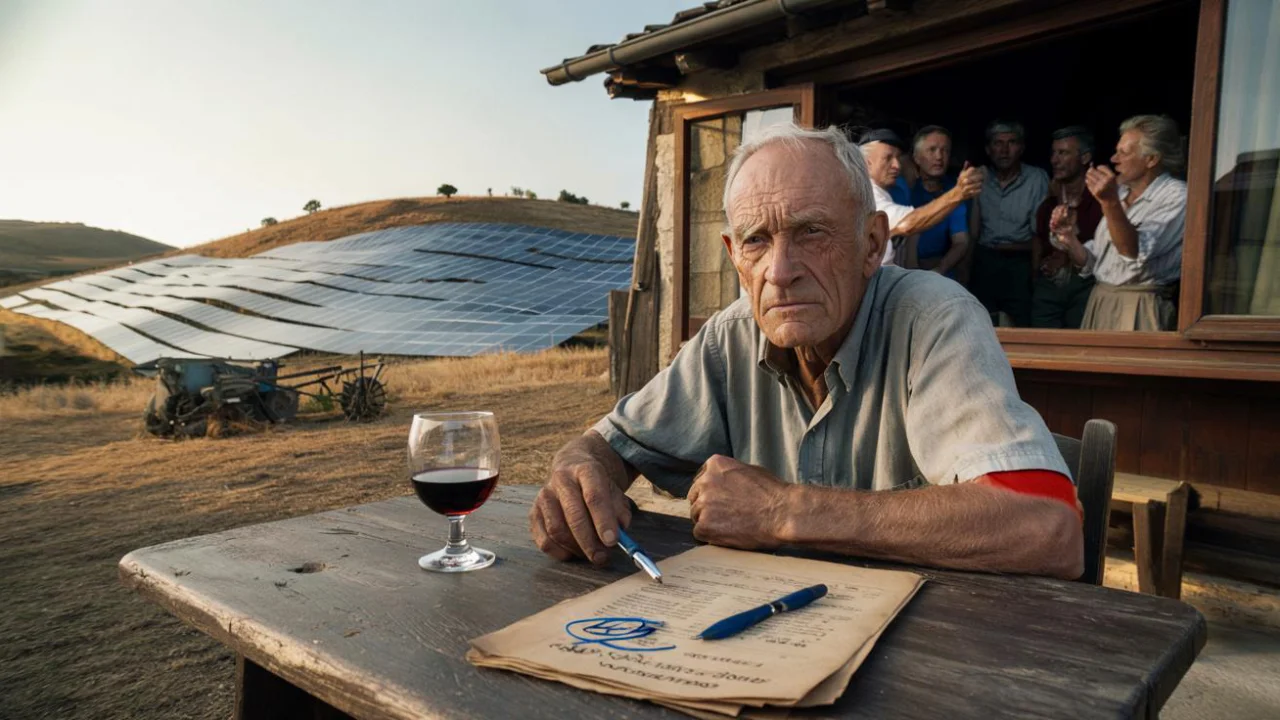
Marcel stared at the glossy brochure, its promises shining brighter than the afternoon sun streaming through his kitchen window. The energy company representative smiled warmly as she explained how his struggling farmland could become a “strategic asset” in the green energy revolution. After forty years of watching crops fail and debts pile up, the guaranteed monthly payments sounded like salvation.
He signed the solar farm contract with his father’s old blue pen, the same one he’d used to sign his marriage certificate decades ago. Within thirty minutes, generations of family land were locked into a 40-page agreement he barely understood. Today, those same fields are covered in black solar panels, and his entire village is torn between calling him a fool or a victim.
The aftermath has split the community down the middle, with neighbors choosing sides faster than they choose teams for the annual harvest festival.
How a Simple Solar Deal Became a Village War
Marcel’s story isn’t unique, but it’s become the flashpoint for a larger conversation about rural exploitation and renewable energy development. The 73-year-old retired farmer thought he was making a smart business decision when representatives from GreenField Energy knocked on his door last spring.
“They made it sound so simple,” Marcel recalls, stirring sugar into his evening wine at the local bar. “Turn your tired land into clean energy and get paid every month. What farmer wouldn’t want that?”
The solar farm contract promised annual payments of $2,400 per acre for the next 25 years, with options for renewal. For Marcel’s 15-acre hilltop property, that meant over $36,000 annually without lifting a finger. After decades of unpredictable harvests and rising fuel costs, the offer felt like winning the lottery.
But the fine print told a different story. Legal experts who’ve since reviewed the contract found clauses that heavily favor the energy company, including provisions that allow them to modify terms, extend the lease indefinitely, and restrict Marcel’s access to his own property.
“These contracts are designed to confuse, not clarify,” explains rural law attorney Sarah Hoffman, who’s seen dozens of similar cases. “Companies use technical language and overwhelming document lengths to discourage farmers from seeking legal advice.”
The Hidden Costs of Solar Farm Agreements
What seemed like a straightforward deal quickly revealed its complexity once construction began. The solar installation required extensive modifications to Marcel’s property, including new access roads, electrical infrastructure, and security fencing that effectively cut him off from portions of his own land.
Here’s what Marcel’s solar farm contract actually included:
- 25-year initial lease with automatic renewal options
- Company rights to modify property as needed for operations
- Restrictions on Marcel’s use of surrounding areas
- Limited liability for environmental damage
- Termination clauses heavily favoring the energy company
- No inflation adjustments to rental payments
| Contract Element | What Marcel Thought | What It Actually Means |
|---|---|---|
| 25-year lease | Guaranteed income for life | Land locked up until age 98 |
| $2,400 per acre annually | Great passive income | Fixed rate with no inflation protection |
| Property modifications | Minor adjustments | Permanent infrastructure changes |
| Renewal options | Flexible future planning | Company can extend automatically |
Energy market analyst David Chen notes that solar developers often target struggling rural communities where landowners are desperate for stable income. “The economics work heavily in the company’s favor,” he explains. “They’re essentially paying pennies for prime real estate while generating millions in energy revenue.”
Marcel’s land will likely produce enough electricity to power 400 homes annually, generating an estimated $150,000 in revenue for GreenField Energy each year. His $36,000 payment represents roughly 24% of that income, well below industry standards for similar agreements.
When Family Legacy Meets Financial Desperation
The village backlash intensified when Marcel’s adult children discovered they’d lost their inheritance without consultation. His daughter Marie drove six hours from the city to confront him, shouting about betrayed family trust and stolen futures.
“This land has been in our family for three generations,” Marie told neighbors at the local market. “He had no right to sign it away without telling us.”
But Marcel remains unrepentant, even as relationships fracture around him. His response to critics has become the village’s most quoted phrase: “Better robbed than rotting poor on dead soil.”
The comment reflects a harsh rural reality that outsiders often miss. Marcel’s farming operation was failing long before the solar company arrived. Rising equipment costs, unpredictable weather, and falling crop prices had left him choosing between paying property taxes and buying groceries.
“People calling me stupid don’t understand,” Marcel says. “I was going to lose this land anyway. At least now I can eat.”
Rural sociologist Dr. Emily Patterson has studied similar conflicts across farming communities. “These situations expose the impossible choices facing rural Americans,” she notes. “When traditional livelihoods fail, people grab whatever lifeline appears, even if the terms aren’t ideal.”
The solar farm contract dispute has revealed deep divisions within the community about progress, tradition, and economic survival. Some neighbors support Marcel’s pragmatic choice, while others see it as betraying rural values.
Local mayor Jim Rodriguez tried mediating between the factions but admits the situation remains tense. “Everyone’s hurting financially, so emotions run high when someone finds a way out,” he says.
The Bigger Picture Behind Rural Solar Contracts
Marcel’s situation reflects a nationwide trend as renewable energy companies increasingly target rural areas for large-scale solar development. These projects offer struggling farmers immediate income but often come with complex long-term consequences.
Consumer protection advocates are pushing for stronger regulations around solar farm contracts, including mandatory cooling-off periods and required legal reviews. Several states have introduced legislation requiring companies to provide simplified contract summaries and extended consideration periods.
The controversy has also sparked broader conversations about rural economic development and sustainable farming alternatives. Some community leaders argue that rather than leasing land to outside companies, farmers need better support for diversified agriculture and local energy cooperatives.
For now, Marcel continues his daily routine of coffee at sunrise and wine at sunset, largely ignoring the ongoing drama his signature created. The solar panels hum quietly above the village, generating clean energy and bitter feelings in equal measure.
Whether Marcel was scammed or simply made a difficult choice remains the subject of heated debate at every local gathering. But his land is locked up for at least the next quarter-century, and his family relationships may take even longer to heal.
FAQs
What should farmers know before signing solar farm contracts?
Always have a lawyer review the agreement, understand all long-term restrictions, and research the company’s track record with other landowners.
Are solar lease payments fair compared to energy profits?
Most solar farm contracts pay landowners 20-30% of the energy revenue generated, which experts consider below market rate for such valuable land use.
Can farmers break solar farm contracts once signed?
Breaking these contracts is extremely difficult and expensive, as they typically include heavy penalties and favor the energy company in disputes.
How long do solar farm agreements typically last?
Most contracts run 20-40 years with automatic renewal options, effectively removing land from family control for generations.
What alternatives exist to traditional solar farm leases?
Some farmers explore community solar cooperatives, agrivoltaics (combining farming with solar), or shorter-term agreements with better terms.
Should family members be involved in major land decisions?
Legal experts strongly recommend discussing major property decisions with family members, as these choices affect inheritance and future generations.


