
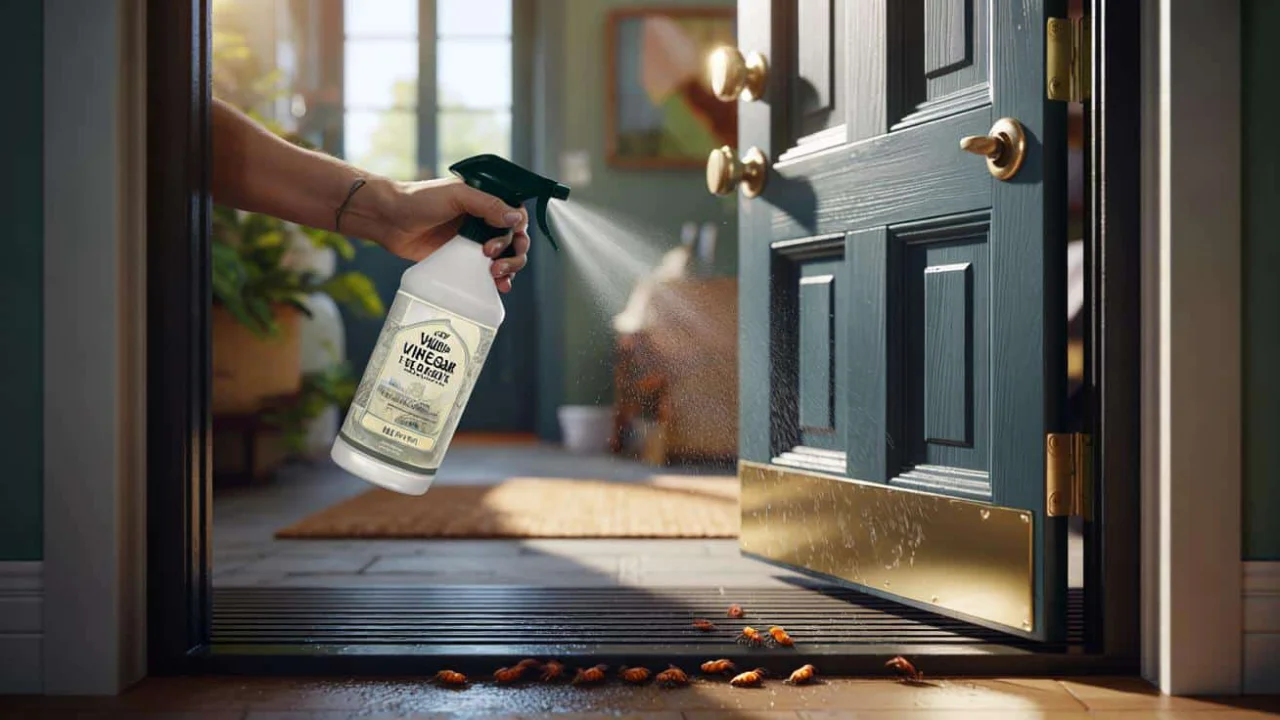
Maria discovered her grandmother’s vinegar habit by accident. She’d arrived early to help with Sunday dinner and caught the elderly woman spraying something clear from an old Windex bottle onto the front door frame. “Abuela, what are you doing?” Maria asked, expecting to hear about a stubborn stain.
Instead, her grandmother smiled and said, “Keeping the bad energy out, mija. And the ants.” She handed Maria the bottle—pure white vinegar, nothing else. “My mother taught me this when I was your age. Works better than those expensive cleaners.”
That was three years ago. Now Maria finds herself doing the same thing every Sunday morning, spraying vinegar on her own front door. Half the time she feels silly about it. The other half, she notices how clean and fresh her entrance always looks.
What’s Really Behind the Vinegar Door Trend
The practice of spraying vinegar on the front door has exploded across social media platforms, neighborhood groups, and family traditions. What started as scattered folk wisdom has become a genuine phenomenon, with people sharing videos and testimonials about this simple household hack.
The trend combines practical cleaning benefits with psychological comfort. Vinegar naturally eliminates odors, dissolves mineral deposits, and creates an unwelcoming environment for certain pests. But there’s something deeper happening here—people are reclaiming control over their personal space in a world that often feels chaotic.
“I see clients who feel overwhelmed by everything happening outside their homes,” explains Dr. Jennifer Walsh, a behavioral psychologist. “Small rituals like this give them a sense of agency. They’re literally cleaning the boundary between their private world and everything else.”
The front door represents more than just an entrance. It’s where first impressions form, where mail carriers and neighbors interact with your space, and where you transition from public to private life every single day.
The Science and Superstition Behind Door Vinegar
Spraying vinegar on your front door delivers measurable benefits that go beyond wishful thinking. White vinegar contains acetic acid, which breaks down grime, neutralizes alkaline odors, and creates conditions that many insects prefer to avoid.
Here’s what actually happens when you use vinegar on your entrance:
- Removes soap scum and water spots from glass panels
- Eliminates pet odors that might attract other animals
- Dissolves salt residue from winter weather
- Creates an acidic environment that deters ants and spiders
- Cuts through fingerprints and smudges on metal handles
- Neutralizes cigarette smoke and food odors
The cultural beliefs surrounding vinegar cleaning run much deeper than modern trends. In many Mediterranean and Latin American traditions, vinegar has been used for spiritual cleansing for generations. While science can’t validate claims about “negative energy,” the psychological impact of maintaining a clean, fresh-smelling entrance is undeniable.
| Vinegar Concentration | Best For | Frequency |
|---|---|---|
| 50/50 with water | Regular maintenance | Weekly |
| Full strength | Tough odors, pest deterrent | Monthly |
| 25/75 with water | Delicate surfaces | As needed |
“The antimicrobial properties of vinegar are well-documented,” notes Dr. Robert Chen, a microbiologist at State University. “While it won’t sterilize like commercial disinfectants, it does reduce bacterial load and inhibits mold growth in humid conditions.”
How People Are Actually Using Vinegar on Their Doors
The methods vary wildly depending on who you ask. Some people spray a light mist daily as part of their morning routine. Others do a thorough cleaning with undiluted vinegar once a month. The most common approach involves a 50/50 vinegar-water solution applied with a spray bottle.
Regional differences show up in the details. In humid coastal areas, people focus on preventing mold and mildew around door frames. In desert climates, the emphasis shifts to removing dust and mineral deposits. Urban dwellers often mention reducing cooking odors that drift from neighboring apartments.
Sarah Thompson, a suburban mom from Ohio, started spraying vinegar on her front door after reading about it online. “I was skeptical, but desperate,” she admits. “We had this persistent ant problem every spring, and they always seemed to find their way through the front entrance.”
Her weekly vinegar routine eliminated the ant trails within a month. More surprisingly, she noticed that delivery drivers stopped commenting on the “funny smell” that had apparently been lingering around her door for years.
The practice has evolved beyond simple cleaning. Some people add essential oils to their vinegar solution for fragrance. Others time their door cleaning to coincide with seasonal changes or personal milestones. It’s become a small act of home maintenance that feels intentional rather than routine.
Professional cleaners have mixed opinions about the trend. While they acknowledge vinegar’s effectiveness for certain cleaning tasks, they warn against using it on natural stone surfaces or finished wood that might be damaged by acid.
“Vinegar works great on glass, metal, and painted surfaces,” explains Maria Rodriguez, owner of a residential cleaning service. “Just test it on a small area first, especially if you have an expensive or antique door.”
Why This Simple Habit Feels So Meaningful
The emotional appeal of spraying vinegar on your front door extends beyond cleanliness. In an era of complex problems and expensive solutions, here’s something simple, affordable, and immediately visible in its effects.
People report feeling more confident about their home’s appearance after adopting the habit. The ritual creates a moment of mindfulness—a few minutes focused entirely on caring for the space that represents safety and belonging.
The cost factor matters too. A gallon of white vinegar costs less than most specialty cleaners and can last for months. In tight economic times, finding effective solutions that don’t strain the budget provides both practical and psychological relief.
Community aspects have emerged as the trend spreads through neighborhoods. Neighbors share tips, compare results, and bond over this shared quirky habit. It’s become a conversation starter that feels more substantive than discussing the weather.
Whether the benefits are purely practical or extend into the realm of psychology and tradition, one thing seems clear: spraying vinegar on the front door has evolved from a folk remedy into a genuine lifestyle choice that resonates with thousands of people seeking simple ways to improve their daily environment.
FAQs
How often should I spray vinegar on my front door?
Most people find that weekly application works well for maintenance, with monthly deep cleaning using stronger vinegar solutions.
Will vinegar damage my door’s finish?
Vinegar is safe for painted metal, glass, and most synthetic materials, but can damage natural stone or untreated wood. Always test on a small area first.
Does the vinegar smell linger after it dries?
The acidic odor typically dissipates within 15-30 minutes as the vinegar evaporates, leaving no lasting smell.
Can I add other ingredients to my vinegar solution?
Many people add a few drops of essential oils for fragrance, but avoid mixing vinegar with bleach or ammonia-based products.
Is there scientific proof that vinegar deters insects?
Yes, the acetic acid in vinegar disrupts scent trails that ants follow and creates an environment most insects prefer to avoid.
What type of vinegar works best for door cleaning?
Plain white distilled vinegar is most effective and won’t leave residue like apple cider or flavored vinegars might.


