
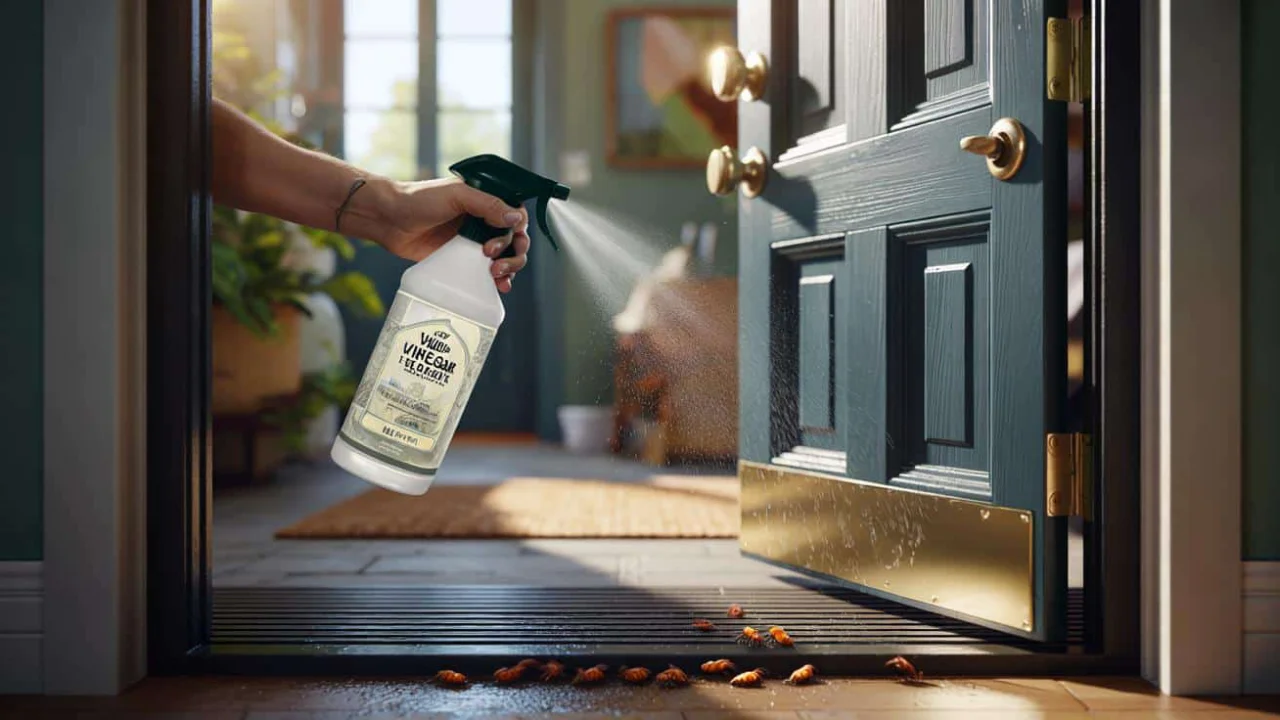
Maria hadn’t believed in household superstitions until her 85-year-old neighbor knocked on her door with a spray bottle filled with white vinegar. “Honey, you spray this on your front door every week,” Mrs. Chen said, demonstrating on Maria’s wooden frame. “Trust an old woman who’s lived through five moves and raised four kids.”
Within a month, Maria noticed something strange. The persistent ant trail that had marched across her doormat disappeared. The musty smell from her apartment hallway seemed less overwhelming. Even her mother-in-law commented that Maria’s place felt “cleaner” somehow, though nothing else had changed.
That conversation started Maria down a rabbit hole of research about spraying vinegar on front door surfaces. What she discovered surprised her: this wasn’t just another internet trend. It was a practice rooted in both practical science and generations of household wisdom.
The Real Reasons Behind the Vinegar Door Trend
Spraying vinegar on front door areas has exploded across social media platforms, but the practice itself isn’t new. Home maintenance experts explain that vinegar’s acetic acid content makes it a natural deterrent for several common household problems.
“White vinegar creates an environment that most insects simply don’t want to cross,” says Jennifer Walsh, a pest control specialist with 15 years of experience. “Ants, in particular, hate the smell and will actively avoid treated areas.”
The trend gained momentum when people started noticing multiple benefits from their vinegar door routine. Beyond pest control, homeowners report cleaner door surfaces, reduced odors, and even fewer spider webs around entrance areas.
But there’s a psychological component too. The front door represents the boundary between private and public space. When people treat this threshold with intention—even something as simple as a weekly vinegar spray—they feel more in control of their home environment.
What Actually Happens When You Spray Vinegar on Your Door
The science behind spraying vinegar on front door surfaces involves several chemical and biological processes working together:
- pH disruption: Vinegar’s acidic nature (pH around 2.5) disrupts the chemical trails that ants use to navigate, effectively erasing their roadmap to your home
- Antimicrobial action: The acetic acid kills bacteria and mold spores that can cause odors around door frames
- Natural degreasing: Vinegar cuts through fingerprints, dirt, and grime that accumulate on door handles and frames
- Spider deterrent: Most spiders avoid the strong scent, reducing web formation near treated areas
- Salt residue removal: In winter climates, vinegar helps dissolve salt stains left by snow boots and ice melt
The key is using the right concentration. Most effective door spraying involves a 50-50 mixture of white vinegar and water, applied weekly or bi-weekly depending on traffic and weather conditions.
| Door Material | Vinegar Concentration | Application Frequency | Special Notes |
|---|---|---|---|
| Wood (painted) | 50% vinegar, 50% water | Weekly | Avoid oversaturation |
| Metal | Full strength vinegar | Bi-weekly | Wipe dry immediately |
| Glass doors | 25% vinegar, 75% water | As needed | Streak-free cleaning |
| Composite materials | 50% vinegar, 50% water | Monthly | Test small area first |
Who’s Really Doing This and Why It Matters
The demographics of door vinegar spraying might surprise you. While social media makes it look like a trendy millennial habit, the practice spans generations and income levels.
Apartment dwellers use it to combat hallway odors and discourage pests in shared spaces. Homeowners with gardens spray their doors to create barriers against insects migrating from outdoor plants. Parents with young children appreciate having a non-toxic cleaning solution near high-touch areas.
“I started doing it because my grandmother swore by it,” explains Sarah Martinez, a working mother of three. “But I kept doing it because it actually works. My kids’ sticky fingerprints come off the door handle easier, and we haven’t had ants in the kitchen since I started the weekly routine.”
Regional variations exist too. In humid climates, people focus on mold prevention. In areas with harsh winters, the emphasis shifts to salt stain removal. Desert dwellers often combine vinegar spraying with dust control measures.
The trend has practical implications for property maintenance. Landlords report fewer pest complaints in buildings where tenants adopt vinegar door cleaning routines. Home inspectors note that properties with well-maintained entry points often show better overall care.
The Unexpected Side Effects Nobody Talks About
Beyond pest control and cleaning, spraying vinegar on front door areas creates ripple effects that users often don’t anticipate. The most common surprise involves neighborhood dynamics.
When one household starts regularly cleaning their door area, neighbors often follow suit. Property managers call this the “tidy threshold effect”—visible maintenance in common areas encourages others to maintain their spaces too.
“We’ve seen entire apartment hallways transform when just one or two tenants start taking care of their door areas,” notes property manager David Kim. “It becomes contagious in the best way.”
Some users report psychological benefits that go beyond the physical cleaning. The weekly ritual creates a sense of home ownership and control, even for renters. Others describe feeling more confident about inviting guests over when their entrance consistently looks and smells clean.
However, there are considerations to keep in mind. Overuse of vinegar can damage certain door finishes, particularly if you’re dealing with natural wood stains or delicate paint jobs. The smell, while temporary, can be overwhelming in enclosed spaces like apartment hallways.
Building management companies have started incorporating vinegar-based cleaning into their maintenance protocols after seeing positive results from tenant-initiated routines. This shift represents a broader acceptance of non-toxic cleaning methods in shared residential spaces.
FAQs
How often should I spray vinegar on my front door?
Most people find weekly applications work well, but bi-weekly is sufficient for low-traffic areas. Increase frequency during ant season or after storms.
Will vinegar damage my door’s finish?
Properly diluted vinegar (50% water) is safe for most painted and sealed surfaces. Test a small area first and avoid pure vinegar on natural wood or delicate finishes.
Does the vinegar smell linger?
The odor typically disappears within 30 minutes as the vinegar dries. Proper ventilation speeds up the process.
Can I use apple cider vinegar instead of white vinegar?
White vinegar works best because it doesn’t leave residue or attract insects with sugar content. Save the apple cider vinegar for your salad.
Is this safe around pets and children?
Yes, vinegar is non-toxic and safe once dried. Keep pets away during application to avoid paw irritation from wet surfaces.
What’s the best time of day to spray my door?
Early morning or late afternoon works well, giving the solution time to dry before evening foot traffic and avoiding midday heat that causes rapid evaporation.


