
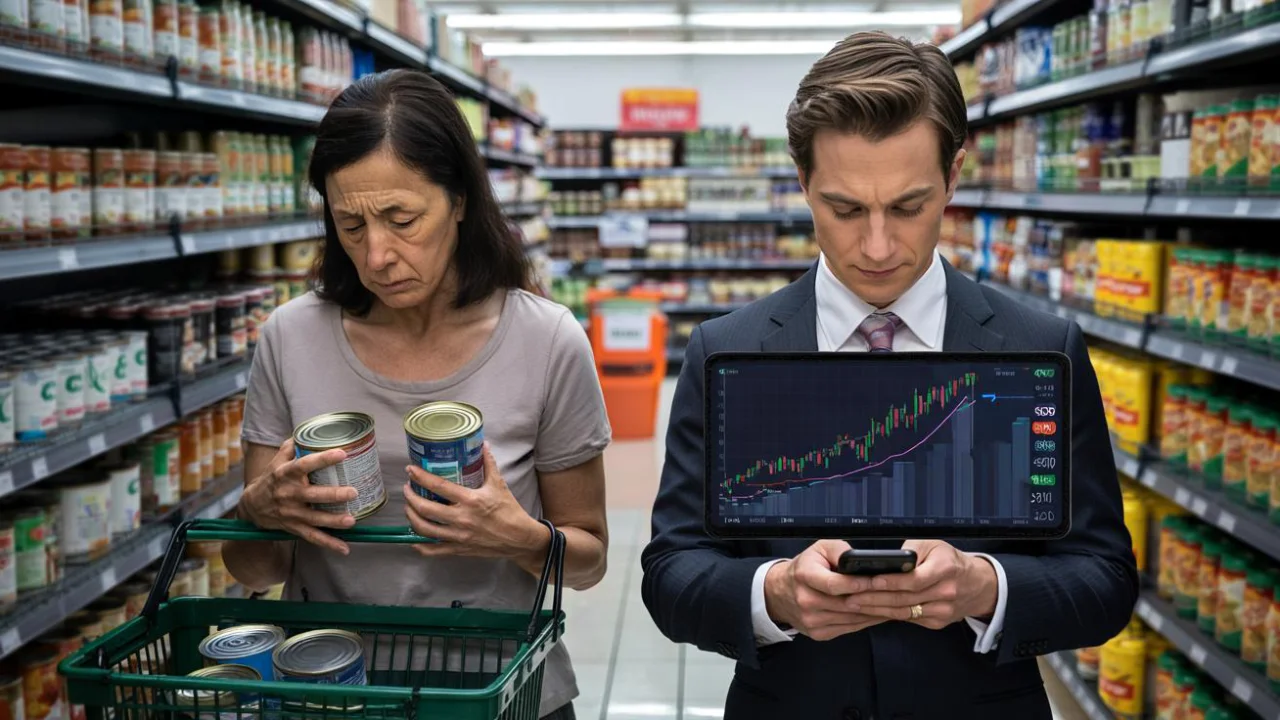
Sarah stares at her grocery cart, doing mental math she never thought she’d need. The milk costs more than her hourly wage. The chicken she used to buy weekly is now a monthly luxury. Her phone buzzes with a notification from her investing app – her small portfolio of food stocks just hit a new high.
She feels sick, but not from hunger this time. The same companies making her stretch every dollar are padding her retirement account. It’s a twisted dance where her pain becomes her profit, and she’s not sure who’s leading anymore.
This is the reality for millions caught between survival and investment strategy. Stockpiling stocks in food companies while families skip meals has become the defining moral battleground of our economic moment.
When Your Portfolio Feasts While Your Neighbors Fast
The numbers tell a story that should make us uncomfortable. Food inflation hit 11.4% in many developed countries last year, while major grocery chains reported profit margins their shareholders hadn’t seen in decades. Walmart’s stock price climbed 26% as food stamp applications surged. Nestlé posted record earnings while food banks ran empty.
Trading forums buzz with excitement about “recession-resistant plays” and “essential goods winners.” Investors share screenshots of their gains from companies like Kroger, Costco, and Unilever. The logic is sound – people need to eat regardless of economic conditions.
“Food stocks are the ultimate defensive investment,” explains Marcus Chen, a retail trading educator with 50,000 YouTube subscribers. “When everything else crashes, groceries keep performing. It’s basic survival economics.”
But the other side of those green portfolio numbers has faces. Real people making impossible choices between heating and eating. Families watering down milk to make it last. Parents pretending they’re not hungry so their kids can have seconds.
The Investment Strategies Driving Food Inequality
Understanding how stockpiling stocks in essential goods works reveals why this debate cuts so deep. Here are the key investment approaches fueling the controversy:
- Value chain dominance – Buying shares across the entire food system from seeds to supermarkets
- Inflation hedging – Using food stocks as protection against currency devaluation
- Recession-proofing – Shifting portfolios toward “necessary” goods during economic downturns
- ESG washing – Positioning food investments as socially responsible because they serve basic needs
- Algorithmic trading – Using AI to capitalize on food price volatility and supply disruptions
| Investment Strategy | Typical Return | Human Impact | Moral Rating |
|---|---|---|---|
| Food retail chains | 8-15% annually | Higher grocery prices | Questionable |
| Agricultural commodities | 12-25% during crises | Global food instability | Concerning |
| Food processing giants | 6-12% steady growth | Shrinkflation, quality cuts | Mixed |
| Discount grocery stocks | 10-20% in recessions | Benefits budget shoppers | Potentially positive |
The uncomfortable truth? Some of the most profitable food investments directly benefit from human desperation. Companies that excel during food crises often do so by extracting maximum value from people who have no choice but to pay.
Real Families, Real Consequences
Meet the Garcia family from Phoenix. Maria works two part-time jobs but still clips every coupon and times her shopping around sales. Her teenage son David has started declining dinner invitations because he’s embarrassed he can’t reciprocate. They’ve never owned stocks, but their struggle directly enriches investors betting on food scarcity.
Compare that to James, a tech worker in Seattle who allocated 30% of his portfolio to food stocks after reading about inflation hedging. His monthly grocery bill barely registers as an expense, but his food investments have gained $15,000 this year. Enough to buy groceries for the Garcia family for eight months.
“I’m not trying to hurt anyone,” James says when confronted with the ethics. “I’m just protecting my family’s future. The system is what it is.”
Dr. Elena Rodriguez, a behavioral economist at UC Berkeley, sees this moral disconnect everywhere. “We’ve created a financial system where betting against human welfare becomes smart money management. People compartmentalize their investment decisions from their social values because the alternative feels impossible.”
The psychological defense mechanisms are predictable. Investors tell themselves they’re being responsible, realistic, even strategic. They point out that their small positions don’t move markets. They argue that profitable companies serve customers better long-term.
But these justifications crumble when you consider the scale. Institutional investors managing pension funds, insurance policies, and retirement accounts have poured billions into food stocks specifically because human need is so predictable. Your teacher’s pension fund likely owns shares in every major grocery chain.
Where Ethics Meet Economics
The debate around stockpiling stocks while families struggle goes beyond individual choices. It reveals fundamental questions about how our economy should work. Should essential human needs be treated as investment opportunities? Can we separate financial success from social responsibility?
Some countries are already drawing lines. Norway’s sovereign wealth fund divested from companies that profit from food speculation. Several European pension funds now screen out investments that worsen inequality. France implemented windfall taxes on excessive grocery profits during inflation spikes.
But the United States remains largely hands-off, treating food as just another commodity to be bought, sold, and optimized for returns.
Financial advisor Rachel Kim has watched clients wrestle with these choices for years. “I have retirees who need their portfolios to grow but feel sick about profiting from hunger. I have young investors who want to be ethical but also want to afford houses someday. There are no clean answers.”
The solution isn’t necessarily avoiding all food investments. Some food companies genuinely improve access and affordability. Others invest in sustainable agriculture or worker welfare. The key is consciousness – understanding that your investment choices have human consequences and acting accordingly.
Whether you see stockpiling stocks in food companies as smart planning or moral failure probably depends on which side of the grocery checkout you usually find yourself. But increasingly, we’re all on both sides, making this one of the defining ethical challenges of modern investing.
FAQs
Is investing in food stocks always unethical?
Not necessarily, but it requires careful consideration of which companies and practices you’re supporting with your investment dollars.
How can I invest responsibly in food-related companies?
Look for companies that improve food access, treat workers fairly, and focus on sustainable practices rather than just maximizing profits from scarcity.
Do individual investors really impact food prices?
Individual retail investors have minimal direct impact, but collectively, investment flows into food stocks can influence company behavior and market dynamics.
Are there alternatives to traditional food stock investing?
Yes, including ESG funds, impact investing, agricultural development funds, and supporting local food systems outside public markets.
Should pension funds avoid food stocks entirely?
Complete avoidance isn’t practical, but pension funds can use their shareholder influence to push food companies toward more ethical practices.
What’s the difference between investing and speculation in food markets?
Investing typically involves long-term ownership supporting business growth, while speculation focuses on short-term price movements that can destabilize food supplies.


