
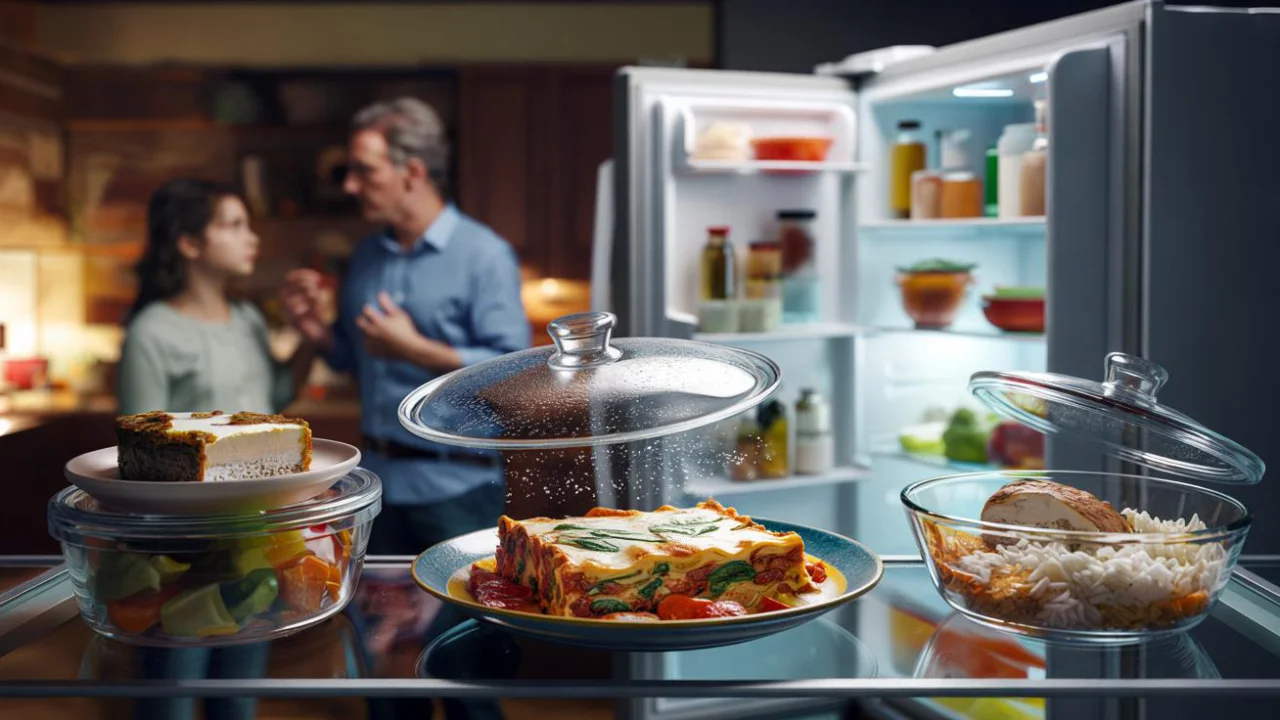
Last Tuesday night, my sister-in-law Sarah did something that made my mother-in-law gasp audibly. After our family dinner, instead of carefully portioning leftover spaghetti into proper containers, Sarah simply grabbed another plate from the cabinet and slapped it on top of the pasta dish. Then she casually walked to the fridge and shoved the whole thing inside.
“That’s not how you store food!” my mother-in-law protested, reaching for her collection of matching Tupperware. But Sarah just shrugged. “Works fine for me. Food stays moist, and I don’t have to wash extra containers.”
What happened next was a 20-minute family debate that somehow escalated into questioning each other’s cooking credentials and life choices. All because of a simple plate-on-plate storage method that’s quietly dividing kitchens across America.
Why the “Plate Method” Has Everyone Picking Sides
You’ve definitely witnessed this controversial storing leftovers technique. Maybe at your grandmother’s house, or that friend who always seems to have perfectly moist leftover pizza. They take whatever’s left on the serving dish, grab another plate, flip it upside down, and create what looks like the world’s laziest food storage system.
No plastic wrap. No vacuum sealing. No fancy glass containers with color-coded lids. Just two plates creating a makeshift dome over your leftover lasagna.
“I’ve been doing this for forty years, and my food has never gone bad,” says Maria Santos, a grandmother from Phoenix who swears by the method. “These young people with their fancy containers and gadgets – they’re making everything too complicated.”
But this old-school approach to storing leftovers has nutritionists and food safety experts pulling their hair out. The lack of airtight sealing, they argue, creates the perfect storm for bacterial growth and food contamination.
The Science Behind This Kitchen Rebellion
Here’s what actually happens when you use the plate method for storing leftovers. That top plate doesn’t create a perfect seal, but it does trap a pocket of humid air around your food. Instead of cold, dry refrigerator air constantly circulating and sucking moisture from your leftover chicken, it hits a barrier.
The result? Your food retains more moisture than it would sitting uncovered, but not as much as it would in a proper airtight container.
| Storage Method | Moisture Retention | Food Safety Risk | Convenience Level |
|---|---|---|---|
| Plate-on-Plate | Medium | Medium-High | Very High |
| Airtight Container | High | Low | Medium |
| Plastic Wrap | High | Low | Low |
| Uncovered | Low | High | High |
Dr. Jennifer Kim, a food microbiologist, explains the appeal: “The plate method works because it slows evaporation without completely stopping air circulation. For short-term storage of certain foods, it can maintain texture better than some alternatives.”
But she’s quick to add a warning: “However, it’s not providing the bacterial protection that proper food storage requires, especially for high-risk foods like dairy or meat.”
The method works best for:
- Pasta dishes with sauce that help retain moisture
- Casseroles and baked dishes with high water content
- Foods that will be consumed within 24-48 hours
- Items that don’t contain high-risk ingredients like raw eggs or seafood
The Family Kitchen Battleground
This simple storing leftovers technique has become a surprising source of household tension. In one corner, you have the “efficiency camp” – people who value speed and simplicity over perfect food safety protocols. In the other corner, the “proper storage advocates” who see this method as a dangerous shortcut that puts families at risk.
“My husband does this plate thing, and it drives me crazy,” admits Jessica Torres from Denver. “I spend money on good storage containers for a reason. When I see him just slapping plates together, I feel like he’s undoing all my efforts to keep our kitchen organized and safe.”
But convenience has its own powerful appeal. After a long dinner party, when you’re exhausted and facing a sink full of dishes, the thought of washing, drying, and organizing multiple containers can feel overwhelming. The plate method offers instant gratification – your storing leftovers task is done in seconds.
Food blogger Michael Chen sees both sides: “Look, I get why people do it. Life is busy, and not everyone has the time or energy for perfect food storage. But there are real risks, especially if you’re feeding kids or elderly family members.”
The generational divide is particularly stark. Older adults who grew up with different food safety standards often view this method as perfectly normal, while younger generations raised on stricter guidelines see it as reckless.
When Convenience Costs More Than We Think
The real controversy around storing leftovers this way isn’t just about food safety – it’s about what it represents. Are we becoming so focused on convenience that we’re willing to compromise on basic health practices? Or are food safety experts being overly cautious about a method that’s worked for generations?
The CDC reports that foodborne illnesses affect 48 million Americans annually, with improper food storage being a significant contributing factor. While not all of these cases stem from the plate method, food safety professionals worry that normalizing shortcuts creates a slippery slope.
“Every food safety rule exists because someone got sick,” warns chef and food safety instructor Roberto Martinez. “When we start making exceptions for convenience, we’re essentially gambling with our health.”
But supporters argue that proper context matters. Using the plate method for storing leftovers from Tuesday’s dinner that you’ll eat Wednesday for lunch? Probably fine. Using it for leftover chicken salad that sits in the fridge for a week? That’s where problems start.
The method also raises questions about food waste. Some argue that by making leftover storage more convenient, people are more likely to save and eat food that might otherwise get thrown away. Others counter that improperly stored food is more likely to spoil quickly, leading to more waste overall.
Finding Middle Ground in Your Kitchen
Despite the heated debates, some families are finding compromise solutions. They use the plate method for specific situations – like storing bread or baked goods that benefit from slight air circulation – while using proper containers for potentially hazardous foods.
Others have developed hybrid approaches: using the plate method for short-term storage (overnight) but transferring everything to proper containers if it won’t be eaten within a day or two.
“I think the key is being intentional about it,” suggests home economics teacher Linda Patterson. “If you’re going to use this method for storing leftovers, at least understand the risks and make informed decisions about when it’s appropriate.”
The plate method controversy ultimately reveals something deeper about how we approach food in modern life. It’s a tension between traditional practices and contemporary knowledge, between convenience and safety, between trusting our instincts and following expert guidance.
Whether you’re team plate or team proper container, one thing is clear: this simple kitchen practice has touched a nerve about how we balance efficiency with responsibility in our daily lives.
FAQs
Is the plate method actually dangerous for storing leftovers?
It depends on the food type and storage duration. For low-risk foods eaten within 1-2 days, the risk is minimal, but it’s not recommended for dairy, meat, or foods stored longer than 48 hours.
Why does food stay moister with the plate method?
The top plate traps humid air around the food, slowing moisture evaporation compared to leaving food completely uncovered, though it’s not as effective as airtight storage.
What foods work best with plate-on-plate storage?
Pasta dishes, casseroles, baked goods, and other foods with high moisture content work best, especially when consumed quickly.
How long can you safely store leftovers using the plate method?
Food safety experts recommend no more than 24-48 hours, and only for foods that don’t contain high-risk ingredients like raw eggs or seafood.
Are there any benefits to this storage method over containers?
The main benefits are convenience and the fact that some foods maintain better texture due to slight air circulation, plus you don’t need to wash extra containers.
Should I be worried if my family uses this method?
If you’re using it selectively for appropriate foods and short time periods, the risk is relatively low, but transitioning to proper storage containers is always the safer choice.


