
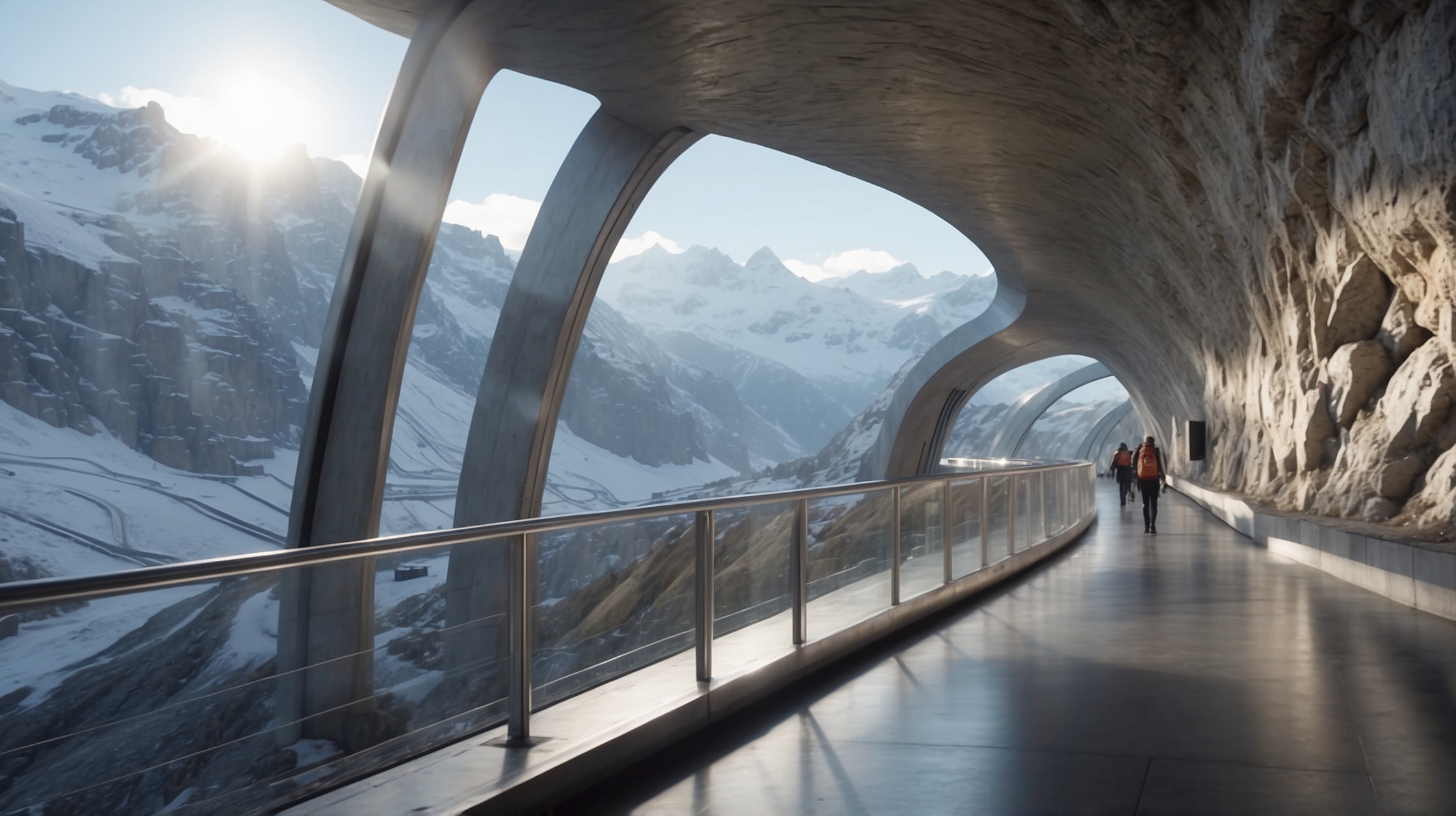
Deep beneath the pristine alpine valleys and picturesque towns of Switzerland lies an astonishing subterranean world. For more than 30 years, the Swiss government and its engineering elite worked quietly and meticulously, creating a network of tunnels and cavernous shelters hidden beneath many of the nation’s urban centers. Passing tourists would never guess that Switzerland’s iconic neutrality includes layers of underground preparation — an invisible backbone of infrastructure shaped by caution, foresight, and technological prowess.
This subterranean network, initially conceived during the Cold War, was designed as both a military strategy and a civil protection system. Miles of tunnels, bunkers, and concealed command centers now sit beneath the surface, a secret metropolis shadowing the one in plain sight. While Switzerland’s neutrality often draws admiration, its rigorous approach to self-defense and emergency preparedness remains far less known, yet no less compelling.
Understanding Switzerland’s underground network
| Aspect | Details |
|---|---|
| Project duration | More than 30 years of construction |
| Purpose | Military defense, civil protection, transportation |
| Notable features | Bunkers, tunnels, command centers, rail pass-throughs |
| Key cities involved | Zurich, Lucerne, Geneva, Bern, Lausanne |
| Secret at the time? | Yes – many installations kept classified for decades |
| Public access today? | Parts open as museums or repurposed for civilian use |
The hidden cities under Swiss soil
Few nations boast a network as extensive and intricately planned as Switzerland’s underground construction. Much more than just isolated bomb shelters, the infrastructure includes highway reroutes, hidden airstrips convertible for fighter jets, food storage vaults, hospitals, and even full-scale hotels built underground to operate during a crisis. All of it woven seamlessly into the topography beneath Swiss cities and mountains.
Switzerland’s law mandates that every resident must have access to a bomb shelter. As a result, thousands of shelters are built into homes, apartment buildings, schools, and offices. Some larger shelters are designed to house entire city districts, and dozens more functioned as top-secret military nerve centers in case of an invasion or nuclear fallout.
“What lies beneath Switzerland is a testament to our historical mindset: prepare for the worst, hope for the best.”
— Klaus Bucher, Swiss Civil Defense Historian
From Cold War paranoia to national identity
The Cold War didn’t just shape geopolitics—it redefined engineering priorities from Washington to Moscow. Switzerland, although not technically aligned with NATO or the Warsaw Pact, understood its strategic position and proximity to potential conflict zones. Thus, its leadership wisely began investing in long-term subterranean infrastructure capable of withstanding chemical, biological, and nuclear attacks should the need arise.
Notably, these projects were not for foreign export, nor for show. This was Swiss pragmatism at work, elevating neutrality to an art form. Against global tensions, underground tunnels and secret facilities became national insurance. It wasn’t just about security; it became part of the Swiss DNA—resilient, discreet, and quietly prepared for any eventuality.
Engineering marvels hidden in the dark
Some installations are so well-integrated they defy the imagination. Highways with removable barriers in certain locations can transform into aircraft runways. Railway tunnels snake beneath mountain ranges, doubling as secure transit corridors and emergency freight paths. In some cases, entire trains can vanish into mountains and exit only several towns ahead, completely shielded from aerial view.
“The engineering challenge wasn’t just about digging—it was about hiding. We had to make it seamless with the land and invisible to potential satellites or enemy reconnaissance.”
— Roland Hirschi, Former Lead Engineer, Swiss Federal Office of Civil Protection
The tunneling spanned decades, progressing through phases of technological innovation, crisis response simulations, and environmental assessments. What emerged was not only a bureaucracy built beneath the surface—but a lifeline for a population committed to self-reliance.
Who wins and who loses from the subterranean investment?
| Winners | Losers |
|---|---|
| Swiss citizens (protected in crisis) | Budget sectors competing for resources |
| Construction and infrastructure firms | Transparency advocates (due to secrecy) |
| Physical security planners worldwide | Urban developers facing later complications |
Reviving forgotten bunkers for civilian use
As global tensions have receded since the Cold War, many of Switzerland’s underground marvels have been demilitarized and creatively repurposed. Once-secret command centers now host temporary exhibitions. Several large-scale bunkers have been converted into document archives, wine cellars, data centers, and even art galleries. A few tourist-friendly tunnels now offer visitors a glimpse into this deeply-rooted culture of readiness.
Yet, not all of the infrastructure has faded into history. Civil protection remains a cornerstone of Swiss policy, including annual drills, shelter maintenance, and updates to plans as new technologies emerge. Some bunkers continue as dormant strongholds, ready to awaken if the global climate shifts toward instability again.
“These sites show the fusion of architecture and existential planning. They weren’t just built—they were imagined.”
— Juliette Moser, Swiss Infrastructure Architect
Why other nations study Switzerland’s underground ethos
In recent years, several governments have quietly begun studying Switzerland’s methods in earnest. What can decades of meticulous tunneling and logistical development teach a world faced with climate instability, political unrest, and cyber warfare? Many countries are beginning to realize that resilience—real and tangible—sometimes lies deeper in the ground than we’d prefer to look.
With populations growing and natural disasters increasing, nations may find wisdom in the Swiss example. Defense doesn’t always mean escalation. Sometimes, it means building quietly, patiently, with difficult foresight and even greater discipline—not to dominate, but simply to endure.
Short FAQs on Switzerland’s underground tunnel network
How extensive is Switzerland’s underground tunnel system?
Switzerland’s system spans hundreds of kilometers, including bomb shelters, military corridors, transport tunnels, and civil protection spaces beneath major cities and mountains.
Are these tunnels only for the military?
No. While many started as military or strategic installations, the system also includes shelters for civilians and repurposed infrastructure now used for data centers, archives, and tourism.
Can tourists visit any part of the underground network?
Yes, visitors can explore certain tunnels and bunkers that have been opened to the public, often through museums or heritage trusts.
Are all residents really guaranteed shelter space?
Yes, Swiss law requires that every citizen has access to shelter space within their community. Many residential buildings include fortified basements for this purpose.
When did this tunnel building start?
The major developments began in the late 1940s and ramped up significantly during the Cold War, continuing in various forms into the early 2000s.
Are the shelters still updated today?
While new construction has slowed, maintenance and modernization still occur, especially in light of renewed global tensions and natural disaster risks.
What makes Swiss tunnels unique compared to other countries?
Their integration into everyday life, legal backing, and scale make them unique. Other nations rarely combine such extensive civilian and military underground provisions.
Are any of these sites considered secret today?
Some still are. Strategic locations and functions remain classified to preserve their operational value in case of future emergencies.


