
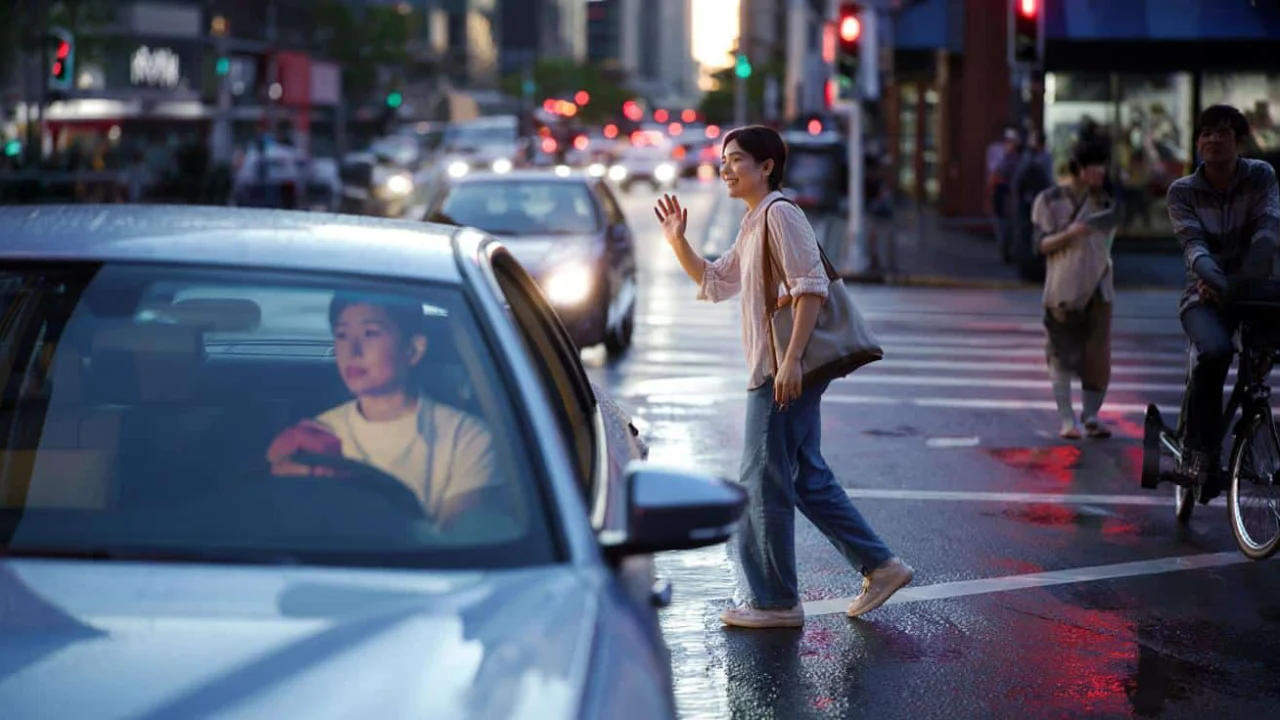
Sarah hurried down Fifth Street, late for her afternoon meeting, when she reached the busy intersection. The light had just turned yellow, but instead of speeding through, the blue sedan slowed to a complete stop. As she jogged across, Sarah found herself lifting her hand in a grateful wave toward the windshield, mouthing “thank you” to someone she couldn’t even see clearly.
Later, sipping coffee with a friend, Sarah mentioned the moment. “I literally thanked a car today,” she laughed. “Like, actually said thank you to a piece of metal.” Her friend shrugged. “I never do that. Why waste the energy?” But Sarah couldn’t shake the feeling that her automatic response said something deeper about how she moves through the world.
That tiny gesture—thanking cars psychology reveals—tells us more about personality and social wiring than most people realize.
What Your Brain Is Really Doing When You Thank a Car
When you wave at a car that stops for you, your brain isn’t actually confused about what’s human and what’s machine. You’re engaging in what psychologists call anthropomorphism—the tendency to attribute human characteristics to non-human objects. But more specifically, you’re acknowledging the person inside that metal shell.
“People who thank cars are essentially thanking the invisible human making a choice to be courteous,” explains Dr. Maria Rodriguez, a behavioral psychologist at Stanford University. “It’s a micro-social interaction that happens in milliseconds.”
This reflex is strongest in people with heightened empathy and social awareness. They don’t just walk through their day; they navigate a complex web of social connections and unspoken agreements. Every small courtesy—a held door, a yielded parking spot, a car that stops at a crosswalk—registers as a human gesture worth acknowledging.
Research shows that thanking cars psychology often correlates with what scientists call “prosocial behavior.” These individuals tend to stack their dishes at restaurants, apologize when others bump into them, and feel genuinely uncomfortable taking the last slice of pizza without asking.
The Hidden Personality Traits of Car-Thankers
People who instinctively thank cars while crossing streets share several fascinating psychological characteristics that set them apart from those who simply walk on by:
| Trait | Description | How It Shows Up |
|---|---|---|
| High Empathy | Naturally tune into others’ emotions and motivations | Automatically consider the driver’s choice to stop |
| Social Reciprocity | Feel compelled to balance social exchanges | Must acknowledge courtesy with gratitude |
| Environmental Awareness | Constantly scan surroundings for social cues | Notice when someone makes an effort for them |
| Emotional Regulation | Use small gestures to maintain positive feelings | The thank-you wave creates a micro-moment of connection |
Dr. James Chen, who studies social behavior at UCLA, notes: “These individuals have what we call an ‘external locus of gratitude.’ They’re constantly aware of how other people’s choices affect their day, even in tiny ways.”
The psychology behind thanking cars also connects to childhood development. People who grew up in households that emphasized manners and social consideration often carry these micro-behaviors into adulthood. It becomes automatic—less conscious choice, more ingrained social reflex.
- They apologize to inanimate objects when they bump into them
- They feel guilty about not holding elevator doors for people who are far away
- They automatically say “bless you” to strangers who sneeze nearby
- They thank ATMs and self-checkout machines under their breath
- They wave at security cameras as if someone is watching
Why This Tiny Gesture Matters More Than You Think
The act of thanking cars while crossing might seem insignificant, but it reflects something profound about how certain people experience the world. They live in a constant state of social awareness, treating every interaction—no matter how brief or impersonal—as part of a larger human network.
“These are often the same people who become excellent team players, thoughtful friends, and considerate neighbors,” says Dr. Rodriguez. “They’re wired to notice and appreciate the small ways people make life a little easier for each other.”
This hyperawareness isn’t always comfortable. Car-thankers often report feeling exhausted by social situations because they’re constantly processing the emotional temperature of every interaction. They notice when someone seems upset, when a conversation feels awkward, or when group dynamics shift.
The flip side is remarkable social intelligence. These individuals typically excel at reading rooms, defusing tension, and making others feel seen and appreciated. Their automatic gratitude toward stopping cars is just one visible manifestation of a deeper psychological pattern.
Interestingly, cultural background plays a significant role in thanking cars psychology. People from collectivist cultures—where community harmony is prioritized—are more likely to engage in these micro-acknowledgments than those from highly individualistic societies.
“In some cultures, not acknowledging someone’s courtesy, even a stranger in a car, would feel deeply uncomfortable,” explains Dr. Chen. “It violates their sense of social balance.”
The behavior also intensifies during stressful periods. When people feel overwhelmed or vulnerable, they become more attuned to moments of human kindness, making them more likely to acknowledge courteous drivers with extra enthusiasm.
For those who don’t naturally thank cars, this doesn’t indicate a lack of empathy or social awareness. Different personalities process social interactions in different ways. Some prefer direct, verbal acknowledgments when they can actually see someone’s face. Others save their social energy for more meaningful connections.
But for those who do find themselves waving at windshields and mouthing silent thank-yous to strangers in traffic, the psychology is clear: you’re someone who sees the human thread connecting even the most mundane daily interactions. That tiny wave says you believe in the importance of acknowledging kindness, no matter how small or fleeting.
FAQs
Is it weird to thank cars when crossing the street?
Not at all—it’s actually a sign of high social awareness and empathy. You’re acknowledging the human choice behind the courtesy.
Do drivers notice when pedestrians thank them?
Many drivers do notice and appreciate the acknowledgment, even if they can’t respond. It creates a positive micro-interaction that can improve both people’s mood.
What if someone doesn’t thank cars—does that mean they’re rude?
No, different personalities express gratitude in different ways. Some people prefer direct interactions while others focus their social energy differently.
Can you learn to be more socially aware like car-thankers?
Yes, mindfulness practices can increase awareness of daily social interactions and help you notice moments worth acknowledging.
Is thanking cars more common in certain places?
Yes, it’s more frequent in smaller communities and cultures that emphasize collective harmony and mutual consideration.
Does age affect whether someone thanks cars?
Older generations tend to engage in these courtesies more frequently, though it varies greatly based on individual personality and upbringing rather than age alone.


