
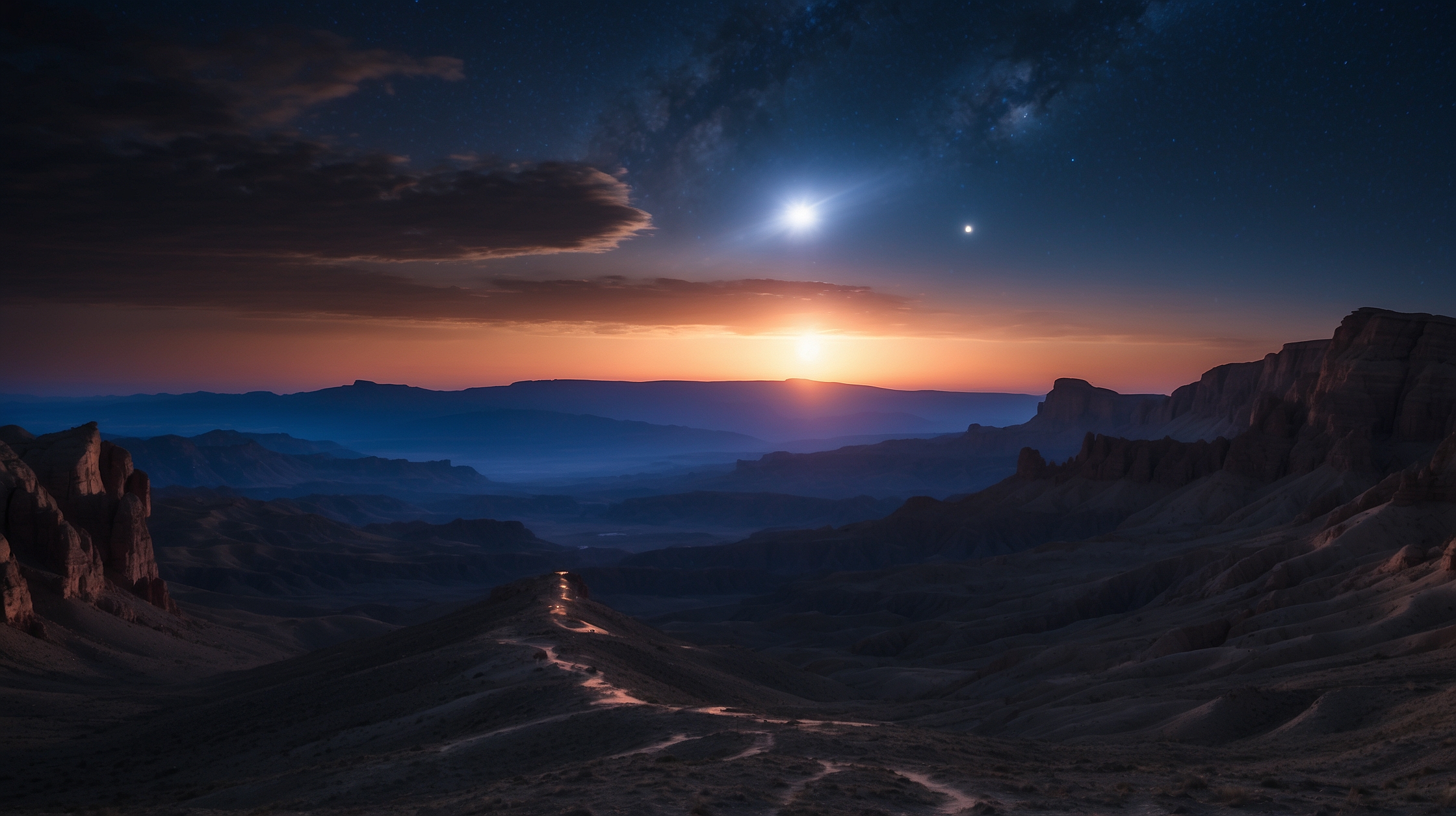
The longest solar eclipse of the century is officially on the celestial calendar, and skywatchers around the world are already making plans to witness this breathtaking astronomical event. This rare cosmic phenomenon is expected to captivate millions as the Moon slowly moves across the Sun, casting a dramatic silhouette and plunging parts of the Earth into temporary darkness. As anticipation builds, experts are emphasizing the significance of this occurrence—not only for stargazers but also for scientists eager to study solar activity in ways only possible during a total eclipse.
This record-setting solar eclipse is a once-in-a-lifetime spectacle, offering unmatched viewing opportunities due to its remarkable duration. Total solar eclipses happen about once every 18 months somewhere on Earth, but the one slated for this year stands apart, delivering more than six minutes of totality in some regions. For comparison, most total eclipses last just two to three minutes. Its obscurity, timing, and path make this a generational event. Understanding the schedule, viewing zones, and safety recommendations is vital for anyone planning to catch a glimpse of this cosmic ballet.
Solar Eclipse 2024 Overview
| Date | August 2, 2027 |
| Type | Total Solar Eclipse |
| Maximum duration of totality | 6 minutes 23 seconds |
| Longest visibility path | Across parts of North Africa, the Middle East, and Western Asia |
| Best viewing locations | Egypt, Saudi Arabia, Yemen, Oman, southern India |
| Time of peak eclipse | Approximately 10:06 AM UTC |
What makes this eclipse special
This solar eclipse is being hailed as the longest of the 21st century, a title it earns due to the maximum duration of totality—more than six minutes—offering an extended view that hasn’t been experienced since 2009 and won’t be seen again for nearly a century. The celestial mechanics involved are exceptional: the Moon will pass closer to Earth than usual, and the Earth will be near aphelion (farthest from the Sun), shrinking the Sun’s apparent size just enough to elongate the eclipse.
As a result, people in the eclipse path will enjoy an extended total eclipse experience. Unlike shorter eclipses, the 2027 event provides rare opportunities for prolonged scientific observations like coronal studies, temperature drops, and atmospheric changes, which are only measurable during complete obscuration of the Sun.
“Long-duration eclipses give us more time to observe phenomena that usually happen too quickly. It opens doors for new insights into solar flares and coronal dynamics.”
— Dr. Lena Crowder, Solar Physicist
Where to watch the eclipse
The eclipse’s path of totality will begin over the Atlantic Ocean before making landfall in North Africa. From there, it will sweep southeast across Egypt, travel through parts of Saudi Arabia and Yemen, cross Oman, and conclude as it grazes southern parts of India and the Bay of Bengal. Major cities like Luxor, Sana’a, and Muscat will witness full totality. Outside the main path, partial eclipses will be visible across large swaths of Europe, Asia, and the northeast of Africa.
The weather will be a determinative factor in choosing the best viewing locations. Desert regions like Egypt’s Valley of the Kings are expected to deliver clear skies and dry air, making them ideal eclipse-watching spots. Tour groups are already being organized, and hotel demand in eclipse-prime regions is skyrocketing.
“The 2027 eclipse track covers regions typically prone to clear August skies, so we can expect excellent visibility for millions.”
— Amir Qasimi, Astronomical Tour Organizer
How to safely view the eclipse
Looking directly at the Sun during any part of the eclipse—except in moments of full totality—is dangerous and can permanently damage your eyesight. Observers must use certified solar viewing glasses or solar filters on telescopes and cameras. Standard sunglasses do not offer adequate protection. Reputable sources will label gear with ISO 12312–2 certification, which validates safe solar observation.
During full totality, when the Moon completely covers the Sun, it is safe—if brief—to look at the eclipse with the naked eye. This stunning moment showcases the solar corona, the plasma halo that encircles the Sun, visible only during total eclipses. However, as soon as the Sun begins to reappear, protective gear must go back on immediately.
Scientific opportunities during the eclipse
Aside from being a stunning visual event, the eclipse offers one of the most significant opportunities for scientific experimentation in the solar sciences. NASA and international observatories are preparing to launch balloons, mobile observatories, and satellite coordination to study the solar corona, magnetic waves, and ionospheric reactions during totality. One initiative plans to capture real-time changes in animal behavior, temperature, and air composition.
This level of preparation underscores the eclipse’s unique value: a long blockage of solar radiation allows more accurate thermal and electromagnetic readings in a short span. Such data contributes to understanding solar storms, which affect satellite communications and power grids back on Earth.
“This eclipse gives researchers six minutes of uninterrupted access to upper corona layers, more than double the time we had in recent studies.”
— Dr. Sunita Ramesh, Astrophysics Researcher
Tourism and cultural impact
Regions along the eclipse’s path are preparing for a major tourism influx. Governments in Egypt, Saudi Arabia, and India plan to coordinate hospitality services, safety patrols, and infrastructure expansion to accommodate the visitors. Special charter flights, “eclipse trains”, and river cruises are being marketed as bucket-list experiences for eclipse chasers around the world.
In addition to economic stimulation, the eclipse is expected to bring a renewed focus on astronomical awareness. Schools in the region are partnering with observatories to organize STEM-tied eclipse viewing camps. Much like solar eclipses in prior decades, this event may find its way into cultural lore, art, and even spiritual practice among local communities, highlighting mankind’s enduring fascination with the cosmos.
Winners and losers from the eclipse spectacle
| Winners | Losers |
|---|---|
| Astronomers & scientists with extended observation time | Regions missing full eclipse due to cloud cover or weather |
| Tourism sectors in prime eclipse viewing locations | People without access to eclipse glasses or safe viewing tools |
| Educators and students involved in eclipse programs | Amateur observers in non-totality zones |
What this means for future eclipses
The 2027 eclipse sets a high bar for future solar events in the 21st century. While more eclipses will occur, none will provide the same combination of geography, duration, and accessibility — a trinity that makes this one memorable. The public participation and scientific cooperation fostered by this eclipse are likely to inspire better preparedness and more ambitious research goals for subsequent eclipses across the globe.
In the years that follow, another long-duration eclipse won’t occur until 2114, making this event particularly noteworthy for those alive today. It blends advanced space science with ancient human wonder, reminding us of our small but curious place in the vast universe.
Short FAQs about the 2027 Solar Eclipse
How long will the 2027 total solar eclipse last?
The eclipse will last up to 6 minutes and 23 seconds at its maximum point of totality.
What makes this eclipse the longest of the century?
The unique alignment of the Moon’s proximity to Earth and the Earth’s distance from the Sun allows for prolonged coverage of the Sun’s disk.
Which countries will experience full totality?
The best views will be possible in Egypt, Saudi Arabia, Yemen, Oman, and parts of southern India.
Is it safe to look at the eclipse without protection?
Only during the full totality phase is it safe to look at the eclipse without protection. At all other times, certified solar glasses are required.
Can I watch the eclipse from Europe or the United States?
Portions of Europe may see a partial eclipse, but the United States will not experience significant visibility of this event.
How can I prepare in advance to watch the eclipse?
Book travels early, obtain certified eclipse glasses, and monitor local weather forecasts for best viewing conditions.
What will scientists study during the eclipse?
Researchers will focus on solar corona structure, geomagnetic responses, and atmospheric changes that occur only during totality.
When is the next solar eclipse after this one?
The next solar eclipse will occur in 2028, but none will match the 2027 eclipse in duration until 2114.


