
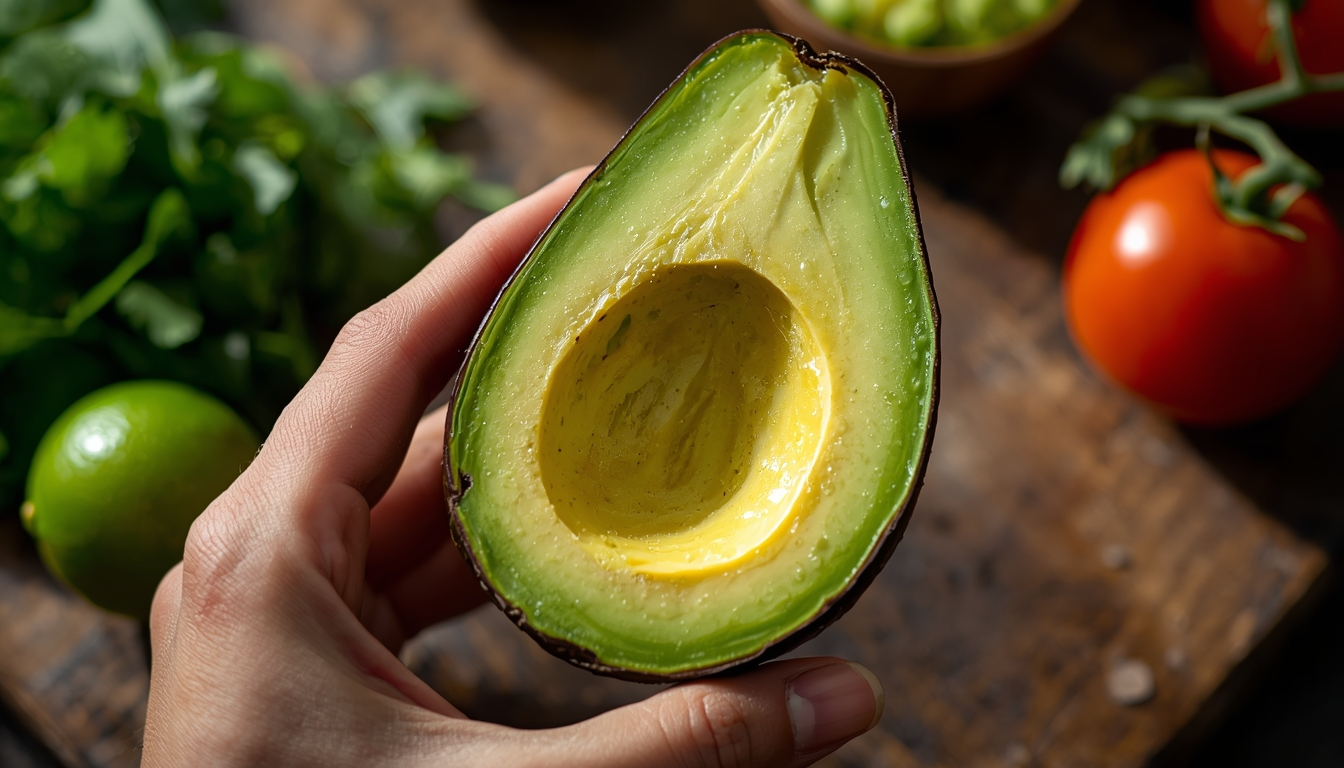
You slice into an avocado, expecting creamy green perfection—only to find brown streaks or rock-hard flesh staring back at you.
It’s one of the most frustrating kitchen disappointments. Especially when guacamole is the final star of your dinner spread.
But professional chefs and produce buyers don’t gamble on avocados. They use a simple visual trick that works far better than squeezing every fruit in the bin.
Here’s how they consistently pick the perfect one.
Why the Squeeze Test Fails
Most shoppers rely on pressure. If it feels soft, it must be ripe—right?
Not necessarily.
Excess squeezing bruises the flesh and creates soft spots that mimic ripeness. By the time you cut it open, you’re left with mushy patches or brown streaks.
Chefs rarely rely on touch first. Instead, they use visual cues that reveal what’s happening inside before the knife ever comes out.
The Chef-Approved Stem Trick
The most reliable indicator of ripeness is hiding in plain sight: the small stem cap at the top of the avocado.
Here’s how it works:
- Gently flick off the tiny brown stem nub.
- Look at the color underneath.
What the Color Means:
- Bright green underneath → Perfectly ripe and ready to eat.
- Brown underneath → Overripe; likely brown inside.
- Stem won’t come off easily → Underripe; needs a few more days.
This method gives you a preview of the flesh without damaging the fruit.
Understanding Avocado Color
Most avocados sold in the U.S. are Hass avocado, which change color as they ripen.
Here’s the progression:
| Skin Color | What It Means | What To Do |
|---|---|---|
| Bright green | Underripe | Wait 3–5 days |
| Dark green | Almost ready | Use in 1–2 days |
| Deep purple-black | Ripe | Eat now |
| Very dark + shriveled | Overripe | Skip it |
Color alone isn’t foolproof—but combined with the stem test, it becomes highly reliable.
Skin Texture and Shape Matter Too
Professional buyers also check:
- Pebbly, slightly bumpy skin (ideal for Hass)
- No flat spots or dents
- No visible cracks or dark sunken areas
- Even shape without irregular bulges
These signs indicate healthy development and proper storage.
Why This Method Works
The stem area is one of the last parts of the avocado to ripen internally. Its color reflects what’s happening inside the fruit more accurately than surface firmness.
Chefs prefer this approach because:
- It avoids bruising
- It reduces food waste
- It preserves shelf life
- It provides a more accurate ripeness check
Produce managers often note that excessive squeezing damages avocados and shortens their usable life.
How to Plan Ahead Like a Chef
If you’re shopping for the week, don’t buy all perfectly ripe avocados at once.
Instead:
- Buy one ready-to-eat (dark skin + green stem underside)
- Buy one slightly firm for midweek
- Buy one bright green for later
This staggered approach ensures you always have one at peak ripeness.
Ripening at Home
To speed up ripening:
- Place avocados in a paper bag
- Add a banana or apple
- Leave at room temperature for 1–2 days
The ethylene gas released by these fruits accelerates the process naturally.
Once ripe, refrigerate to slow further softening
Why This Skill Matters
Avocados are more expensive than ever, and nearly 40% are wasted due to improper selection and storage.
Learning this quick visual method saves money—and prevents dinner-party disasters.
Whether you’re making toast, slicing for salads, or whipping up guacamole, a perfectly ripe avocado makes all the difference.
FAQs
Can I ripen an avocado faster?
Yes. Store it in a paper bag with a banana or apple for 1–2 days.
How long do ripe avocados last in the fridge?
Typically 3–5 days before becoming overly soft.
What if the stem is already missing?
Check the small circular indentation. If it’s green inside, it’s likely ripe. Brown indicates overripeness.
Should I ever squeeze an avocado?
Only gently—and only after it passes the visual checks.
Can I eat an avocado with small brown spots?
Yes, minor spots can be trimmed. Extensive browning usually means it’s past its prime.


