
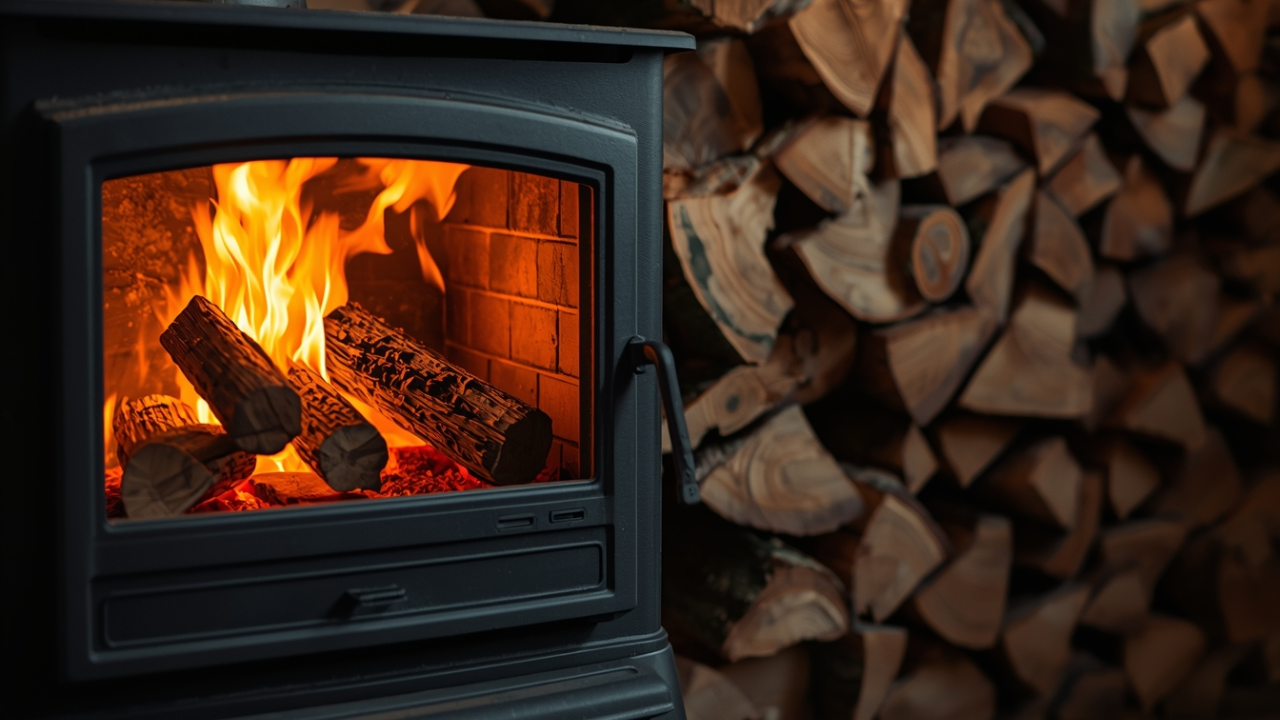
As energy costs continue to rise and winter weather grows increasingly unpredictable, many households are reconsidering how they heat their homes. While traditional firewood has long been the preferred choice for wood-burning stoves and fireplaces, a lesser-known alternative is gaining attention among homeowners and energy specialists — densified logs.
Often marketed as compressed logs or heat logs, these modern fuel sources promise significantly higher efficiency, cleaner combustion and easier storage. In some cases, they can deliver up to three times the heat output of conventional firewood, making them an increasingly attractive heating solution.
What Densified Logs Actually Are
Densified logs are manufactured from leftover wood materials such as sawdust and wood shavings generated during timber processing. Instead of being discarded, these residues are dried and compressed under extremely high pressure to form dense cylinders or rectangular blocks.
One of their most notable features is their natural composition. Unlike some artificial fuels, densified logs are typically produced without chemical binders or adhesives. The intense compression process forces wood particles to bond naturally using the wood’s own lignin — a natural polymer found in plant cell walls.
By removing air pockets and drastically reducing moisture levels, densified logs achieve a consistent structure. Unlike traditional firewood, which can vary widely in density and humidity, compressed logs burn more predictably and efficiently.
Why Densified Logs Can Be Up to Three Times More Efficient
The Importance of Moisture Content
Moisture plays a crucial role in wood-burning efficiency. Even properly seasoned traditional firewood often contains 20–30% moisture. By contrast, densified logs typically contain less than 10% moisture, with many reaching levels as low as 6–8%.
When wood contains high moisture levels, a large portion of the heat produced during combustion is wasted evaporating water before the wood can burn properly. This significantly reduces usable heat output.
Densified logs, due to their low moisture content, burn hotter and release heat faster. On average, they produce approximately 4.8 to 5.2 kilowatt-hours (kWh) of heat per kilogram, compared with 2 to 3 kWh/kg for standard firewood.
This difference means homeowners often require far less fuel to achieve the same level of warmth, which explains the frequently quoted claim of up to 300% greater efficiency.
Consistent Flame and Heat Output
Another advantage of densified logs is their uniform composition. Traditional firewood contains knots, cracks and variable density, which can cause uneven burning patterns. Some logs burn rapidly, while others smoulder slowly.
Compressed logs eliminate these inconsistencies. Their tightly packed structure produces a steady and stable flame, which offers several benefits:
- More predictable heating performance
- Easier temperature control in modern stoves
- Reduced need for constant refuelling
- Improved energy utilisation
For homeowners using advanced wood-burning inserts or stoves, this consistency can help maintain comfortable room temperatures with fewer adjustments.
Cleaner Combustion and Reduced Maintenance
Lower Smoke and Particle Emissions
Because densified logs burn more completely, they generate less smoke and fewer airborne particles. This is particularly important in regions where air quality regulations are becoming stricter and older wood-burning appliances face increased scrutiny.
Cleaner combustion also produces fewer soot deposits inside chimneys and flues. Over time, this can lead to:
- Reduced chimney maintenance
- Lower risk of creosote accumulation
- Decreased likelihood of chimney fires
- Cleaner stove glass and interior surfaces
Homeowners who switch to compressed logs often notice that their heating systems require less frequent cleaning and servicing.
Storage Benefits and Practical Convenience
One of the most practical advantages of densified logs is their compact size. Due to their high density, they can occupy significantly less storage space compared with traditional firewood.
In many cases, densified logs require up to four times less storage space for the same heating value.
This makes them particularly suitable for:
- Urban homes with limited storage
- Apartments or cottages without woodpiles
- Homeowners seeking easier fuel handling
- Users who prefer buying pre-packaged fuel quantities
Their neat packaging also simplifies transport, stacking and inventory management throughout the winter season.
Comparing Densified Logs and Traditional Firewood
| Characteristic | Densified Logs | Traditional Firewood |
|---|---|---|
| Energy Output | 4.8–5.2 kWh/kg | 2–3 kWh/kg |
| Moisture Content | Below 10% | 20–30% in many cases |
| Storage Requirement | Compact and space-saving | Bulky and requires ventilation |
| Ash Production | Low | Higher |
| Environmental Impact | Uses wood industry residues | Depends on forestry practices |
Despite their efficiency advantages, traditional firewood still holds value for individuals who have access to locally sourced timber and the ability to season wood themselves. In such cases, firewood may remain more cost-effective from a direct purchase standpoint.
How to Use Densified Logs Effectively
Starting the Fire Properly
Because densified logs are extremely dense, they do not ignite as easily as lighter split wood. A proper fire-starting technique ensures optimal performance.
- Begin with dry kindling and natural firelighters
- Allow a strong ember base to form
- Add one or two compressed logs gradually
- Avoid overloading the stove
Airflow control is also essential. Excess air can cause the logs to burn too quickly, while insufficient airflow can produce smoke and incomplete combustion.
Proper Storage for Maximum Performance
Although densified logs arrive with low moisture levels, improper storage can compromise their efficiency. To maintain performance:
- Store logs in a dry, ventilated location
- Keep them elevated from damp floors
- Avoid direct contact with walls exposed to moisture
- Rotate indoor and outdoor stock regularly
Maintaining dryness ensures the logs retain their high calorific value throughout the heating season.
Cost Considerations and Long-Term Savings
Densified logs often carry a higher price per tonne compared with loose firewood. However, this cost difference becomes less significant when efficiency is considered.
Because fewer logs are required to generate equivalent heat, the cost per usable energy unit can be competitive or even lower in well-insulated homes.
Additional savings may include:
- Reduced chimney cleaning expenses
- Less time spent handling or stacking wood
- Lower waste from poorly seasoned logs
For many homeowners, convenience and reliability offset higher upfront fuel costs.
Environmental Benefits and Sustainability
Densified logs are produced from wood industry by-products that would otherwise be discarded or used for low-value purposes. This process is known as waste valorisation — converting leftover materials into useful products.
While wood burning is not entirely carbon-neutral, using recycled wood residues can reduce environmental impact compared with fossil fuel heating sources, particularly when combined with modern high-efficiency stoves and proper insulation.
Understanding Calorific Value
A key concept in evaluating fuel efficiency is calorific value. This term refers to the amount of heat energy released when a fuel burns, usually measured in kilowatt-hours per kilogram.
Higher calorific values indicate greater heat production from smaller quantities of fuel. Densified logs achieve higher calorific values due to their density and low moisture content.
Real-Life Heating Strategies
Many households now combine different heating fuels to maximise efficiency and comfort. Some use traditional logs for aesthetic evening fires while relying on densified logs during extreme cold periods when strong, consistent heating is essential.
Others, particularly in smaller homes, rely almost entirely on compressed logs due to storage limitations.
However, users should avoid overloading stoves with high-energy fuel. Excess heat can damage appliances and reduce safety. Following manufacturer fuel recommendations is essential for optimal performance.
The Future of Efficient Wood Heating
As energy costs rise and environmental awareness grows, densified logs represent a practical evolution in wood heating technology. By delivering stronger, cleaner and more predictable heat output, they allow homeowners to achieve greater comfort with fewer resources.
When used alongside improved insulation, modern heating appliances and smart temperature control, densified logs can form part of a balanced, energy-efficient home heating strategy.
Their growing popularity reflects a broader shift toward smarter fuel choices — where efficiency, sustainability and convenience combine to meet modern winter heating demands.


