
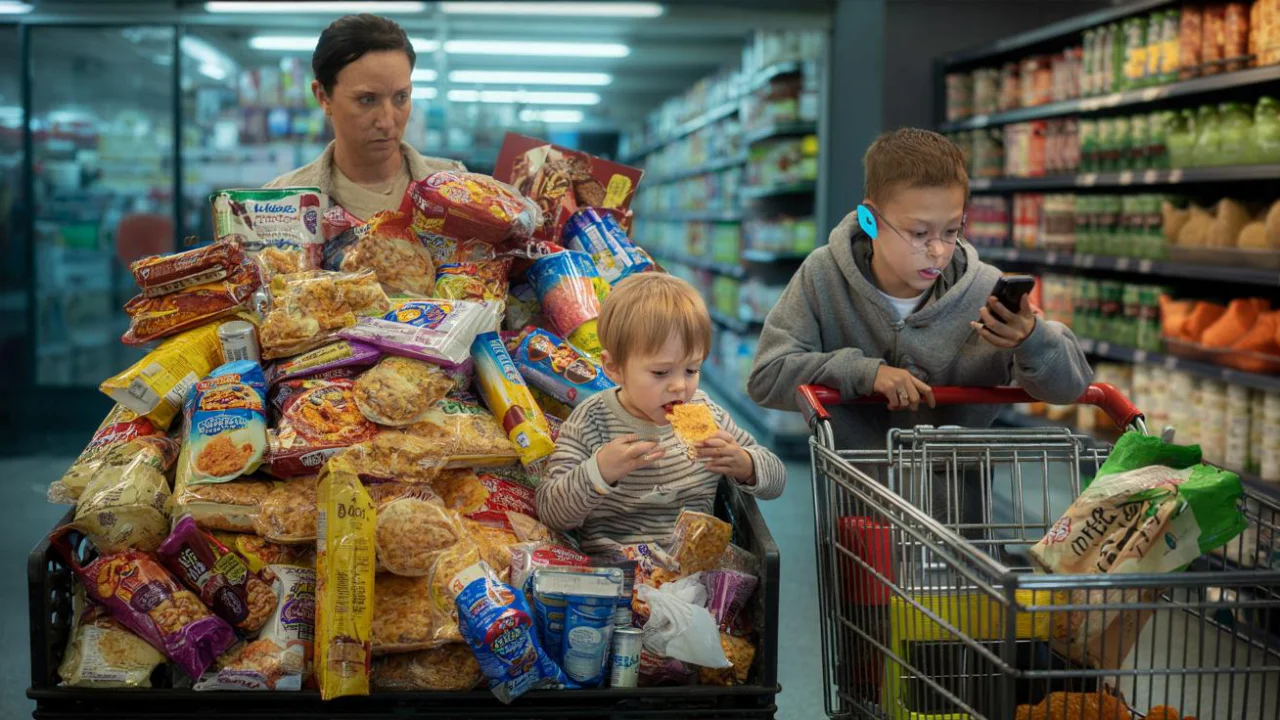
Sarah stares at the grocery receipt in her car, engine still running. $247 for a week’s worth of food that somehow feels like it won’t last three days. Her 8-year-old is already tearing into a granola bar from the backseat – the kind with more sugar than a candy bar but wrapped in promises of “whole grains” and “natural energy.”
This wasn’t the plan. She’d walked into the store thinking about balanced meals and fresh vegetables. But somewhere between the screaming toddler, the after-school pickup rush, and the reality of needing dinner ready in 20 minutes, her cart filled with boxes, packets, and containers designed to solve problems she didn’t even know she had.
Sound familiar? You’re not alone. Millions of families are caught in the same cycle, and it’s quietly rewriting our relationship with food – one ultra processed meal at a time.
How Ultra Processed Foods Hijacked Our Shopping Carts
Ultra processed foods aren’t just the obvious culprits like chips and candy. They’re the breakfast cereals that promise to start your day right, the yogurts packed with more sugar than ice cream, and the “healthy” granola bars that spike blood sugar faster than a soda.
These foods are engineered for convenience and craving. They’re designed to hit the perfect combination of salt, sugar, and fat that makes your brain say “more” before you’ve even finished chewing.
“We’ve created a food environment where the most accessible, affordable, and convenient options are also the ones that mess with our blood sugar the most,” explains Dr. Rachel Martinez, a nutrition researcher who studies processed food consumption. “It’s not a coincidence – it’s by design.”
The statistics are staggering. In many Western countries, ultra processed foods now make up more than half of the average person’s daily calories. For children, that number can climb even higher – sometimes reaching 60% or more of their total food intake.
The Blood Sugar Roller Coaster We Can’t Get Off
Here’s what happens when ultra processed foods become your baseline: your blood sugar starts riding a roller coaster that never stops. These foods are engineered to be absorbed quickly, causing rapid spikes followed by crashes that leave you hungrier than when you started.
The cycle looks something like this:
- Morning: Sugary cereal and juice sends blood sugar soaring
- Mid-morning crash: Energy drops, cravings kick in
- Quick fix: Processed snack bar provides temporary relief
- Lunch spike: Pre-packaged meal with hidden sugars
- Afternoon slump: More processed snacks to combat fatigue
- Evening: Family dinner featuring convenience foods
- Late night: Sweet treats to unwind
“Your body starts to expect these constant sugar hits,” notes Dr. James Chen, an endocrinologist who specializes in metabolic health. “Over time, this pattern can lead to insulin resistance, weight gain, and eventually type 2 diabetes – even in children.”
| Food Type | Blood Sugar Impact | Crash Time | Hunger Return |
|---|---|---|---|
| Fruit gummies | Rapid spike | 30-60 minutes | Stronger than before |
| Protein bar (processed) | Moderate spike | 1-2 hours | Gradual return |
| Whole apple with nuts | Gentle rise | No crash | 4-5 hours later |
| Instant oatmeal (flavored) | Sharp spike | 2-3 hours | With cravings |
The Real Cost of Convenient Eating
Beyond the blood sugar chaos, our love affair with ultra processed foods is changing how we relate to meals altogether. Family dinners are increasingly built around foods that require minimal preparation but maximum marketing.
The financial impact is significant too. While processed foods might seem cheaper per item, they’re actually more expensive per nutritional value. A family spending $200 weekly on processed convenience foods could often eat better for less with whole ingredients – if they had the time and energy to prepare them.
But here’s the thing: this isn’t really about individual choices. It’s about a food system that’s made ultra processed options the path of least resistance.
“When you’re working two jobs, dealing with a long commute, and trying to get kids to three different activities, those fifteen-minute meal solutions start looking like the only reasonable option,” observes Dr. Lisa Park, a public health researcher. “We’ve structured society in a way that makes processed food seem necessary for survival.”
Breaking Free Without Breaking Down
The good news? Small changes can make a big difference in stabilizing blood sugar and reducing dependence on ultra processed foods. It’s not about perfection – it’s about finding sustainable swaps that work for real life.
Start with the biggest blood sugar offenders: sugary drinks, candy-like breakfast cereals, and snacks that are basically desserts in disguise. Replace them gradually with options that provide steady energy instead of quick spikes.
Some families are finding success with “hybrid” approaches – keeping some convenient options while adding whole food elements. Think pre-cut vegetables with hummus instead of crackers, or adding frozen berries to plain yogurt instead of buying the pre-sweetened versions.
The key is recognizing that ultra processed foods aren’t inherently evil – they’re just tools that work better for food companies than for your blood sugar. Once you understand the game, you can start playing by different rules.
FAQs
What exactly counts as an ultra processed food?
If it has more than five ingredients, especially ones you can’t pronounce or wouldn’t have in your kitchen, it’s likely ultra processed.
Are all processed foods bad for blood sugar?
No. Foods like frozen vegetables, canned beans, or plain yogurt are minimally processed and won’t cause blood sugar spikes like ultra processed options.
How can I tell if a food will spike my blood sugar?
Look at the ingredient list – if sugar (in any form) is in the first three ingredients, or if it has very little fiber and protein, it’s likely to cause a spike.
Is it realistic to avoid ultra processed foods completely?
For most families, complete avoidance isn’t practical or necessary. Focus on reducing them and choosing better options when possible.
What’s the best way to transition kids away from ultra processed snacks?
Gradual changes work better than dramatic overhauls. Try mixing half regular cereal with half low-sugar cereal, or offering fruit alongside processed snacks.
Do ultra processed foods really cause long-term health problems?
Research increasingly links high consumption of ultra processed foods to obesity, diabetes, heart disease, and other chronic conditions, especially when they make up a large portion of someone’s diet.


