
Sarah stares at her shopping cart, doing mental math. Two frozen pizzas, a bag of chicken nuggets, instant mac and cheese, and energy drinks for tomorrow’s shift. Total: £12. The fresh salmon she wanted? £8 for one piece. Her toddler is already melting down in aisle three, and she’s got twenty minutes before her next job starts.
This is the math that millions of families do every week. Not the math of calories or blood sugar spikes, but the brutal economics of feeding people when time and money are running out.
Sarah’s cart tells a bigger story about why ultraprocessed foods have become the backbone of modern eating. It’s not just about convenience anymore. It’s about survival in a world where cooking from scratch feels like a luxury most can’t afford.
The invisible sugar storm in every aisle
Walk into any supermarket and you’re entering a carefully designed blood sugar battlefield. Those bright freezer sections aren’t just convenient – they’re engineered to trigger specific responses in your brain and body.
Dr. Rachel Martinez, a metabolic researcher at King’s College London, puts it simply: “Ultraprocessed foods are designed to be irresistible. They hit the sweet spot of salt, sugar, and fat that makes our brains want more, while stripping away the fiber and protein that would normally make us feel satisfied.”
The numbers tell a stark story. The average British family now gets 56% of their daily calories from ultraprocessed foods. That’s everything from breakfast cereals and flavored yogurts to ready meals and takeaway sandwiches.
But here’s what most people don’t realize: these foods don’t just affect your waistline. They create blood sugar roller coasters that influence everything from your mood at 3pm to whether your kids can concentrate in school.
What ultraprocessed foods actually do to your body
The science behind blood sugar and ultraprocessed foods is both fascinating and alarming. When you eat a piece of fresh fruit, your body processes the natural sugars slowly, thanks to fiber and other compounds that act like speed bumps in your digestive system.
Ultraprocessed foods work differently. They’re pre-digested, in a sense. The manufacturing process breaks down natural structures, removes fiber, and adds ingredients that make your blood sugar spike fast and crash hard.
| Food Type | Blood Sugar Impact | Hunger Return Time |
|---|---|---|
| Fresh apple with skin | Gentle 30-minute rise | 2-3 hours |
| Apple juice | Sharp 15-minute spike | 30-60 minutes |
| Apple-flavored cereal bar | Rapid spike + crash | 45 minutes |
| Whole grain toast | Steady 45-minute rise | 3-4 hours |
| White bread sandwich | Quick spike in 20 minutes | 1-2 hours |
These patterns matter more than most people realize. That 3pm energy crash? The mood swings? The constant hunger? They’re often linked to the blood sugar roller coaster that ultraprocessed foods create.
Professor James Chen, who studies food addiction at Oxford University, explains: “When blood sugar crashes, your brain interprets it as an emergency. You get cravings, irritability, and difficulty concentrating. It’s not willpower – it’s biology.”
The hidden costs adding up everywhere
The blood sugar connection shows up in places you wouldn’t expect. Teachers report that kids who eat ultraprocessed breakfasts struggle more with focus during morning lessons. Emergency room doctors see more people with anxiety attacks that coincide with blood sugar crashes.
The economic impact is staggering too. Consider these hidden costs of our ultraprocessed food system:
- NHS spending on diabetes has tripled in the past decade
- Sick days from fatigue and mood-related issues cost UK businesses £8.4 billion annually
- Children’s dental treatments linked to processed food consumption have increased by 40%
- Mental health services report 60% more cases of anxiety disorders correlating with poor diet quality
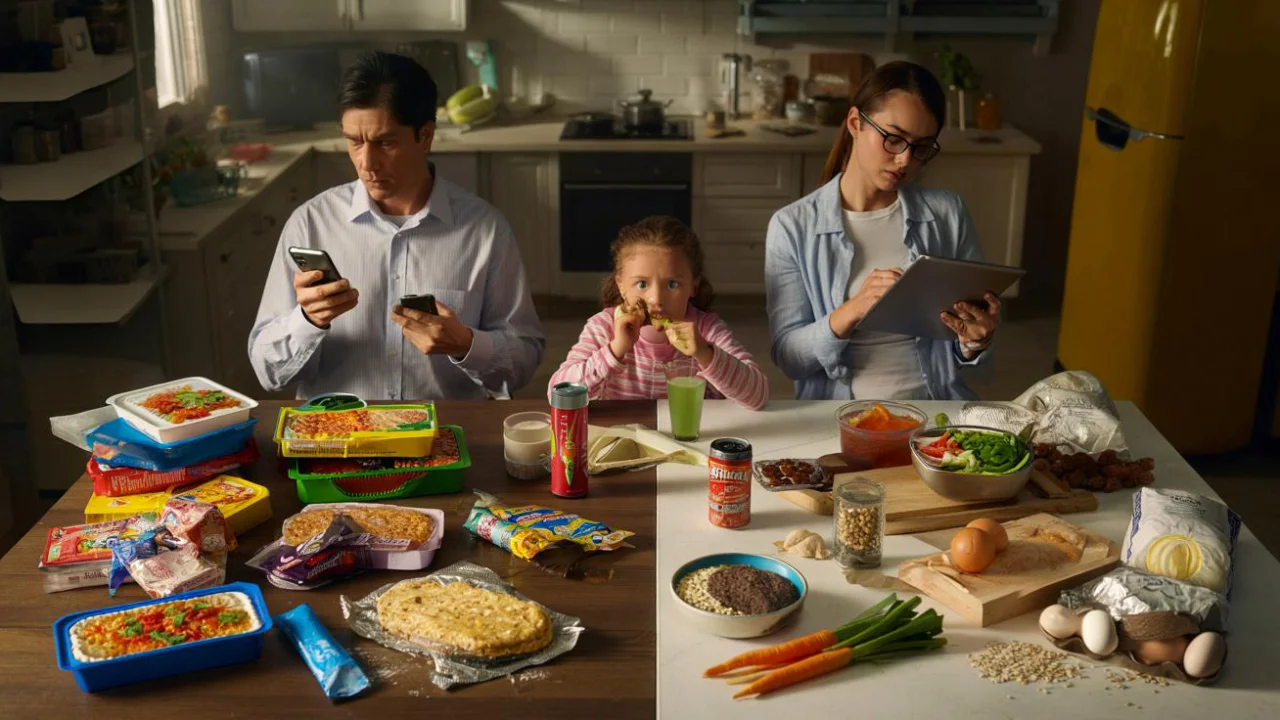
But the most devastating cost might be social. Families eating ultraprocessed foods together aren’t really eating together. Someone’s always finishing first, getting seconds, or feeling unsatisfied. The shared meal – once the cornerstone of family life – becomes a series of individual transactions with plastic containers.
Dr. Elena Rodriguez, a family therapist who specializes in eating behaviors, notes: “I see families where no one knows how to be hungry or full anymore. They’re constantly snacking, constantly seeking the next hit of salt-sugar-fat. They’ve lost touch with their body’s natural signals.”
Why we keep choosing convenience over health
The frustrating truth is that most people know ultraprocessed foods aren’t ideal. But knowing and doing are completely different things when you’re juggling work, childcare, and a budget that doesn’t stretch to organic vegetables.
The food industry has spent decades perfecting products that solve immediate problems: hunger, time pressure, crying kids in the backseat. They’ve also made these foods incredibly affordable compared to fresh alternatives.
A frozen pizza feeds a family of four for £3. The ingredients to make pizza from scratch? £12, plus two hours of prep and cooking time that many working parents simply don’t have.
This creates what researchers call “nutritional poverty” – having enough calories but not enough nutrients. People feel full but remain malnourished, leading to constant cravings and energy crashes that make healthy choices even harder.
Small changes that actually work
Despite the challenges, some families are finding ways to break the ultraprocessed cycle without breaking their budgets or schedules. The key isn’t perfection – it’s understanding how blood sugar works and making strategic swaps.
Instead of eliminating all convenience foods, nutrition counselor Mike Thompson suggests the “one ingredient upgrade” approach: “Keep the frozen pizza, but add a side salad from a bag. Keep the cereal, but choose one with more fiber. Small changes compound over time.”
The goal isn’t to shame anyone or suggest that cooking from scratch is always possible. It’s about understanding that our blood sugar responses affect everything from our mood to our relationships, and that even small changes can make a real difference.
Some families are batch-cooking simple meals on weekends. Others are choosing ultraprocessed foods with more protein and fiber. The key is awareness – understanding what these foods do to your body so you can make informed choices within your real-life constraints.
FAQs
Are all processed foods bad for blood sugar?
Not necessarily. Foods like frozen vegetables, canned beans, and plain yogurt are processed but don’t cause the same blood sugar spikes as ultraprocessed foods with added sugars and refined starches.
How can I tell if a food is ultraprocessed?
Look at the ingredient list. If it contains ingredients you wouldn’t find in a home kitchen (like high-fructose corn syrup, modified starches, or artificial flavors), it’s likely ultraprocessed.
Can eating ultraprocessed foods occasionally still be harmful?
Occasional consumption isn’t the issue – it’s when these foods make up the majority of your diet that blood sugar problems develop. Balance and frequency matter more than perfection.
What’s the cheapest way to improve blood sugar response?
Add protein or fiber to ultraprocessed meals. A handful of nuts with your cereal, or vegetables with your instant noodles can significantly slow down blood sugar spikes.
Do “sugar-free” processed foods avoid blood sugar problems?
Not always. Many sugar-free products contain refined starches that still cause blood sugar spikes, plus artificial sweeteners that may affect hunger signals in other ways.
How long does it take to notice changes after reducing ultraprocessed foods?
Most people report more stable energy levels within 3-7 days of reducing ultraprocessed foods, though individual responses vary based on overall diet and health status.


