
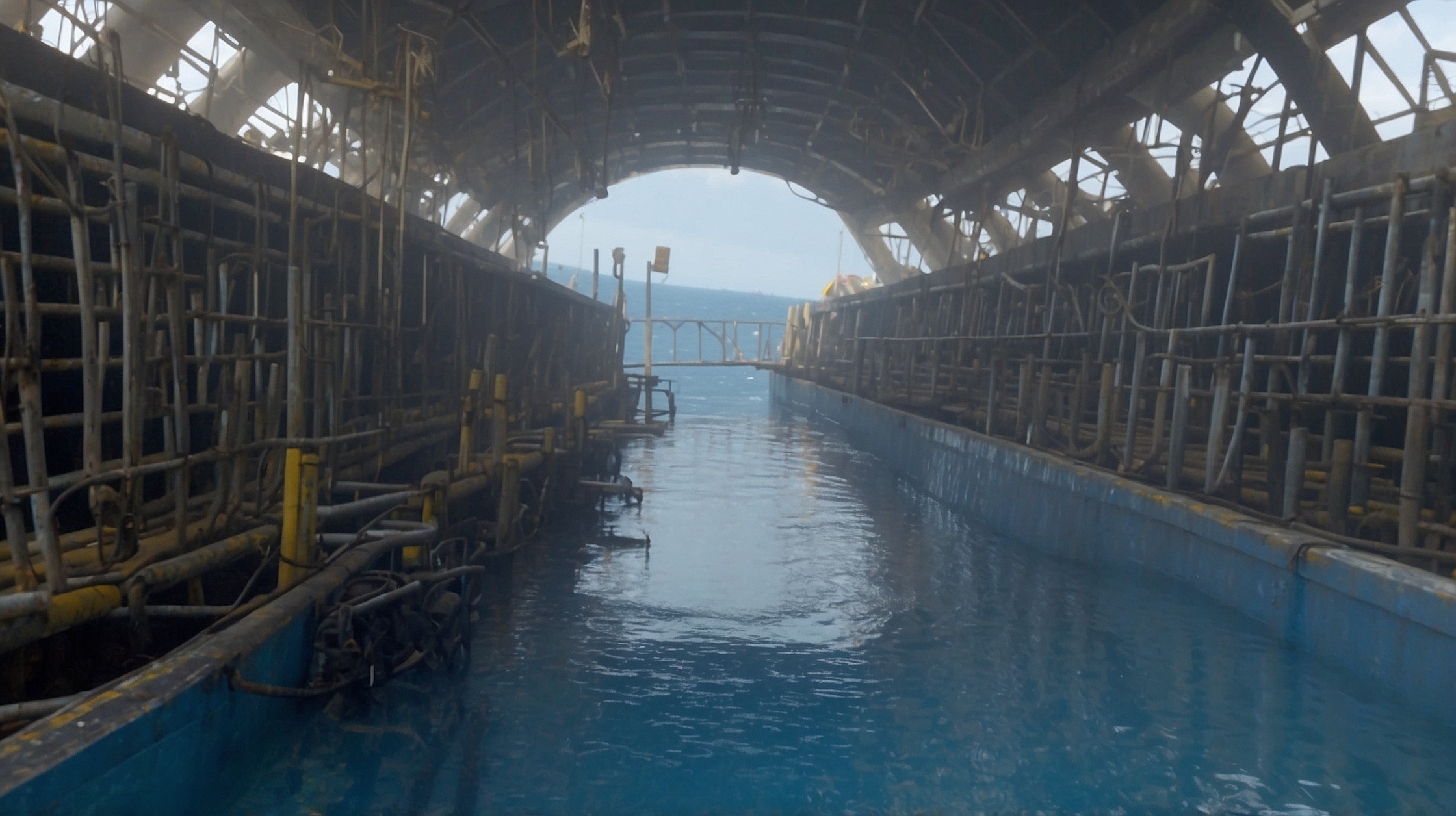
A monumental infrastructure project of global significance is now underway, promising to transform transportation, economic partnerships, and international connectivity. Engineers and policymakers confirmed that construction has officially begun on the world’s deepest underwater rail tunnel, set to link two continents via a revolutionary deep-sea corridor. This bold initiative, now approved and funded, marks a pivotal moment not only in civil engineering but also in geopolitics and international trade.
Designed to connect Europe and Africa with a high-speed rail system running beneath the sea, the underwater tunnel represents a generational leap forward in how nations collaborate to tackle borderless challenges such as sustainable transit and economic integration. The project is being heralded as a feat as ambitious as it is complex—featuring state-of-the-art construction techniques, uncharted engineering depths, and the promise of reshaping continental relations.
Underwater Rail Tunnel Project: Key Facts at a Glance
| Project Name | Deep-Sea Continental Rail Tunnel |
| Connecting Continents | Europe and Africa |
| Starting Year | 2024 |
| Estimated Completion | 2031 |
| Tunnel Length | Over 38 kilometers (approximate) |
| Maximum Depth | More than 400 meters below sea level |
| Primary Use | High-speed passenger and freight rail |
| Estimated Cost | Over $25 billion |
| Funded By | Bilateral partnerships, international banks, private investors |
What makes this tunnel a world-first
This deep-sea rail tunnel, once complete, will not only be the longest underwater tunnel ever built but also the deepest in engineering history. No tunnel to date has pushed past both the geographic and geological barriers that this project confronts head-on. The project incorporates **cutting-edge boring technology**, dynamic pressure equalization systems, and seismic-resistant support structures—each a marvel in its own right.
Unlike previously constructed tunnels, which typically run through narrow straits or across relatively stable seabeds, this mega tunnel traverses a seismically dynamic zone and requires advanced underwater precision mapping. Specialized tunnel boring machines (TBMs) custom-built for this project will work in tandem from both continental endpoints to meet at a mid-ocean junction point designed with a pressure-regulated maintenance hub.
Strategic motivations behind the tunnel
At the heart of the project lies a clear geopolitical motive: **to deepen cooperative ties** between Europe and Africa and open new pathways for trade, mobility, and development. Policy analysts underline that the tunnel could significantly reduce shipping costs, create a faster logistical route for goods, and bolster tourism in both regions.
For Europe, the tunnel presents an opportunity to strengthen its economic supply chain with African partners and diversify import-export channels. For Africa, it means unlocking potential in manufacturing zones, enabling workforce movement, and accessing European markets in record time. Generating faster, more reliable connections supports both continents’ green transportation goals by reducing dependency on air and truck travel.
“This project marks a brave new era of international connectivity. We’re not just building a tunnel; we’re building a future.”
— Dr. Elias Moreno, Chief Engineer, Intercontinental Transit Authority
Construction milestones and engineering challenges
The construction is expected to span over seven years, with activities divided into cumulative benchmarks, including seabed excavation, tunnel boring, ventilation system implementation, security framework establishment, and the laying of high-tensile tracks. Environmental clearances and geotechnical analysis consumed nearly five years before full-scale execution could commence.
Among the most difficult challenges is ensuring the **safety and durability** of infrastructure under intense underwater pressure and variable tectonic activity. Engineers will use reinforced concrete tubing and corrosion-resistant materials. They are also incorporating a triple-redundant safety mechanism to handle emergencies such as power failure or tremors.
“Between advanced robotics, floating workstations, and continuous 3D sonar mapping, this is modern engineering on steroids.”
— Maya Leclerc, Infrastructure Analyst, Global Transport Watch
Environmental safeguards and sustainability efforts
Environmental concerns were a central consideration from the project’s inception. Marine ecologists collaborated extensively with engineers to **mitigate harm to underwater ecosystems**. Tunnel construction is being managed with minimal seabed disruption thanks to guided channel boring systems instead of extensive dredging.
The tunnel, once operational, is expected to offset thousands of tons of CO2 emissions annually by diverting traffic from polluting air routes and diesel truck corridors. Electric high-speed trains powered via renewable grids could set a new bar for clean intercontinental transit.
“It’s a prime example of sustainability and innovation intersecting. Zero-waste protocols and carbon offset mandates will guide every phase.”
— Lin Zhao, Environmental Policy Fellow
Winners and potential challenges
| Winners | Losers |
|---|---|
| Trade and logistics companies | Air freight providers on affected routes |
| Tourism sectors in both continents | Diesel trucking industries |
| Green infrastructure advocates | Regions bypassed by new route |
| Urban developers and real estate | Small ports potentially losing business |
How the project compares to global infrastructure feats
Compared to the **Chunnel** connecting the UK and France or the **Seikan Tunnel** in Japan, this new continental link dwarfs them both in complexity and depth. While those projects served intra-continental mobility, this tunnel redefines intercontinental capability. Experts believe it may set a new global standard for subsea connectivity, serving as a blueprint for future underwater transportation projects around the world.
“The tunnel is not just closing a gap between two landmasses—it’s closing a chapter on geographic isolation.”
— Henrik Baumann, Global Infrastructure Consultant
What economic transformation could result
Projections estimate the tunnel will **facilitate over $200 billion in trade annually** at peak capacity. Peripheral zones such as inland logistics hubs, medium-sized cities, and seaport coasters are also predicted to experience economic booms due to enhanced freight pipelines. Employment is already ramping up, with over 30,000 jobs expected during the construction phase and thousands more post-launch in operations, maintenance, and tourism services.
Smart mobility and future expansion plans
The tunnel will be equipped with **real-time traffic monitoring**, adaptive lighting, and AI-powered maintenance diagnostics. There are even early discussions of integrating autonomous high-speed rail cars in the latter development phase. Future plans may include parallel data and energy cable tunnels, turning the corridor into a multipurpose infrastructure backbone connecting continents holistically.
“We’re designing not just for today’s transportation needs, but for tomorrow’s digital and energy flows.”
— Ranya Gupta, Strategic Planner, Continental Innovations Agency
Frequently Asked Questions
How long will the underwater tunnel take to complete?
The construction timeline is approximately seven years, with full operation expected by 2031.
Which countries are primarily involved?
The project is a joint effort between various European and African nations, although specific country partnerships are still developing as the project scales.
What will be transported through the tunnel?
Both high-speed passenger trains and freight cargo services will operate through the tunnel.
How deep will the tunnel be?
The tunnel will reach depths of more than 400 meters below sea level, setting a record for depth.
What are the environmental impacts?
The project includes multiple safeguards to prevent ecosystem damage, and it’s projected to significantly reduce CO2 emissions long-term.
Will regular travelers be able to use it?
Yes, the tunnel will accommodate passenger train services linking urban hubs on both continents.
Is the tunnel earthquake-resistant?
Yes, it includes seismic-resistant technology to handle underwater tectonic fluctuations.
What technological innovations are used?
Highlights include AI diagnostics, adaptive lighting, 3D seabed mapping, and electric propulsion systems.


