
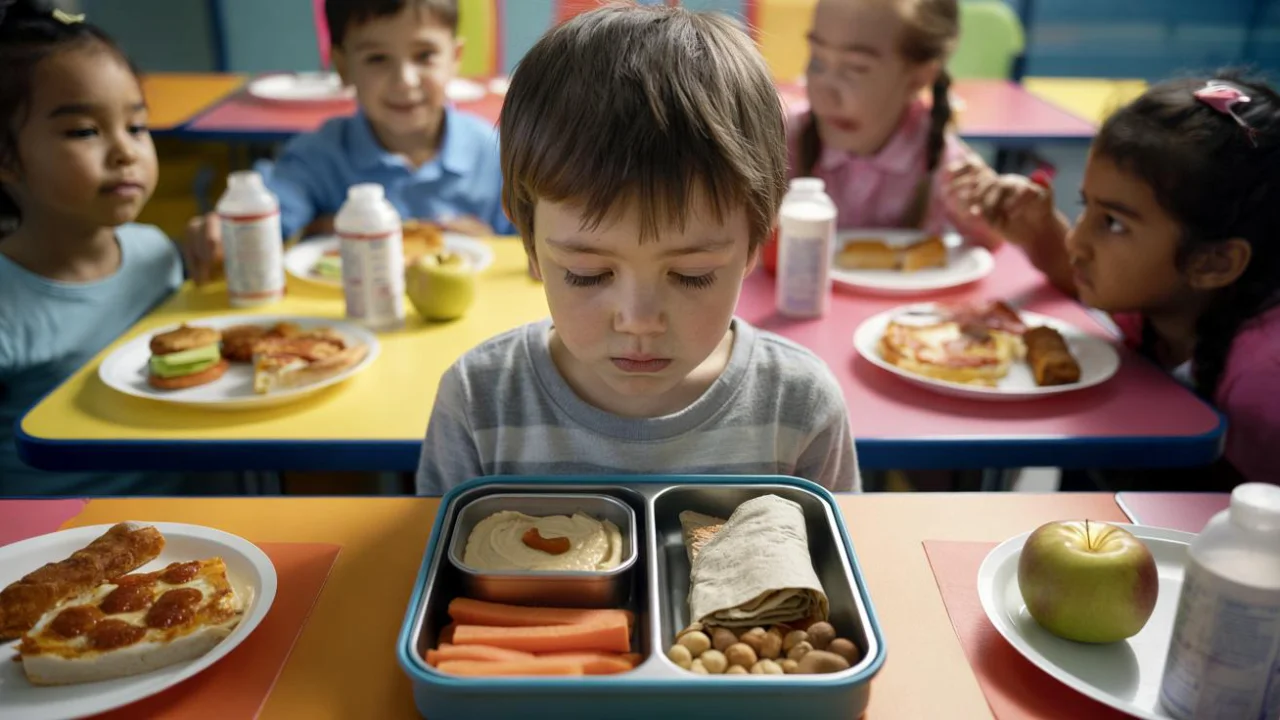
Sarah stares at the angry messages flooding her phone. Her six-year-old daughter Emma came home from school crying because her teacher publicly asked if she was “getting enough protein at home.” The crime? Emma’s lunchbox contained quinoa salad, chickpea cookies, and almond butter sandwiches instead of turkey and cheese.
“I spend hours planning balanced meals,” Sarah whispers to her husband that night. “But suddenly everyone thinks I’m starving our kid because we don’t eat meat.”
Welcome to modern vegetarian parenting, where every meal becomes a statement and every lunchbox invites judgment. What should be simple family choices now spark heated debates about child welfare, cultural identity, and even accusations of abuse.
The New Parenting Battlefield
Vegetarian parenting has exploded into one of the most polarizing topics of our time. Walk through any school pickup line and you’ll hear the whispers. Check social media and you’ll find viral videos of grandparents crying over “family traditions being destroyed” when their children announce plant-based households.
The statistics tell the story. Nearly 6% of American households now follow vegetarian or vegan diets, with many starting when they have children. But this shift hasn’t happened quietly.
“Parents are facing unprecedented scrutiny over food choices that previous generations never questioned,” says Dr. Lisa Chen, a pediatric nutritionist. “I’ve had families come to me in tears because someone threatened to call child services over a tofu sandwich.”
The pressure comes from everywhere. Teachers worry about pale-looking kids. Relatives feel personally attacked by dietary changes. Social media amplifies every extreme story until balanced perspectives disappear entirely.
What’s Really Behind the Outrage
The anger around vegetarian parenting rarely stays focused on nutrition. Instead, it becomes a proxy war for deeper cultural anxieties.
Here’s what’s really driving the conflict:
- Cultural identity threats: Food connects us to heritage and family traditions
- Generational power struggles: Young parents rejecting how they were raised
- Economic guilt: Plant-based eating can feel like privilege shaming to working families
- Religious tensions: Some faiths view vegetarianism as rejecting God’s gifts
- Misinformation spread: Extreme cases get amplified while success stories stay quiet
“When a parent chooses vegetarianism for their child, extended family often interpret it as rejection of their own parenting,” explains family therapist Dr. Michael Torres. “It becomes personal very quickly.”
| Common Accusations | Reality Check |
|---|---|
| Kids will be malnourished | Well-planned vegetarian diets meet all nutritional needs |
| Children can’t choose for themselves | All parents make dietary choices for young children |
| It’s just a trendy phase | Many families maintain vegetarian diets long-term |
| Kids will rebel and binge on meat | Most vegetarian-raised children continue similar eating patterns |
The Real-World Consequences
While internet debates rage, real families face tangible consequences. Some vegetarian parents report genuine discrimination that affects their children’s daily lives.
Emma’s mom Sarah isn’t alone. Across the country, families share similar stories of being ostracized, reported to authorities, or having their parenting questioned by institutions.
Schools sometimes refuse to accommodate plant-based lunches. Daycares have banned certain families from bringing birthday treats. Some pediatricians still incorrectly insist that children “need” meat to grow properly.
“The stress affects the whole family,” notes child psychologist Dr. Jennifer Walsh. “Kids pick up on their parents’ anxiety about food choices. They start feeling ashamed of what should be normal family meals.”
The impact extends beyond individual families. Many vegetarian parents report:
- Avoiding certain social situations to prevent food conflicts
- Spending excessive time defending normal dietary choices
- Children developing anxiety around eating in public
- Strained relationships with extended family members
- Increased grocery budgets to “prove” their meals are adequate
But there’s another side rarely discussed. Many vegetarian families thrive. Their children grow up healthy, develop broader food awareness, and learn to make thoughtful choices about consumption.
Finding Middle Ground
Despite the heated rhetoric, most nutrition experts agree that the vegetarian parenting debate misses the real point. The quality of any child’s diet matters more than whether it includes meat.
“I see plenty of malnourished kids whose diets consist mainly of processed foods and sugary drinks,” says pediatric dietitian Dr. Amanda Rodriguez. “Meanwhile, many vegetarian families are providing some of the most nutritionally thoughtful meals I encounter.”
The key factors for healthy child nutrition include:
- Adequate calories for growth and energy
- Diverse protein sources (beans, nuts, dairy if consumed)
- Essential vitamins and minerals through varied foods
- Limited processed foods regardless of dietary style
- Regular medical monitoring and adjustments as needed
Some families find compromise solutions. They might eat vegetarian at home while allowing flexibility at social events. Others involve children in age-appropriate food discussions so they understand family choices without feeling burdened by them.
The most successful vegetarian parenting approaches focus on abundance rather than restriction. Instead of emphasizing what children can’t eat, they celebrate the variety of foods they can enjoy.
FAQs
Can children get all necessary nutrients from vegetarian diets?
Yes, well-planned vegetarian diets provide all essential nutrients for growing children, though some supplements like B12 may be recommended.
Do vegetarian children have lower energy levels?
No, properly nourished vegetarian children have similar energy levels to their meat-eating peers when meals include adequate calories and nutrients.
What should vegetarian parents do if schools won’t accommodate their child’s diet?
Most schools are legally required to accommodate dietary needs. Parents can work with administration and provide documentation from healthcare providers if necessary.
How can vegetarian families handle criticism from relatives?
Open communication about health monitoring, sharing positive outcomes, and setting clear boundaries about parenting decisions can help reduce family tension.
Should vegetarian parents force their dietary choices on children?
All parents make food choices for young children. As kids grow, many vegetarian families involve them in age-appropriate discussions about their family’s dietary philosophy.
What are signs that a vegetarian child might need dietary adjustments?
Concerning signs include persistent fatigue, slow growth, frequent illness, or unusual food cravings. Regular pediatric checkups help monitor nutritional status.


