
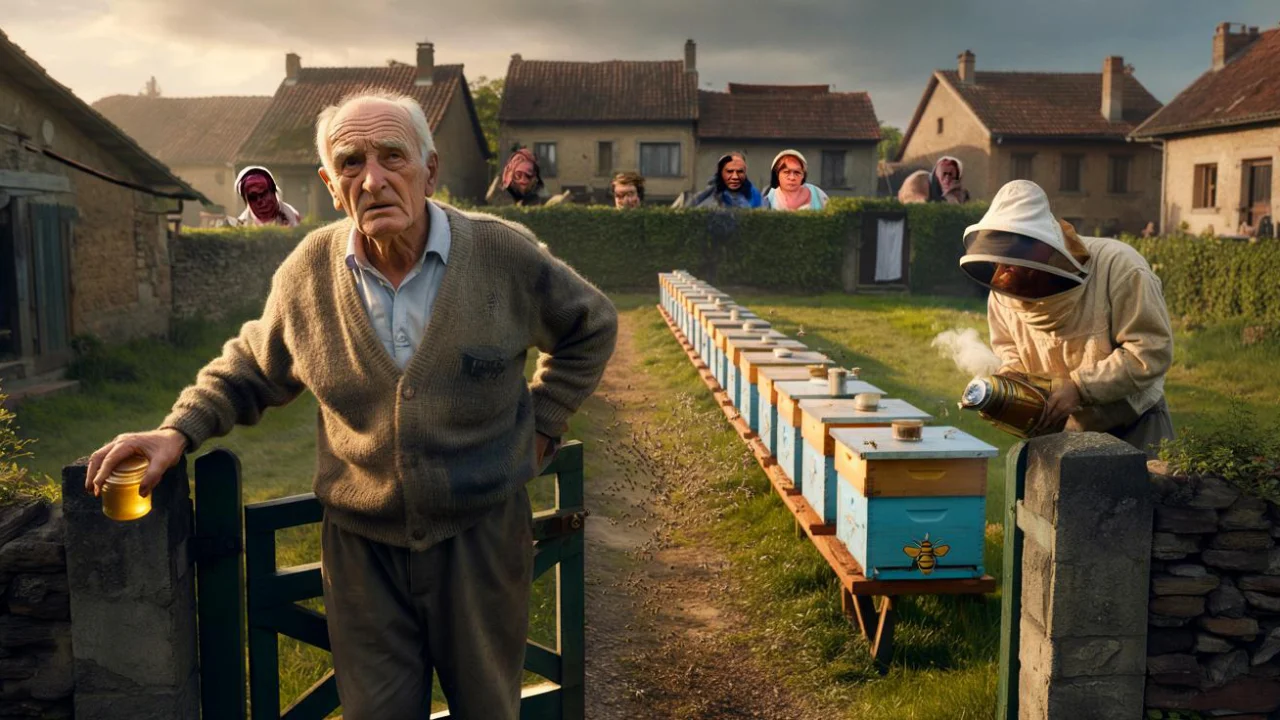
Gérard Dubois never imagined that offering his back field to a struggling young beekeeper would destroy his retirement peace. At 68, he’d spent thirty years quietly tending his garden in the French village of Saint-Léon, watching seasons change through his kitchen window. When Antoine pulled up with his overloaded van and twenty tired-looking hives, Gérard saw a kid who reminded him of his own grandson.
“Just until you find something permanent,” he told Antoine over coffee, waving away talk of rent money. “The bees can have the brambles.”
Six months later, Gérard faced a tax bill for €3,400, angry neighbors demanding village council meetings, and the uncomfortable realization that in modern France, even kindness comes with paperwork. His simple favor had ignited a village taxes controversy that would split his community down the middle and leave everyone questioning whether helping your neighbor is worth the risk.
How Neighborhood Gossip Became a Tax Investigation
The trouble started small, as it always does in villages of 847 people. Lucette Moreau, Gérard’s next-door neighbor for fifteen years, noticed the white hive boxes appearing along his fence line. She’d tolerated his vegetable garden and even his three noisy chickens, but this felt different.
“It looks commercial,” she told her sister Marie during their weekly shopping trip. “All those boxes in neat rows, that boy coming twice a week with his van.”
Word traveled fast through Saint-Léon’s narrow streets. By market day, half the village had decided Gérard was running an unlicensed business. The other half thought he deserved support for helping a young entrepreneur. Nobody bothered asking what actually happened.
“I’ve seen this pattern repeat in rural communities across France,” explains Dr. Catherine Berger, who studies village social dynamics at the University of Lyon. “When economic anxiety runs high, any change in the established order triggers suspicion. People project their own financial fears onto their neighbors.”
The mayor received three formal complaints within two weeks. Someone had photographed Antoine’s van and sent pictures to the regional tax office. Gérard found himself explaining his handshake agreement to officials who spoke in terms of “commercial land use” and “undeclared rental income.”
The Real Cost of Helping Others
What Gérard discovered shocked him. French tax law makes no distinction between helping a friend and running a business if money or goods change hands. The jar of honey Antoine left each month legally constituted “payment in kind.” His unused field had become a commercial property subject to business taxes.
The village taxes controversy exposed gaps that affect thousands of rural French families:
- Land use changes trigger automatic tax reassessments, even for informal arrangements
- Accepting any goods or services as “thank you” gifts creates taxable transactions
- Neighbors can file complaints that force expensive legal reviews
- Small favors between community members often violate zoning restrictions
- Appeals processes cost more than most retirees can afford
| Tax Obligation | Annual Cost | Trigger |
|---|---|---|
| Business Property Tax | €1,800 | Commercial use designation |
| Undeclared Income | €800 | Honey jars valued as rent |
| Zoning Violation Fine | €600 | Agricultural use in residential zone |
| Legal Consultation | €200 | Required for appeals process |
“The system assumes everyone operates like a business,” says tax advisor Philippe Roux, who helps rural families navigate these issues. “There’s no category for ‘helping your neighbor’ in the tax code. Every transaction gets monetized, whether you intended it or not.”
When Community Spirit Meets Modern Bureaucracy
Gérard’s story resonates because it touches something fundamental about how we live together. In villages like Saint-Léon, people have always helped each other without formal contracts or tax considerations. Your neighbor fixed your roof, you lent him your truck, the baker gave day-old bread to the widow down the street.
But modern France operates on documented transactions and official permissions. The informal economy of favors doesn’t fit into administrative categories designed for urban businesses.
“This creates a chilling effect on community cooperation,” observes rural sociologist Dr. Marie Vasseur. “People stop helping because they can’t afford the legal consequences of kindness.”
The village split predictably. Older residents rallied around Gérard, organizing a petition and offering to contribute to his legal defense. Younger families, many struggling with their own tax burdens, resented what they saw as special treatment.
Antoine, caught in the middle, offered to leave immediately. “I never wanted this for Monsieur Gérard,” he said. “Maybe I should just stick to industrial sites where nobody cares about bees or neighbors.”
The beekeeper’s guilt highlighted another layer of the problem. Young entrepreneurs in rural areas depend on community support to get started, but accepting that help creates tax liabilities for everyone involved.
The Uncomfortable Questions Nobody Wants to Answer
Gérard’s village taxes controversy forces uncomfortable questions about modern rural life. Should helping your neighbor require permits and tax filings? Does community spirit belong in an age of digital documentation and revenue optimization?
The French tax office eventually reduced Gérard’s bill to €1,200 after his lawyer argued that the arrangement was charitable rather than commercial. But the damage was done. Trust between neighbors had fractured, and the precedent was set.
Other villagers quietly stopped informal arrangements they’d maintained for years. The farmer who let hikers park in his field started charging fees to avoid tax complications. The elderly woman who watched neighborhood children after school asked parents to sign liability waivers.
“We’re creating a society where every human interaction needs legal protection,” warns community advocate Jean-Michel Laurent. “That’s not sustainable in small communities where relationships matter more than contracts.”
Gérard paid his reduced tax bill and kept the hives. Antoine registered as an official tenant for €50 per month, creating proper documentation that satisfied both tax authorities and zoning requirements. The bees continued making honey, indifferent to human bureaucracy.
But something essential was lost. The spontaneous generosity that had defined village life for generations now required careful calculation of legal and financial consequences. Helping others became a risk assessment rather than a natural impulse.
FAQs
Can neighbors really report informal arrangements to tax authorities?
Yes, French law allows anyone to report suspected undeclared income or business activities to regional tax offices, often anonymously.
What constitutes “payment in kind” for tax purposes?
Any goods, services, or benefits received in exchange for use of your property, including honey, vegetables, or labor, can be classified as taxable income.
Are there legal ways to help neighbors without tax consequences?
Pure charity with no exchange of goods or services typically avoids tax issues, but documented agreements and proper declarations are safer approaches.
How common are village tax disputes like this?
Rural tax controversies involving informal arrangements affect thousands of French families annually, particularly in areas where traditional community practices clash with modern regulations.
What should people do before making informal agreements?
Consult a local tax advisor and document any arrangements clearly, even for friendly favors, to avoid unexpected legal complications.
Can these tax bills be appealed successfully?
Appeals are possible but require legal assistance and proper documentation, often costing more than many rural residents can afford.


