
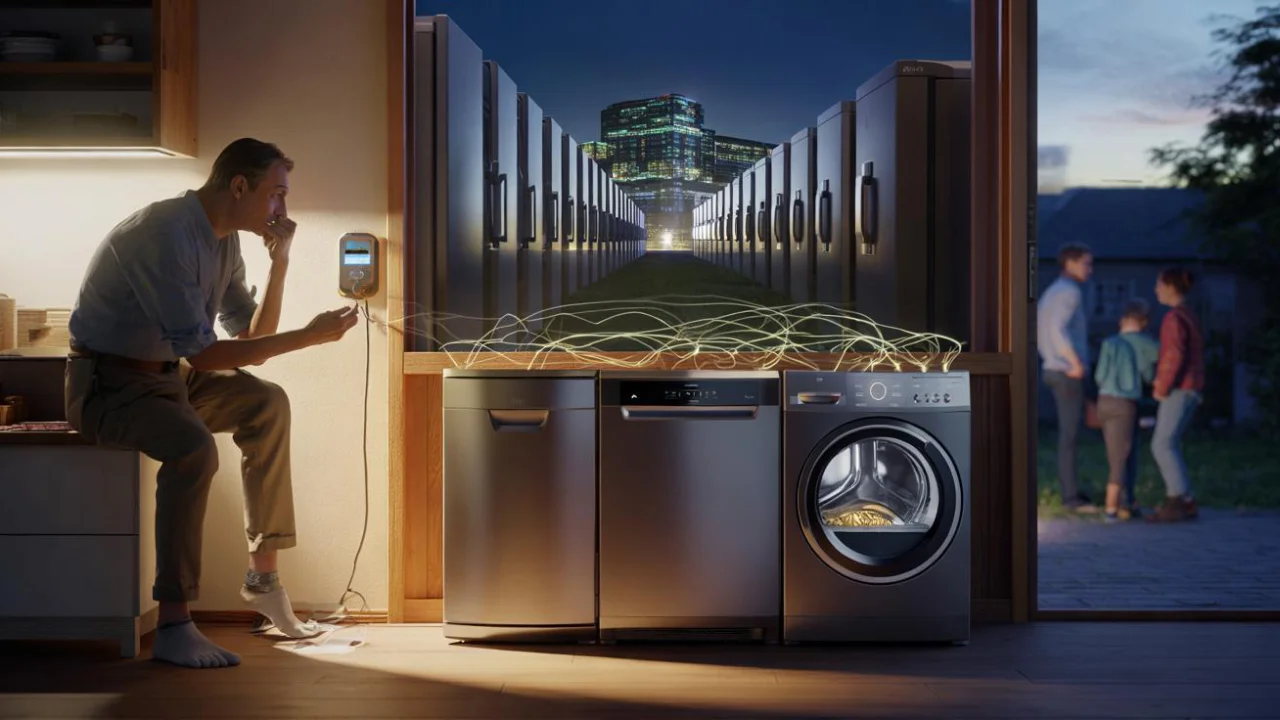
Sarah Martinez thought she was being smart when she upgraded to a connected water heater last spring. The salesperson promised instant hot water, smartphone controls, and “maximum efficiency.” For months, she enjoyed the luxury of stepping into a steaming shower without waiting. Then her electricity bill arrived in December – nearly triple her usual winter amount.
“I kept thinking there must be some mistake,” Sarah recalls, staring at the $847 charge. “I called the power company twice. They said everything looked normal on their end.” It wasn’t until her tech-savvy neighbor borrowed an energy monitor that the shocking truth emerged: her “efficient” water heater was consuming electricity around the clock, even when nobody was home.
Sarah’s experience mirrors a growing crisis hiding in millions of homes across the country. That gentle humming from your basement or utility closet isn’t just background noise – it’s the sound of money disappearing and energy grids straining under unnecessary load.
The Silent Energy Monster Living in Your Home
Traditional water heaters were simple beasts. Heat water, store it, repeat when needed. But today’s “smart” models are different creatures entirely. They maintain constant internet connections, run internal computers, and keep sensors active 24/7. The result? Water heater energy consumption has skyrocketed in ways most homeowners never realize.
Modern connected water heaters don’t just heat water – they’re essentially small data centers that happen to warm your shower. Every minute of every day, they’re communicating with servers, analyzing usage patterns, and maintaining readiness for remote commands you might never actually use.
“We’re seeing units that consume 15-20% more baseline energy than their ‘dumb’ predecessors, purely from the connected features,” explains Dr. Amanda Chen, an energy systems researcher at Pacific Northwest National Laboratory. “The standby load alone can equal running a small refrigerator continuously.”
The math becomes disturbing when scaled up. A single connected water heater running in maximum efficiency mode with all smart features active can consume as much standby power as 65 standard refrigerators. Most owners discover this only after receiving shocking utility bills.
The Real Numbers Behind Your Rising Bills
Understanding water heater energy consumption requires looking beyond the marketing promises. Here’s what actually happens when you install that “energy-efficient” smart unit:
- Baseline consumption: Traditional units use power only during heating cycles
- Smart features load: Connected models maintain 50-200 watts of continuous standby power
- Server communication: Constant data transmission adds 15-30 watts per hour
- Predictive heating: AI learning systems pre-heat based on usage patterns, often incorrectly
- Remote monitoring: Internal sensors and cameras require continuous power
The energy impact varies dramatically by model and usage:
| Water Heater Type | Daily Standby Consumption | Annual Extra Cost | Equivalent Refrigerators |
|---|---|---|---|
| Traditional Electric | 0.5-1.2 kWh | $0 | 0 |
| Basic Smart Model | 2.1-3.6 kWh | $180-290 | 8-15 |
| Premium Connected | 4.8-8.2 kWh | $420-680 | 32-65 |
| Commercial Smart Unit | 12-18 kWh | $1,100-1,650 | 85-120 |
“The worst part is that most of these features provide minimal actual benefit,” notes Marcus Rodriguez, a home energy auditor in Phoenix. “People pay thousands extra for remote control they rarely use, while burning through electricity every single day.”
When Smart Technology Becomes Neighborhood Warfare
The water heater energy consumption crisis is dividing communities in unexpected ways. Homeowners’ associations debate whether to ban high-consumption appliances. Apartment complexes face massive utility cost increases when tenants install connected units without permission.
In suburban Denver, the Riverside Commons HOA imposed emergency restrictions after their shared electrical infrastructure couldn’t handle multiple smart water heaters operating simultaneously. “We had brownouts every evening when people got home from work,” explains board president Janet Williams. “The grid literally couldn’t cope.”
The political implications are equally messy. Manufacturers lobby against efficiency regulations while utilities push for stricter standards. Environmental groups want immediate bans on high-consumption models, while consumer advocates argue people should have choice in their appliances.
“We’re essentially subsidizing corporate profits through inflated energy bills,” argues state representative Tom Harrison, who’s proposing legislation requiring clear consumption labeling. “Companies market these as ‘efficient’ while they quietly drain more power than entire households used to consume.”
Meanwhile, power companies face a dilemma. Smart water heaters generate significant revenue through increased consumption, but they also strain infrastructure and force expensive grid upgrades. Some utilities now offer rebates to customers who disconnect smart features, creating an absurd situation where being “dumb” saves money.
The divide extends to expert opinions. Industry engineers defend connected features as necessary for grid management and user convenience. Energy efficiency advocates call them wasteful marketing gimmicks designed to increase corporate profits through forced obsolescence and subscription services.
“Every connected water heater is essentially a profit center for manufacturers,” explains Dr. Chen. “They collect usage data, sell replacement parts, offer premium services, and create dependency on their ecosystem. The consumer pays for all of it through higher energy bills.”
What You Can Do Right Now
If you suspect your water heater energy consumption is out of control, several immediate steps can help:
- Install a smart power meter between your water heater and electrical supply
- Monitor consumption for 2-4 weeks to establish baseline usage
- Disable unnecessary connected features through your unit’s settings
- Switch to scheduled heating instead of predictive mode
- Consider installing a manual timer to limit operating hours
Some homeowners have successfully reduced consumption by 60-80% simply by turning off smart features they never actually used. Others have discovered that manufacturers’ “eco” modes actually consume more power than standard operation due to increased sensor activity.
The solution isn’t necessarily abandoning modern technology, but understanding what you’re actually paying for. That morning shower shouldn’t cost more than heating your entire house, but for millions of Americans with connected water heaters, it increasingly does.
FAQs
How can I tell if my water heater is consuming too much energy?
Install a plug-in energy monitor or check your utility bill for unusual spikes. Smart water heaters often double or triple baseline electricity costs.
Are there any truly efficient smart water heaters?
Some newer models allow you to disable connectivity features while keeping basic efficiency improvements. Look for units with manual override options.
Can I retrofit my existing water heater instead of buying a new one?
Yes, aftermarket timers and insulation improvements often provide better efficiency gains than expensive smart upgrades, without the ongoing energy penalties.
What should I do if my HOA restricts high-consumption appliances?
Document your current usage before any upgrades and consider efficiency improvements that don’t require internet connectivity or continuous power draw.
Are manufacturers required to disclose standby power consumption?
Currently, no federal law requires clear labeling of connected appliance energy usage, though some states are considering legislation to mandate transparency.
Will disconnecting smart features void my warranty?
Most manufacturers cannot legally void warranties for disabling connectivity features, but check your specific contract terms before making changes.


