
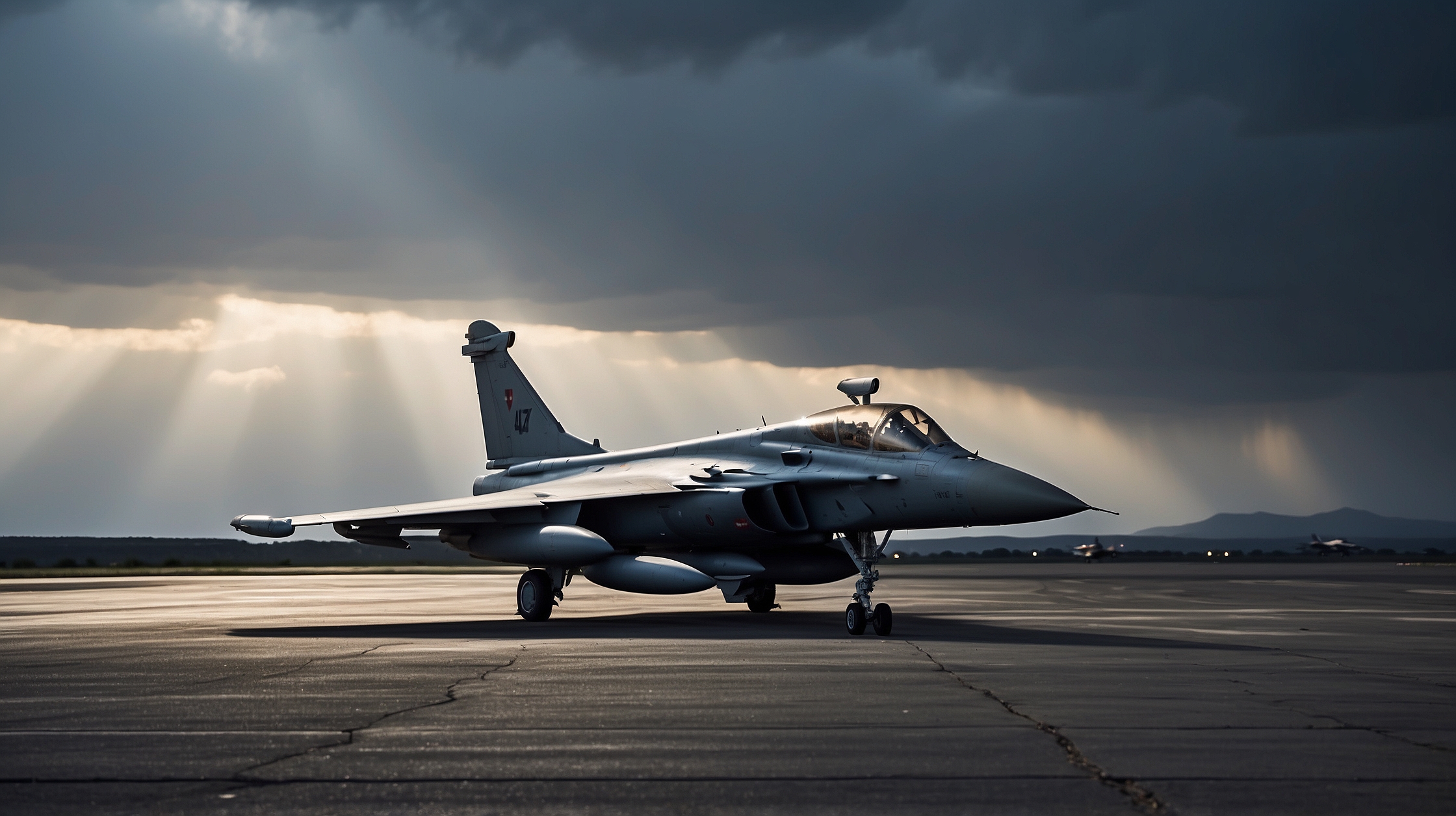
The collapse of the long-anticipated Rafale fighter jet deal has sent shockwaves through the defense and geopolitical spheres, raising questions about India’s procurement processes and its broader military ambitions. Once touted as a landmark arrangement set to enhance India’s aerial warfare capabilities, the unraveling of the deal has triggered doubts about how such high-stakes decisions are made and sustained over time. What initially began as a strategic partnership has now turned into a cautionary tale for future defense pacts.
Initially envisioned as a force-multiplier for the Indian Air Force (IAF), the Rafale deal’s failure emphasizes systemic concerns—ranging from bureaucratic red tape and political wrangling to shifting strategic priorities. Both domestic and international defense observers are closely watching the implications that the deal’s dissolution could have on India’s readiness and upcoming military plans. As global powers pivot toward next-generation aerial platforms, India is now left reassessing not only how it equips its forces but whom it partners with moving forward.
Quick overview of the Rafale fighter jet deal development
| Aspect | Details |
|---|---|
| Deal Parties | India and Dassault Aviation (France) |
| Original Agreement | Purchase of 126 Rafale fighter jets in 2007; later modified to 36 jets in fly-away condition |
| Total Contract Worth | Approximately €7.87 billion (for 36 jets finalized in 2016) |
| Status | Initial batch inducted; remaining halted amid logistical and political factors |
| Key Concerns | Offset obligations, HAL partnership disagreements, pricing controversy |
| Impacted Agencies | Indian Air Force, DRDO, HAL, Dassault Aviation |
What led to the collapse of the Rafale deal
The disintegration of the Rafale fighter jet deal can be traced back to a series of compounding issues. Originally, India had planned to acquire 126 Medium Multi-Role Combat Aircraft (MMRCA) to bolster its depleting squadron strength. Dassault Aviation won the MMRCA contract, and negotiations centered around transfer of technology and domestic manufacturing through Hindustan Aeronautics Limited (HAL).
However, complications soon surfaced. **Dassault’s reluctance** to take responsibility for aircraft manufactured by HAL led to prolonged disagreements. Additionally, escalating costs and disputes over delivery timelines hindered progress. The inability to finalize terms with HAL also triggered political scrutiny, and allegations of favoritism in the eventual off-the-shelf purchase of 36 jets further muddied the waters.
A major sticking point was also **offset obligations**—Dassault and its partners were to reinvest 50% of the deal value into India’s defense ecosystem. This clause became a double-edged sword, as delays and opacity in executing offsets fueled controversy and legal challenges. Despite the delivery of 36 Rafales under the modified deal, the abandonment of the larger framework has left strategic gaps unaddressed.
Strategic and operational consequences for India
For the Indian Air Force, which continues to rely on aging aircraft like the MiG-21 and Jaguar, the breakdown of the broader Rafale deal delays efforts to achieve a sanctioned strength of 42 squadrons. Currently operating at a significantly lower number, the IAF’s capabilities are being tested amidst volatile regional tensions with both China and Pakistan.
Moreover, the failed promise of **Make in India** under this deal has undercut the country’s ambitions for industrial self-reliance in defense. Not only has India’s domestic defense industry lost an opportunity for substantial capacity-building, but the friction has also discouraged potential foreign investors from entering long-term joint ventures in the Indian market.
Fallout on future defense procurements
The Rafale saga has led Indian policymakers to reflect on procurement frameworks as a whole. Questions regarding transparency, pricing benchmarks, and partner selection have forced a systemic review. India’s experience with Rafale may prompt a shift toward **government-to-government (G2G)** models rather than vendor-led open competition, especially for high-value deals.
Furthermore, India may now place heightened emphasis on indigenous platforms like the LCA Tejas Mk2 and Advanced Medium Combat Aircraft (AMCA) to reduce overdependence on foreign suppliers. While imports will remain critical for advanced technologies, the recalibration could ensure more resilient control over operational ecosystems.
Reactions from stakeholders and defense experts
The Rafale fallout has elicited varied reactions. While some defense experts view the initial off-the-shelf purchase as necessary intervention due to delays, others lament the missed strategic opportunity.
“It’s a classic instance where **administrative inefficiencies** overpowered operational necessity. While the 36 jets are a game-changer, the collapse of the full project is a step backward.”
— Air Marshal (Retd) R.K. Sharma
“If India wants to be taken seriously as a power, then defense deals must be **depoliticized** and executed with certainty. Our international credibility is at stake.”
— Defense Analyst Aparna Menon
Notably, Dassault Aviation has maintained limited public commentary, with industry insiders underscoring the importance of clarity in future joint ventures. Internally, DRDO and HAL are reportedly reassessing frameworks to engage with foreign OEMs under clearer terms and risk-sharing mechanisms.
Winners and losers from the Rafale deal collapse
| Winners | Losers |
|---|---|
| LCA Tejas Program | HAL’s public reputation |
| Countries offering G2G defense pacts | Indian Air Force’s modernization timeline |
| Alternative fifth-gen aircraft vendors | Make in India defense outlook |
| National Defense Academy’s policy reform advocates | Dassault’s long-term India business prospects |
What changed in the defense ecosystem this year
The evolving geopolitical climate has already prompted notable shifts. India recently announced increased budget allocations for indigenous R&D and emphasized fast-tracked approval processes for domestic prototypes. A push toward joint-venture-based production models instead of dependency-based licensing protocols is also taking shape.
The Ministry of Defence has also issued new guidelines to streamline procurement, including shortened vendor evaluation cycles, clearer offset frameworks, and more flexible contract conditions to avoid future Rafale-like complications. These reforms aim not only to attract new foreign partners but also to reassure stakeholders of India’s long-term defense reliability.
What alternatives India is considering now
In the wake of Rafale’s collapse as a scalable option, India is now exploring multiple operational alternatives. These include collaborative development with Russia on the Su-75 Checkmate, negotiations on F-21 platforms with U.S. manufacturers, and fast-tracked indigenous upgrades to the LCA and AMCA programs.
Additionally, talks have intensified with European and South Asian partners for **co-development initiatives** in AI-driven aerial systems, unmanned platforms, and radars. The emphasis is quickly shifting from bulk procurement to strategic capability-building.
Short FAQs about the Rafale fighter jet deal collapse
What was the original plan for the Rafale deal?
The initial plan, dating back to 2007, was for India to purchase 126 Rafale jets, with 108 to be manufactured domestically by HAL and 18 delivered in fly-away condition.
Why did the full Rafale deal collapse?
Disagreements over manufacturing responsibilities, offset obligations, pricing, and political controversies led to the cancellation of the broader 126-jet agreement.
How many Rafale jets has India received?
As per the revised 2016 agreement, India has received all 36 jets, which were delivered in fly-away condition from France.
What happened to HAL’s role in the Rafale project?
HAL was originally expected to produce 108 jets, but disagreements with Dassault over responsibility and quality control led to HAL’s exclusion from the final deal.
Will India buy more Rafale jets in the future?
While there is no confirmed agreement for additional jets, the IAF has expressed operational need for more units. However, future orders may hinge on cleaner contractual terms and partner feasibility.
What does this mean for India’s Make in India policy?
The collapse stalled one of Make in India’s most significant defenses initiatives, highlighting challenges in executing large-scale technology transfers and joint production models.
Are indigenous alternatives like Tejas and AMCA sufficient?
While still in development phases, these aircraft are seen as integral to future planning. However, they can’t currently replace the capabilities offered by platforms like Rafale.
Has this impacted India’s defense credibility globally?
Yes, to an extent. Global defense OEMs are now more cautious in structuring long-term cooperation frameworks with India, awaiting clearer procurement and project execution policy improvements.


