
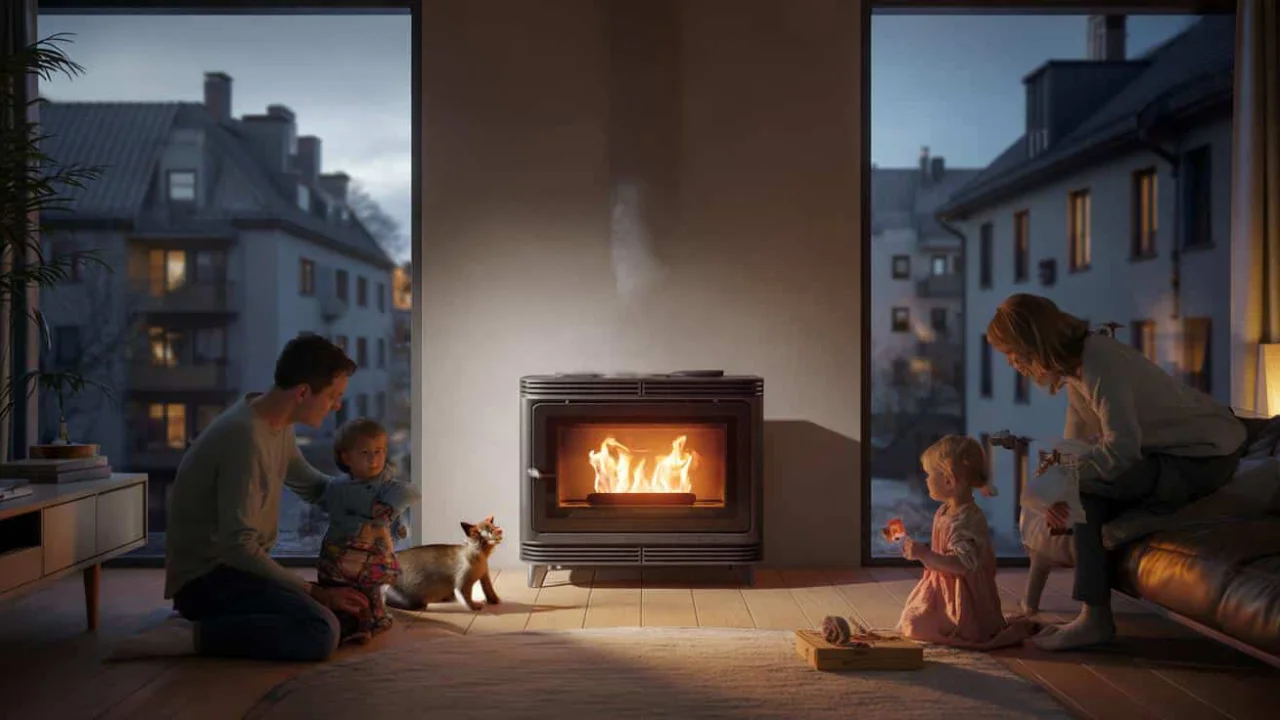
Sarah Martinez thought she was walking into the wrong apartment when she first visited her friend’s downtown loft. There, nestled against the exposed brick wall, sat what looked like a sleek fireplace with dancing flames behind crystal-clear glass. But when she instinctively glanced up, expecting to see a chimney or vent pipe, she found nothing but smooth ceiling and modern lighting.
“Where does the smoke go?” Sarah asked, genuinely puzzled.
Her friend Emma just smiled and gestured toward a small, almost invisible vent near the floor. “It’s a wood stove without flue,” she explained. “No chimney needed. The technology burns so clean that barely any smoke escapes, and what little does gets filtered right back into the room as heat.”
The Science Behind Flue-Free Wood Burning
A wood stove without flue operates on a completely different principle than traditional fireplaces. These innovative heating systems use advanced combustion technology that burns fuel at extremely high temperatures, typically between 1,400 and 1,800 degrees Fahrenheit.
The secret lies in the combustion chamber design. Unlike conventional wood stoves that send smoke and gases up a chimney, flue-free models feature secondary burn chambers that re-ignite the gases and particles before they can escape. This process, called secondary combustion, captures nearly all the energy from the fuel.
“We’re essentially burning the smoke itself,” explains heating engineer Marcus Thompson, who has worked with flue-free systems for over a decade. “What you see is complete fuel utilization – almost nothing goes to waste.”
Most of these systems don’t burn traditional logs. Instead, they use compressed wood pellets, bioethanol, or specially processed wood blocks that create minimal ash and virtually no creosote buildup.
Why Families Are Making the Switch
The appeal of a wood stove without flue extends far beyond just avoiding chimney installation. Urban homeowners face unique challenges that these systems directly address:
- No structural modifications needed – No roof penetration, chimney installation, or major construction work
- Apartment-friendly design – Many models work in condos and rental properties where traditional fireplaces aren’t possible
- Enhanced safety features – Automatic shut-off systems and sealed combustion chambers reduce fire risks
- Improved air quality – Advanced filtration means cleaner indoor air compared to traditional wood burning
- Lower maintenance costs – No chimney cleaning, minimal ash removal, and fewer moving parts
“I was spending $800 every year just on chimney cleaning and repairs,” says homeowner Janet Williams from Portland. “With my new flue-free system, I’ve had zero maintenance costs in three years.”
| Feature | Traditional Wood Stove | Flue-Free Wood Stove |
|---|---|---|
| Installation Cost | $3,000-8,000 | $1,500-4,000 |
| Annual Maintenance | $200-500 | $50-150 |
| Efficiency Rating | 60-75% | 85-95% |
| Installation Time | 2-5 days | 4-8 hours |
Real-World Impact on Modern Households
The growing popularity of flue-free wood stoves reflects broader changes in how people heat their homes. Rising energy costs, environmental concerns, and urbanization have created demand for flexible, efficient heating solutions.
Young families, in particular, are drawn to these systems. Parents appreciate the safety features – many models have cool-touch surfaces and automatic shut-offs that activate if oxygen levels drop or if the unit tips over.
“With two toddlers, I needed something that looked like a real fireplace but wouldn’t burn them if they got too close,” explains father of two David Chen. “The glass surface stays warm but not scalding hot.”
Environmental benefits also play a significant role. Modern flue-free systems produce up to 80% fewer emissions than traditional wood stoves. The complete combustion process means less particulate matter enters the atmosphere.
“These systems represent a genuine leap forward in residential heating technology,” notes environmental engineer Dr. Lisa Rodriguez. “They give people the ambiance and warmth of wood burning without the environmental guilt.”
Installation and Practical Considerations
Setting up a wood stove without flue typically requires only basic electrical connection and minimal ventilation. Most units plug into standard wall outlets and need just a small air intake vent or use room air for combustion.
However, proper sizing remains crucial. These systems work best in spaces between 400 and 1,200 square feet. Larger areas may require multiple units or supplemental heating.
Fuel costs vary by region, but pellet fuel typically costs 20-30% less than heating oil and about the same as natural gas. The high efficiency rating means less fuel consumption overall.
Professional installation isn’t always required, though many manufacturers recommend it for warranty purposes. The process usually involves:
- Selecting appropriate wall location
- Installing small ventilation openings if needed
- Connecting electrical supply
- Testing safety systems and controls
Building codes vary by location, so checking local regulations before purchase is essential. Most areas now recognize and permit flue-free wood stoves, but some older building codes may require updates.
Looking Ahead: The Future of Home Heating
Industry projections suggest flue-free wood stove sales will grow by 35% annually over the next five years. This growth is driven by urban densification, energy efficiency mandates, and changing lifestyle preferences.
Manufacturers are developing even more advanced models with smartphone connectivity, programmable heating schedules, and integration with home automation systems. Some newer units can even adjust burn rates based on outdoor temperature and occupancy sensors.
“We’re seeing this technology mature rapidly,” says heating industry analyst Robert Kumar. “What started as a niche product for apartments is becoming mainstream for anyone who wants efficient, flexible heating.”
The technology isn’t perfect yet. Cold climates still challenge these systems, and some users miss the crackling sounds and wood smoke aroma of traditional fireplaces. But for many households seeking modern convenience with classic warmth, the wood stove without flue represents an ideal compromise.
FAQs
Do flue-free wood stoves really work without any ventilation?
Most require minimal ventilation through small vents or use room air, but they don’t need traditional chimneys or flue pipes.
Are these systems safe for apartments and condos?
Yes, many are designed specifically for multi-unit buildings and include enhanced safety features like automatic shutoffs and sealed combustion.
How much does it cost to operate a flue-free wood stove?
Operating costs typically range from $300-600 annually, depending on usage and local fuel prices.
Can I install one myself, or do I need a professional?
Many units are designed for DIY installation, though professional setup is recommended for warranty coverage and local code compliance.
Do they heat as well as traditional wood stoves?
Most flue-free models are actually more efficient than traditional stoves, converting 85-95% of fuel energy into usable heat.
What type of fuel do these stoves use?
Most burn compressed wood pellets, bioethanol, or specially processed wood blocks rather than traditional firewood logs.


