
Sarah stared at the thermostat showing another $400 heating bill and felt her stomach drop. Her old radiators were killing her budget, but installing a traditional wood stove would mean tearing through walls, building a chimney, and spending thousands she didn’t have. That’s when her neighbor mentioned something that sounded impossible: a wood stove that didn’t need a flue.
“You mean no chimney at all?” Sarah asked, incredulous. Her neighbor just smiled and invited her over to see it in action.
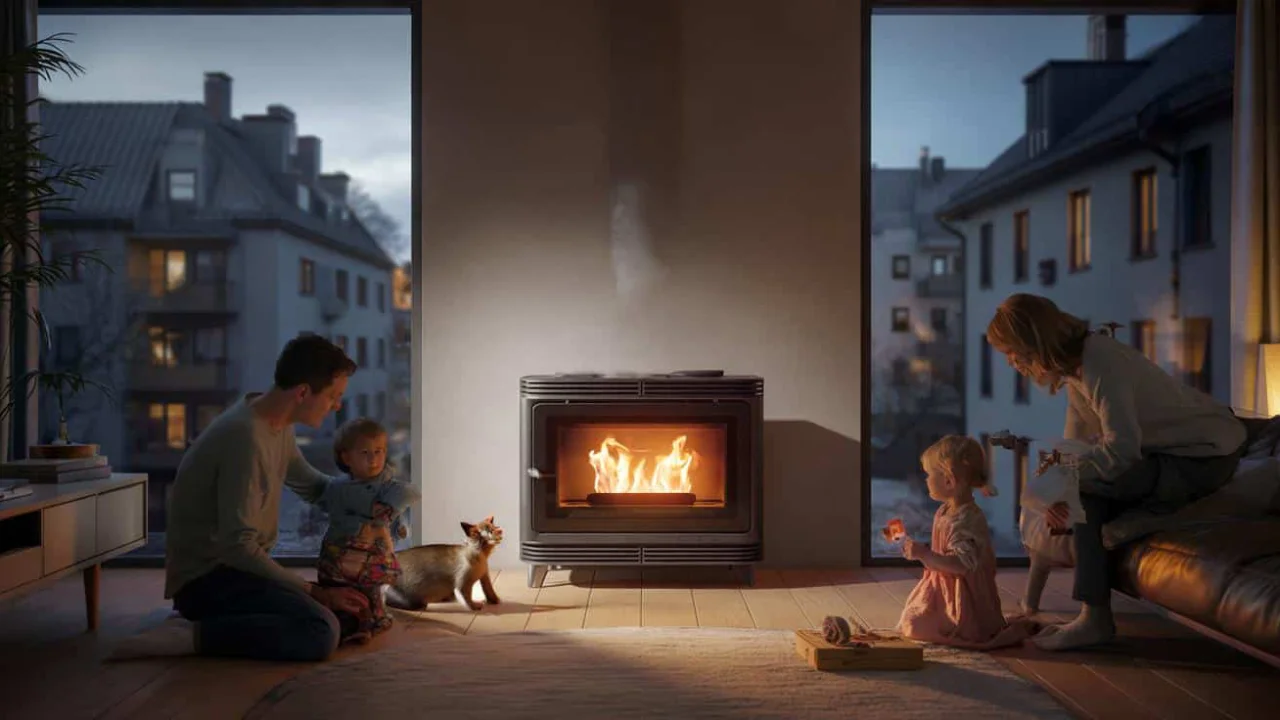
Walking into that cozy living room changed everything Sarah thought she knew about home heating. There it was—a sleek, modern wood stove glowing warmly behind glass, with no chimney pipe snaking up through the ceiling. Just clean walls and comfortable warmth filling every corner of the room.
The Technology Behind Flue-Free Wood Heating
A wood stove without flue represents a significant leap in combustion engineering. These innovative units burn fuel so efficiently that they produce minimal smoke and emissions, eliminating the need for traditional chimney systems.
The secret lies in the advanced combustion chamber design. Instead of allowing gases and particles to escape up a flue, these stoves burn everything twice—first the wood or pellets, then the gases those materials produce. This secondary combustion happens at extremely high temperatures, typically over 1,100 degrees Fahrenheit.
“We’ve essentially created a controlled burn that’s so complete, there’s almost nothing left to vent,” explains heating engineer Michael Torres. “The technology has been refined to the point where these units produce less than 2 grams of emissions per hour.”
Most flue-free models still require some form of ventilation—usually a small direct vent through an exterior wall or a simple air circulation system. But you’re talking about a 4-inch vent hole instead of a full chimney installation.
Key Features and Installation Requirements
Understanding what makes these stoves different helps explain why they’re gaining popularity so quickly. Here are the essential components and requirements:
- Clean-burn combustion chamber: Engineered to achieve near-complete fuel consumption
- Automated air control: Precisely manages oxygen flow for optimal burning
- Heat exchange systems: Maximizes warmth output while minimizing waste
- Safety sensors: Monitor air quality and automatically shut down if needed
- Minimal ventilation needs: Usually just a small wall vent or existing ventilation system
The installation process is dramatically simpler than traditional wood stoves. Most units can be installed in a single day without major construction work.
| Installation Aspect | Traditional Wood Stove | Flue-Free Wood Stove |
|---|---|---|
| Chimney Required | Full chimney system | None |
| Wall/Roof Penetration | Major structural changes | Small vent hole only |
| Installation Time | 2-5 days | 4-8 hours |
| Permits Needed | Multiple permits required | Minimal permitting |
| Average Cost | $3,000-$8,000 | $1,500-$4,000 |
Why Households Are Making the Switch
The appeal goes far beyond just avoiding chimney installation. These stoves are solving real problems for modern homeowners who want wood heat without the traditional hassles.
Emma Rodriguez installed one in her downtown apartment last winter. “I live in a century-old building where installing a chimney would be impossible,” she says. “This gave me the wood fire experience I’d been missing since I moved from my parents’ house in the countryside.”
Urban dwellers aren’t the only ones interested. Rural homeowners are choosing flue-free options for secondary heating zones, workshops, and guest houses where running new chimney systems would be costly or impractical.
The environmental benefits are compelling too. These units typically achieve 85-95% efficiency ratings, compared to 60-80% for traditional wood stoves. That means more heat from less wood and dramatically fewer emissions.
Real-World Performance and Considerations
Like any heating technology, wood stoves without flue systems have both advantages and limitations. Understanding both sides helps homeowners make informed decisions.
The heating capacity varies by model, but most units effectively warm 800-1,500 square feet. They work best in open floor plans where heat can circulate freely. Rooms with lots of barriers or multiple levels might need additional heating solutions.
Fuel options are more flexible than you might expect. While many models are designed for wood pellets, others can burn seasoned hardwood, compressed logs, or even specialty fuel blocks. The key is using dry, clean-burning materials that support the high-efficiency combustion process.
“The biggest adjustment for most people is learning to trust the technology,” notes home heating specialist Janet Park. “They keep looking for smoke or expecting something to go wrong, but these systems are designed to run clean and quiet.”
Maintenance is generally simpler than traditional wood stoves. The high-efficiency burn leaves less creosote and ash buildup, though regular cleaning of the glass doors and combustion chamber is still necessary.
Safety features include automatic shutdown systems that activate if air quality sensors detect any issues. Most models also have child locks and cool-touch exteriors that make them safer around families.
Market Growth and Future Outlook
Sales of flue-free wood stoves have increased by over 200% in the past three years, according to industry reports. The growth is driven by several converging factors: rising energy costs, increased interest in alternative heating, and improved technology that addresses previous limitations.
Building codes in most areas now recognize these units as legitimate heating appliances, though local regulations vary. Some regions have specific air quality requirements or installation standards that must be met.
The technology continues evolving rapidly. Newer models include smartphone connectivity, programmable heating schedules, and even integration with home automation systems. Some manufacturers are developing units that can switch between wood and electric operation depending on fuel availability and user preference.
Cost savings drive much of the interest. Homeowners typically see 30-50% reductions in heating costs compared to electric or gas systems, with payback periods of 2-4 years depending on usage and local fuel costs.
FAQs
Do wood stoves without flue really produce no smoke?
They produce minimal visible smoke due to the high-efficiency combustion process, but they still need some ventilation for safety and optimal performance.
Can I install a flue-free wood stove in any room?
Most rooms work fine, but you’ll need adequate space around the unit and access to exterior walls for ventilation. Basement installations may require special considerations.
How much wood do these stoves use compared to traditional ones?
They typically use 25-40% less wood due to their higher efficiency ratings and more complete combustion process.
Are flue-free wood stoves safe for homes with children?
Yes, most models include safety features like cool-touch surfaces, automatic shutoffs, and child locks. However, adult supervision around any heating appliance is always recommended.
What happens if the power goes out?
Many models can operate without electricity, though some automated features may not function. Battery backup systems are available for units that require power for safety monitoring.
Do these stoves work in very cold climates?
They perform well in cold weather, though extremely cold climates may require supplementary heating. The key is choosing a properly sized unit for your space and insulation level.


