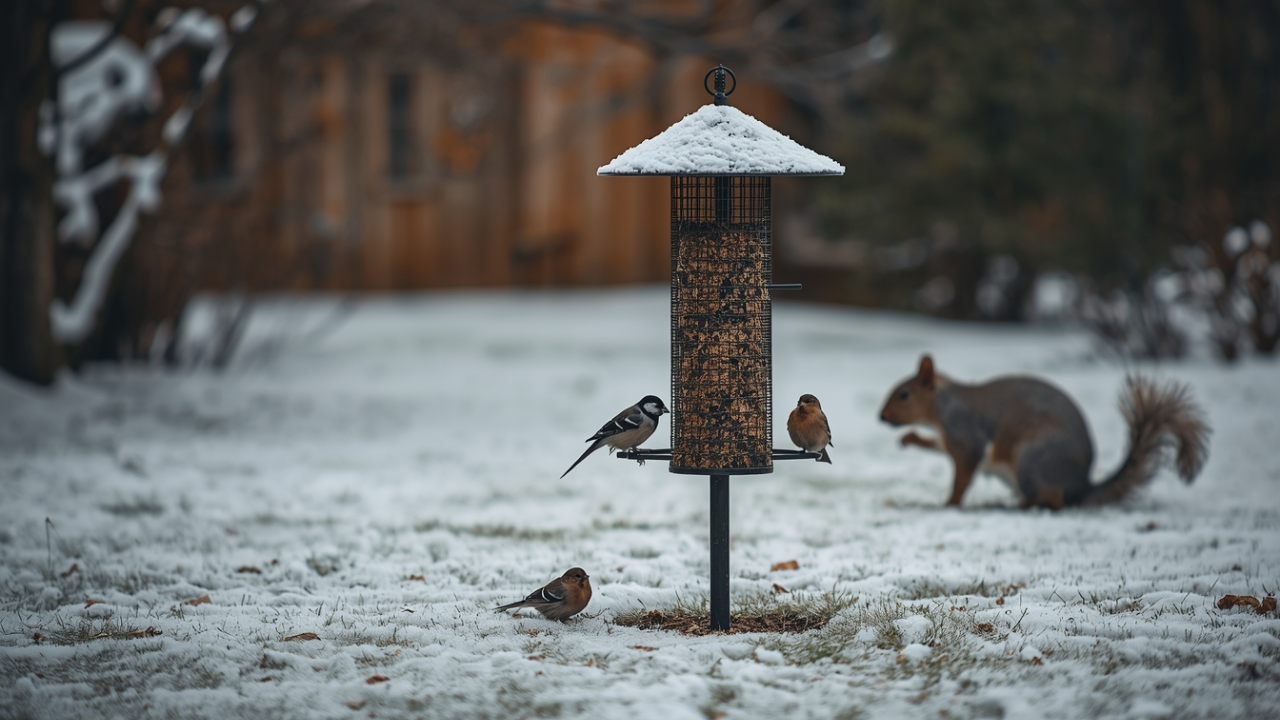
On a frosty winter morning, your garden may look peaceful — feeders swinging gently, birds darting in for breakfast. But after dark, that same setup can become a buffet for rats.
Across the UK and US, feeding birds is a cherished winter ritual. It supports wildlife when natural food is scarce. Yet without careful setup, that generosity can unintentionally attract rodents. The solution is not to stop feeding birds — it’s to make sure you’re not feeding everything else.
When Bird Feeding Becomes a Hidden Health Risk
Winter is harsh for small animals. A feeder full of seed represents easy, predictable calories. For birds, it’s survival support. For rats, it’s a reliable nightly food supply.
Rats rarely appear randomly. They follow three things:
- Food
- Water
- Shelter
A poorly positioned bird feeder provides all three in one convenient location.
Beyond nuisance, rats carry bacteria and pathogens in their urine and droppings. These can contaminate patios, soil, children’s toys and even the feeders themselves. Birds feeding on contaminated surfaces may spread disease. Pets and children can also be exposed.
Stopping a rat problem early is far easier than dealing with a full infestation later.
Build a Rat-Resistant Feeding Station
Preventing rats is largely about geometry. Think from a rat’s perspective: how would you climb or jump to reach the food?
Raise Feeders Out of Jumping Range
Rats can jump higher than most people expect.
- Place feeders at least 1.5–1.6 metres (5–5.3 feet) above the ground.
- Keep feeders at least 2 metres (6.5 feet) away from fences, sheds, walls or overhanging branches.
- Use smooth metal poles, not wood, which provides grip.
Height alone isn’t enough — distance from structures matters just as much.
Use Physical Barriers
Many bird feeder poles can be fitted with dome- or cone-shaped guards known as baffles. Though often marketed as squirrel guards, they work effectively against rats too.
To be effective:
- Install the baffle high enough that rats can’t jump over it.
- Position it below the feeder so it blocks climbers.
If hanging feeders from trees, use thin metal chain or wire instead of rope. Rope acts like a ladder for rodents, while chain is harder to grip.
Your Seed Choice May Be the Real Problem
The type of seed you use directly affects how much ends up on the ground — and that ground debris is what rats target.
Cheap birdseed mixes often contain fillers like wheat and maize. Many small birds reject these ingredients, tossing them aside. The result? A carpet of edible leftovers beneath your feeder.
Choose Low-Waste Options
Better options include:
- Hulled sunflower hearts – fully eaten, leaving almost no waste.
- Finely chopped peanuts – popular when placed in proper mesh feeders.
- High-quality “no mess” mixes – designed for minimal spillage.
- Suet blocks or fat cakes in solid holders – less crumb scatter.
Avoid loose fat balls in plastic nets. They break apart easily and the nets can harm wildlife.
Reducing waste on the ground is one of the most effective rat deterrents.
The Two-Minute Daily Routine That Makes a Difference
Cleanliness is essential and surprisingly quick.
Adopt a simple late-afternoon routine:
- Sweep or rake up spilled seed.
- Empty catch trays under feeders.
- Check for signs of droppings.
Rats are opportunistic. If they find nothing for several nights, they often move elsewhere.
Also practice portion control. Birds feed during daylight. If feeders remain full at dusk, you are effectively leaving dinner out for nocturnal visitors.
Aim for feeders to be nearly empty by late afternoon.
Identify Other Rat Attractions in Your Garden
Bird seed may not be the only draw. Some common features make gardens especially attractive to rodents.
| Garden Feature | Why Rats Like It | What to Change |
|---|---|---|
| Dense shrubs or clutter | Safe hiding spots | Trim vegetation, clear debris |
| Open compost heaps | Warm nesting areas | Use sealed compost bins |
| Pet food bowls | Easy extra food | Remove bowls overnight |
| Chicken feed | Continuous grain supply | Store feed in sealed containers |
| Ponds or leaky water butts | Reliable water source | Secure lids and fix leaks |
Even the best feeder setup won’t work if shelter and water remain easily available.
When to Pause Feeding Altogether
Sometimes a temporary stop is necessary.
If you notice:
- Rats active in daylight
- Burrows near patios or decking
- Gnawed plastic feeders
- Droppings near structures
It may be time to remove feeders for a few weeks.
Breaking the food cycle often forces rats to relocate. Once signs disappear, you can reintroduce feeders using improved positioning and hygiene.
Will Birds Suffer If You Stop Feeding?
Many people worry that stopping feeding will harm birds. In reality, garden feeding is supplemental. Wild birds forage across wide territories and use multiple gardens and natural sources.
They rely on:
- Hedgerows
- Fields
- Berry shrubs
- Insects
- Other nearby gardens
A short pause is far less harmful than enabling a rat population to establish itself.
Understanding “No-Spill Feeding” and Pest Management
Wildlife experts often recommend two related strategies.
No-Spill Feeding
This approach focuses on preventing seed from reaching the ground. Hulled seeds, feeder trays and measured portions all support this method.
Integrated Pest Management
Rather than jumping straight to poisons or traps, this strategy removes what attracts pests — food, water and shelter — making the environment less inviting.
Both methods prioritise prevention over reaction.
A Tale of Two Gardens
Imagine two neighbouring gardens in winter.
In one, low feeders spill cheap seed over untidy paving beside an open compost heap. In the other, tall metal poles hold sunflower hearts above clean ground swept each evening.
Both feed birds. Only one feeds rats.
The difference lies not in generosity, but in design.
Keep Feeding Birds — Just Not the Night Shift
Feeding garden birds is rewarding and beneficial when done thoughtfully. By raising feeders, choosing low-waste seed, cleaning daily and reducing shelter, you can dramatically reduce rodent attraction.
A well-managed feeding station delivers winter support to birds without turning your garden into a rodent dining hall.
With a few practical adjustments, you can enjoy birdsong in the morning — without unwelcome rustling in the night.