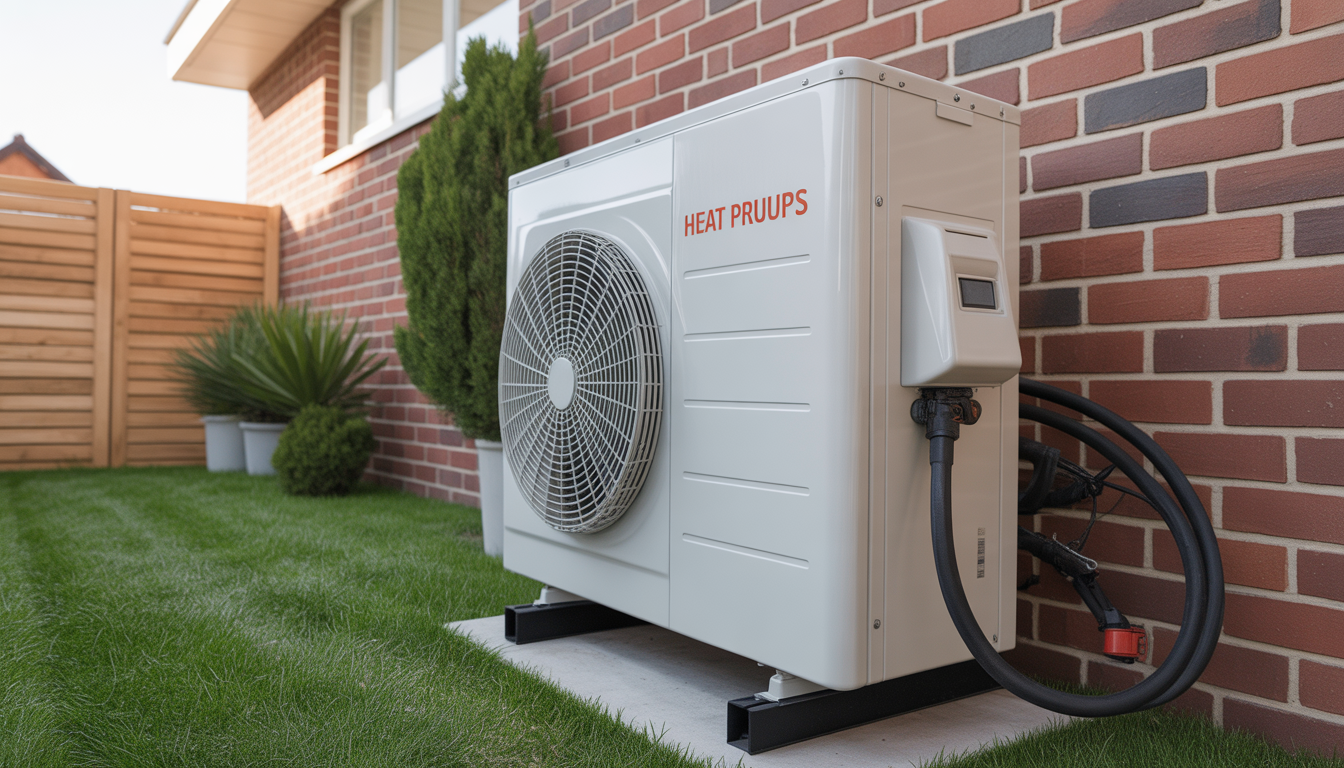
Across Europe, heat pumps are being promoted as the future of home heating. Governments in France, the United Kingdom, and beyond are offering grants and subsidies to encourage households to replace gas and oil boilers.
The message sounds simple:
✔ Lower emissions
✔ Lower energy bills
✔ Future-proof heating
But on the ground, reality often feels more complicated.
So are heat pumps truly too expensive and unreliable — or is the picture more nuanced?
Let’s unpack the full truth.
1. The First Shock: Upfront Cost
For most homeowners, the biggest barrier is the installation bill.
Typical Installation Costs (Before or After Limited Grants)
| System Type | France | United Kingdom |
|---|---|---|
| Air-Source Heat Pump | €10,000–€20,000 | £7,000–£13,000 |
| Ground-Source Heat Pump | Often €18,000+ | Frequently £15,000+ |
Ground-source systems are especially expensive because they require excavation or drilling for underground loops.
Even with subsidies, many households still face a five-figure invoice.
For families already managing mortgages and rising living costs, that is a serious financial decision.
2. Why Performance Varies So Much
Heat pumps do not behave like traditional gas boilers. Their performance depends heavily on:
- Insulation quality
- Radiator size or underfloor heating
- Outdoor climate
- Occupant behavior
Two nearly identical houses on the same street can experience very different results.
Key Factors That Affect Efficiency
| Factor | Impact |
|---|---|
| Poor insulation | Forces pump to work harder |
| Small old radiators | Require higher water temperature |
| Cold winters | Reduce efficiency |
| Thermostat changes | Increase electricity use |
A well-insulated new-build in southern England may perform brilliantly.
A drafty stone farmhouse in northern France may struggle.
3. The COP Myth: Lab vs Reality
Manufacturers advertise something called COP (Coefficient of Performance).
If a heat pump has a COP of 3, it means:
1 unit of electricity → 3 units of heat
Sounds fantastic.
But here’s the catch:
COP is often measured in laboratory conditions.
In real winter conditions — especially near freezing — efficiency drops.
When temperatures plunge, air-source heat pumps may:
- Lose efficiency
- Activate electric backup heaters
- Cause electricity bills to spike
COP vs SCOP
| Term | What It Means |
|---|---|
| COP | Instant efficiency in ideal conditions |
| SCOP | Seasonal average efficiency (more realistic) |
When comparing systems, SCOP matters far more than COP.
4. The Electricity Dependence Problem
Switching from gas to a heat pump increases reliance on electricity.
This works well if:
- The grid is decarbonizing
- Electricity prices remain stable
But during energy crises, electricity prices can surge.
Scenario Comparison
| Scenario | Likely Outcome |
|---|---|
| Mild winters + stable electricity prices | Lower overall bills |
| Harsh winters + high electricity prices | Unexpectedly high bills |
| Hybrid system | More balanced costs |
Electricity price volatility is one of the biggest unknowns for future savings.
5. Maintenance and Reliability: Not “Fit and Forget”
Marketing often suggests heat pumps quietly run for 15–20 years without issue.
Reality is more complex.
These systems include:
- Compressors
- Fans
- Refrigerant circuits
- Electronic controls
- Sensors
They require regular servicing.
Common Issues
- Clogged filters
- Sensor failures
- Compressor wear
- Weather exposure damage
- Refrigerant leaks
Annual servicing adds ongoing cost.
If poorly installed or undersized, components may wear out sooner than expected.
6. Lifespan Expectations vs Reality
Manufacturers often cite 15–20 years.
But earlier failures can happen if:
- The system was badly sized
- The outdoor unit faces salty coastal air
- Maintenance is skipped
- Installers lacked proper expertise
A compressor replacement within 8–10 years can feel like a broken promise to homeowners.
7. Where the Marketing Went Wrong
Government campaigns across Europe have emphasized:
- Emissions reductions
- Grants and subsidies
- Long-term savings
Less emphasis has been placed on:
- Insulation requirements
- Heat-loss calculations
- Realistic cold-weather performance
- Installation quality
When expectations are too high, disappointment spreads quickly.
Trust erodes not because the technology fails — but because it was oversimplified.
8. Insulation First, Technology Second
Energy experts consistently repeat one principle:
Fix the building before changing the heating system.
Priority Steps
- Improve loft insulation
- Seal drafts
- Upgrade windows if necessary
- Improve wall insulation
Once heat loss is reduced:
- Smaller heat pumps may suffice
- Efficiency improves
- Bills become more predictable
Skipping this step is one of the biggest causes of regret.
9. Hybrid Systems: A Middle Path
Hybrid systems combine:
- A heat pump
- A gas or oil boiler
How they work:
- Heat pump handles moderate temperatures
- Boiler activates during deep cold
Pros
- Lower electricity spikes
- Improved comfort
- Smaller heat pump size
Cons
- Continued fossil fuel reliance
- Higher installation complexity
For many households, hybrid systems offer a more realistic transition path.
10. Who Benefits Most?
Let’s compare two real-world profiles.
Scenario A: Likely Success
- Modern 1990s home
- Double glazing
- Decent insulation
- Underfloor heating
- Stable thermostat use
Result:
✔ Lower emissions
✔ Slightly lower total energy bills
✔ Good comfort
Scenario B: Likely Struggles
- Old stone house
- Poor insulation
- Small radiators
- Large temperature swings
Result:
✖ High electricity bills
✖ Comfort complaints
✖ Regret about investment
Same technology. Different preparation.
11. Are Heat Pumps Unreliable?
Not inherently.
When:
- Properly sized
- Installed by qualified engineers
- Paired with good insulation
- Maintained regularly
They can be highly reliable.
But they are not miracle machines.
They demand correct conditions.
12. The Climate Perspective
Heat pumps significantly reduce emissions compared to gas boilers — especially as electricity grids decarbonize.
They:
- Cut household carbon footprint
- Reduce fossil fuel dependence
- Support electrification goals
However, if installation quality remains inconsistent, public backlash could slow adoption.
13. So, Are They “Too Expensive”?
It depends.
They are expensive upfront.
They are not universally cheap to run.
They are not universally suitable.
But in the right home, under the right conditions, they can:
- Reduce emissions significantly
- Deliver stable comfort
- Provide long-term cost stability
The truth is neither hype nor disaster.
It is context.
What Prospective Buyers Should Do
Before signing anything:
✔ Request a detailed heat-loss calculation
✔ Compare SCOP, not just COP
✔ Get multiple installer quotes
✔ Ask for local case studies
✔ Model bills under different electricity price scenarios
Heat pumps are not a universal solution — but they are not a scam either.
They are a technology that rewards preparation and punishes shortcuts.
And in Europe’s shift away from fossil fuels, that distinction matters more than ever.