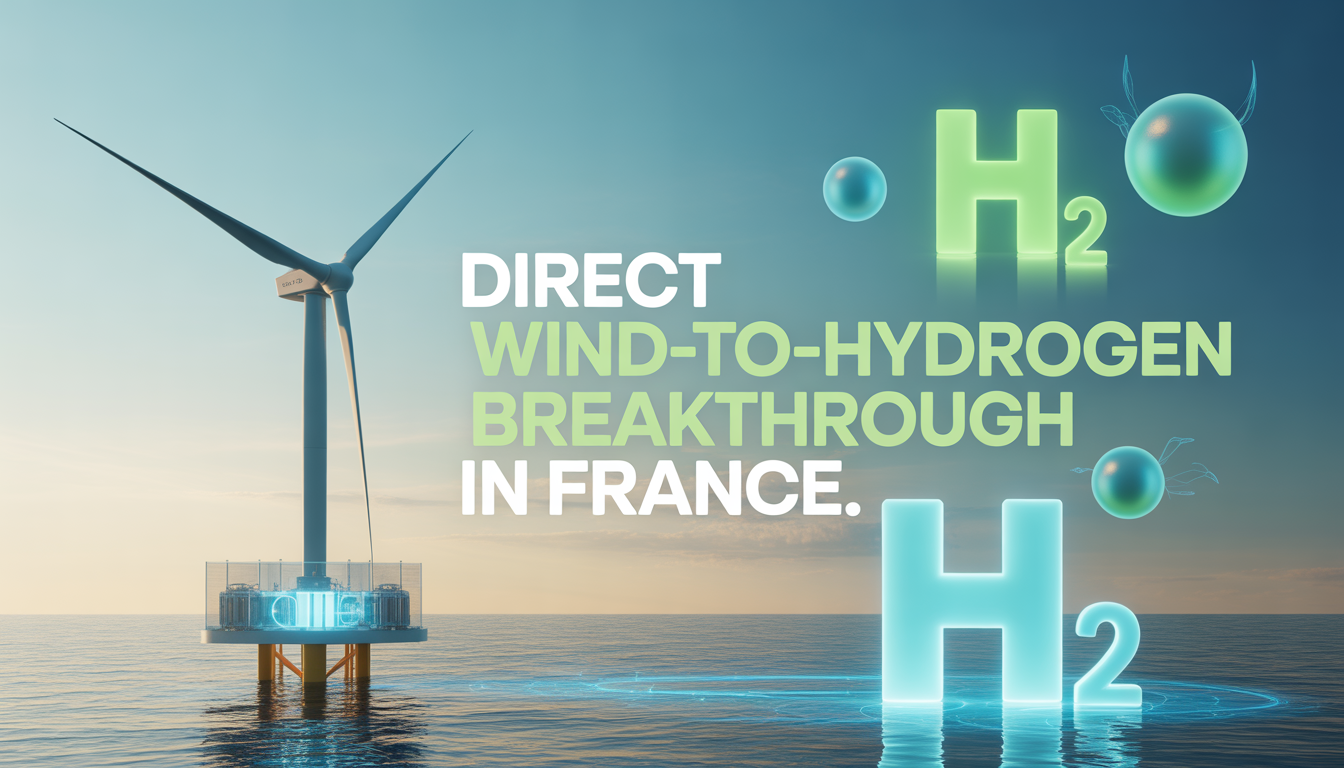
In the fast-moving world of renewable energy, innovation often comes from unexpected places. A relatively unknown French company has now achieved what many experts considered a long-term ambition: producing green hydrogen directly from wind turbines. This milestone could dramatically simplify how renewable energy is generated, stored, and distributed.
Unlike conventional systems that separate wind power generation and hydrogen production into different stages, this breakthrough integrates the two into one seamless process. By doing so, the company has potentially eliminated inefficiencies that have long hindered green hydrogen’s economic viability.
As nations accelerate their climate commitments, this innovation could mark a pivotal moment in the global transition toward sustainable energy.
Understanding the Traditional Hydrogen Production Model
Green hydrogen is typically produced through electrolysis, a process that uses electricity to split water into hydrogen and oxygen. When powered by renewable sources such as wind or solar, the resulting hydrogen is considered environmentally friendly because it emits no carbon during production.
However, traditional wind-powered hydrogen production involves multiple steps. Wind turbines generate alternating current electricity. That electricity is converted, stabilized, and fed into electrolysis units. Each stage introduces energy losses and adds complexity, cost, and infrastructure requirements.
In many cases, surplus wind energy is either stored in batteries or fed back into the grid, only to be redirected later for hydrogen production. This layered system reduces overall efficiency and increases operational expenses.
The French company’s approach changes this structure entirely.
The Technology Behind Direct Wind-to-Hydrogen Conversion
The breakthrough lies in integrating electrolysis equipment directly within the wind turbine system. Instead of converting wind-generated electricity for external use, the system channels energy straight into hydrogen production units installed at or near the turbine site.
This direct integration significantly reduces energy conversion losses. It also addresses one of renewable energy’s most persistent challenges: intermittency. Wind power fluctuates depending on weather conditions. Instead of allowing excess power to go unused during peak wind periods, the system converts surplus energy directly into hydrogen.
Hydrogen acts as a form of chemical energy storage. It can be stored for extended periods without degradation and transported to areas where energy demand is high. This approach effectively transforms wind turbines into both power generators and fuel production facilities.
Why This Innovation Is So Important
Hydrogen is widely viewed as a cornerstone of the future energy economy. When used as fuel, hydrogen produces only water vapor as a byproduct. It can power vehicles, supply industrial heat, and generate electricity without emitting carbon dioxide.
However, producing green hydrogen efficiently and affordably has remained a major barrier to widespread adoption. By eliminating intermediary conversion stages, direct wind-to-hydrogen production could significantly reduce costs and increase overall efficiency.
This advancement could be especially valuable in remote or offshore wind farms. Instead of relying solely on grid connections, these facilities could produce hydrogen on-site and transport it by ship or pipeline. This opens opportunities for decentralized energy systems that operate independently from traditional grids.
France’s Growing Role in Hydrogen Innovation
France has traditionally been associated with nuclear energy leadership, but it has also expanded its renewable portfolio in recent years. National initiatives supporting hydrogen research and wind energy development have encouraged innovation across the country.
The emergence of this pioneering company reflects a broader strategic push toward clean technology leadership. By investing in integrated renewable systems, France aims to strengthen its position in the global hydrogen economy.
This breakthrough highlights how smaller, focused enterprises can compete alongside major multinational corporations. In many cases, innovation stems from companies willing to specialize deeply in solving a specific technical challenge.
Overcoming Technical Challenges
Developing direct wind-to-hydrogen systems required solving complex engineering problems. Wind turbines generate variable power depending on wind speed, while electrolysis units traditionally perform best under stable electrical input.
To overcome this mismatch, the company likely developed advanced power management systems capable of optimizing hydrogen production across fluctuating wind conditions. These systems balance performance, efficiency, and equipment durability.
Another challenge involved integrating electrolysis units within turbine infrastructure. Wind farms are exposed to harsh environmental conditions, including strong winds, salt air (in offshore settings), and temperature fluctuations. The hydrogen production equipment must operate reliably under these stresses.
Safety systems are also critical. Hydrogen is highly flammable, and storing it at pressure requires strict safety protocols. Reliable monitoring, ventilation, and containment systems are essential components of the overall design.
Market Implications and Industry Response
The successful demonstration of direct wind-to-hydrogen production could reshape renewable energy economics. Wind farm operators may diversify revenue streams by producing hydrogen instead of selling electricity alone.
Hydrogen can serve multiple markets, including transportation, heavy industry, and backup power generation. By generating hydrogen directly at wind farm sites, producers may reduce distribution costs and enhance supply chain resilience.
Global energy markets are closely watching hydrogen technology advancements. Countries such as Germany, Japan, South Korea, and Australia have announced ambitious hydrogen investment plans. A scalable direct production model could accelerate international adoption.
The renewable energy sector evolves rapidly. While first-mover advantage is valuable, maintaining leadership will require continued innovation and successful commercialization.
Scaling and Commercial Deployment Challenges
Proving the technology at pilot scale is only the first step. Large-scale deployment requires manufacturing capacity, capital investment, regulatory approvals, and infrastructure development.
Hydrogen transport and storage infrastructure remains underdeveloped in many regions. Pipelines, storage facilities, and refueling stations must expand alongside production capabilities.
Financing also plays a major role. Investors need evidence of long-term reliability and cost competitiveness compared to alternative energy storage solutions. Clear regulatory frameworks and supportive government policies will further influence expansion.
Frequently Asked Questions
What makes direct wind-to-hydrogen production different?
It eliminates intermediary power conversion steps, improving efficiency and reducing energy losses.
How does hydrogen solve renewable energy storage issues?
Hydrogen stores excess renewable energy in chemical form, which can be used later when wind output drops or demand rises.
Where can hydrogen produced this way be used?
Applications include fuel cell vehicles, industrial heating, power generation, and residential energy systems.
What are the main challenges to widespread adoption?
Scaling production, building infrastructure, ensuring safety, and achieving cost competitiveness remain key hurdles.
Conclusion
The French company’s successful direct wind-to-hydrogen production represents a significant milestone in renewable energy innovation. By integrating hydrogen generation directly into wind turbine systems, it addresses inefficiencies that have long limited green hydrogen’s economic potential.
While challenges remain in scaling and commercialization, the breakthrough offers a compelling vision of integrated clean energy systems. If successfully expanded, this approach could accelerate the global transition to sustainable energy and help bridge the gap between renewable generation and reliable energy storage.
In the race toward carbon neutrality, innovations like this may prove essential. Sometimes the most transformative progress comes not from industry giants, but from determined pioneers quietly redefining what is possible.