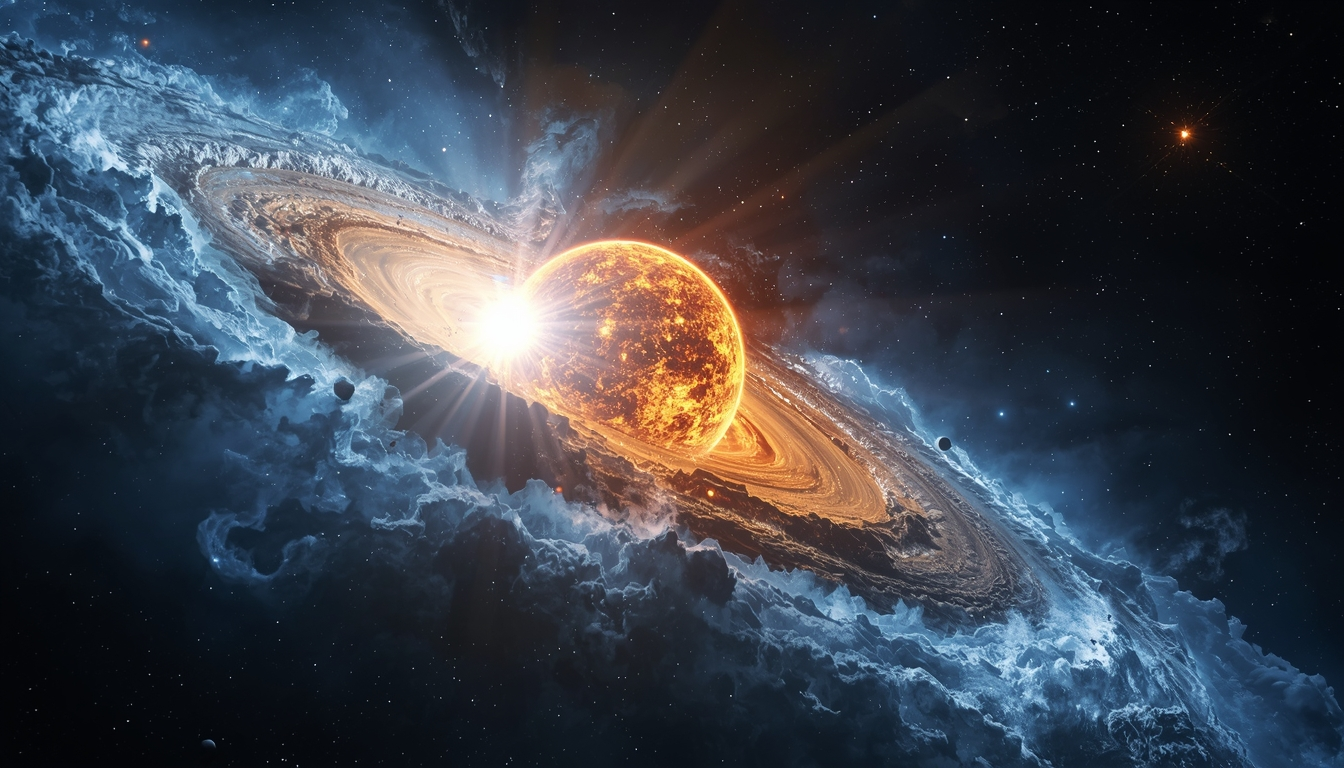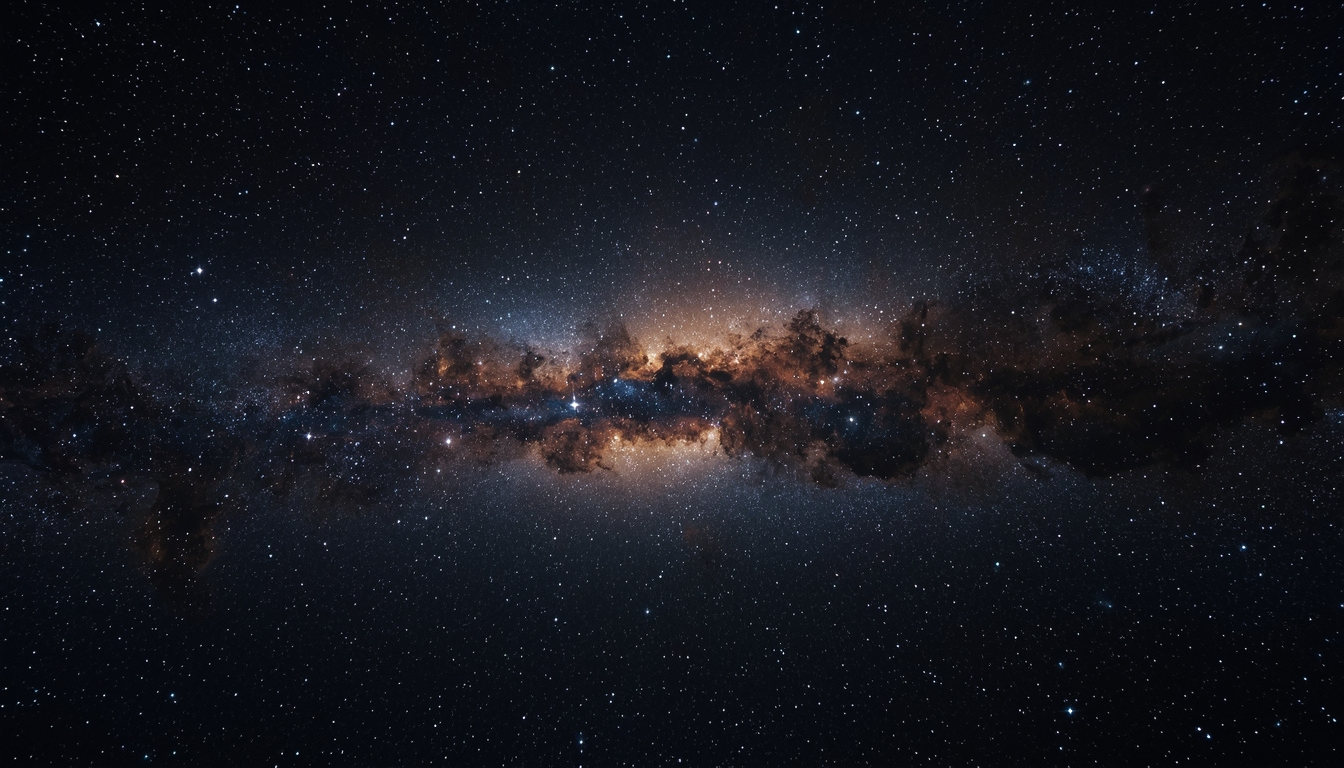
The Milky Way contains hundreds of billions of stars. Many of them host planets. Current estimates suggest that billions of those worlds could be rocky and potentially habitable. Given that the Milky Way formed more than 13 billion years ago, life elsewhere has had ample time to emerge — and evolve.
Yet we see no clear sign of extraterrestrial civilizations.
This tension is known as the Fermi Paradox, named after physicist Enrico Fermi, who famously asked: “Where is everybody?” Popular astronomer Carl Sagan once estimated that thousands of advanced civilizations could exist in our galaxy alone.
So why the silence? Here are 11 leading explanations.
1. We Are Alone
The simplest answer is also the most unsettling: intelligent life may be extraordinarily rare. Earth could be a cosmic exception — a fortunate accident in an otherwise sterile Universe.
While statistically unlikely, it cannot yet be ruled out.
2. Life Exists — But Not Intelligent Life
Microbial organisms may be common, while complex, technological species are not. On Earth, simple life appeared quickly, but it took billions of years for intelligent beings to evolve.
Other planets might be stuck at the bacterial stage.
3. Alien Civilizations Don’t Use Detectable Technology
Extraterrestrials might exist but never developed radio, lasers, or other technologies we rely on for communication. Their biology and culture could follow entirely different evolutionary paths.
Or they may have no interest in broadcasting into space.
4. Their Technology Is Far Beyond Ours
Advanced civilizations might use communication methods we cannot yet detect — quantum signals, neutrino beams, or technologies we haven’t even imagined.
In that case, the silence may simply reflect our limitations.
5. Civilizations Self-Destruct
Technological societies may have short lifespans. Nuclear war, ecological collapse, pandemics, or runaway artificial intelligence could eliminate them before they spread beyond their home systems.
Humanity itself faces similar risks.
6. The Universe Is Hostile
Cosmic environments can be violent. Supernova explosions, gamma-ray bursts, asteroid impacts, and stellar flares can sterilize planets.
Red dwarf stars — common hosts of rocky worlds — frequently unleash powerful flares that may strip planetary atmospheres. Life could struggle to survive long enough to become advanced.
7. The Galaxy Is Enormous
The Milky Way spans about 100,000 light-years. Even signals traveling at light speed require millennia to cross it.
If a civilization 10,000 light-years away sent a message a century ago, we would still be waiting 9,900 years to receive it. Timing alone could explain the silence.
8. We’ve Been Listening for Too Short a Time
Modern radio astronomy has existed for less than a century. Organized searches for extraterrestrial signals have been underway for only about six decades.
Compared to the galaxy’s age, that is the blink of an eye.
Programs like the Breakthrough Listen are scanning millions of stars, but the search has barely begun.
9. They’re Listening — But Not Transmitting
Humanity itself emits relatively weak radio leakage today compared to the mid-20th century. We are not loudly announcing our presence.
Alien civilizations might also choose to remain quiet, observing rather than broadcasting.
10. They’re Avoiding Us
Some scientists speculate about a “cosmic non-interference” principle — similar to the Prime Directive in the Star Trek universe.
Advanced civilizations might deliberately avoid contacting emerging societies like ours, allowing natural evolution to proceed uninterrupted.
Alternatively, they may see us as unstable or uninteresting.
11. They’re Already Here
The most sensational possibility — that extraterrestrials are secretly present on Earth — lacks credible scientific evidence. Claims of hidden agreements or concealed spacecraft remain firmly in the realm of speculation.
Extraordinary claims require extraordinary proof, and so far, none has emerged.
The Search Continues
Despite the silence, optimism remains strong in the scientific community. Missions within our Solar System are investigating potentially habitable environments such as Mars and the icy moons Europa and Enceladus. Meanwhile, powerful instruments like the James Webb Space Telescope are analyzing the atmospheres of distant rocky exoplanets for chemical signs of life.
Whether we are alone or simply early arrivals in a vast cosmic landscape remains one of humanity’s deepest questions.
For now, the silence persists. But in a Universe as large and ancient as ours, absence of evidence is not yet evidence of absence.